Long Beach is considering a new water taxi service to offer a sustainable alternative to driving for the Olympic and Paralympic Games, but the region remains far from a ‘car-free’ Olympics.


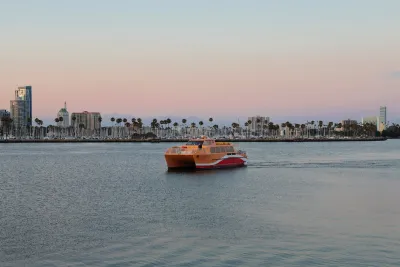
Long Beach, California, which is set to host 18 events as part of the 2028 Olympic and 2029 Paralympic Games, is considering a new water taxi service that would ferry attendees between venues, reports Kara Finnstrom for CBS News.
“In May, the LA County Board of Supervisors floated the idea of using a water taxi service between San Pedro and Long Beach to get visitors around while dodging air emissions from cars – and traffic. The service would be emissions-free and quick, making it perfect for a heavy-tourist season like the one that will come during the 2028 Summer Olympics.” The service would be similar to one already operating between the pier and the Queen Mary ship.
According to Long Beach Mayor Rex Richardson, “[We want to] put systems in place that not only benefits the experience during 2028 but they can be left in place [after the Olympics].”
Los Angeles has long touted its plans of hosting a “no-car” Olympics. While the new Regional Connector will go a long way towards filling gaps in the city’s transit system, that dream may not fully come to fruition in time for the Games.
FULL STORY: Proposed 2028 Los Angeles Olympics water taxi transportation method could make waves


LA has no plan — or funding — to help unhoused people displaced by Olympics security efforts
City and county officials say they don't have the funds to offer housing to the up to 1,600 people that will be displaced by perimeters around event venues.
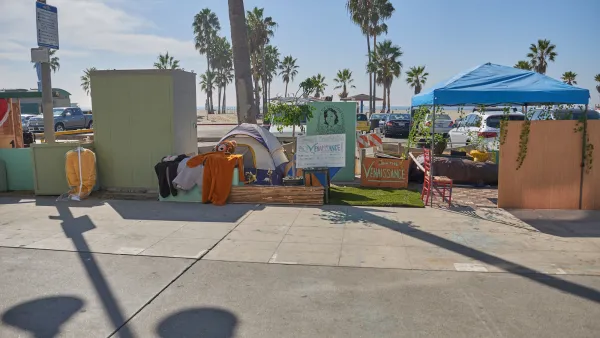
LA Proposal Would Forcibly Remove Unhoused People Near Olympic Venues
Los Angeles County sent city officials a report outlining strategies for clearing homeless encampments, but advocates point out that the report itself notes there are not enough shelte resources to accommodate all unhoused residents.
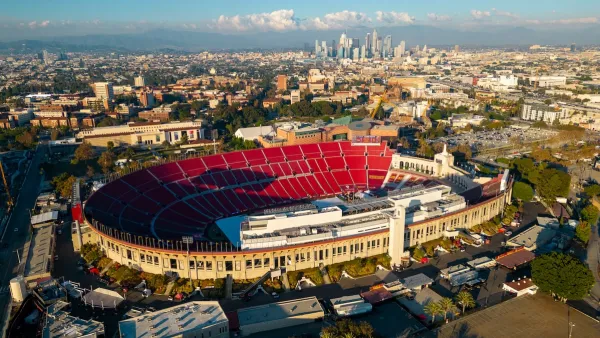
LA’s ‘Car-Free’ Olympic Dream Is in Danger
Can the city fund its ambitious plans to build over $3 billion of public transit and sustainable transportation projects before the 2028 Olympic Games?

Planetizen Federal Action Tracker
A weekly monitor of how Trump’s orders and actions are impacting planners and planning in America.

The state-sanctioned urbicide of Austin
People don’t kill cities. Freeways do.

US to reduce Colorado River water deliveries to Mexico
A new Colorado Treaty amendment reduces Mexico’s Colorado River water allocation by 250,000 acre feet.

Airbnb launches $250 million 'last-dollar financing' housing accelerator, makes first investment in Austin
The company will put $6.4 million towards affordable housing development in Texas’ capital.

Guerilla urbanists are building DIY bus stop benches in Chicago
A before-and-after of one of the bus stops with a new bench. The new benches are not officially sanctioned or permitted, but the residents who placed them hope they will be the start of a network of DIY benches across the city.

Mamdani overhauls NYC's Vision Zero plan with 100 new policy goals
The overhaul aims to reduce traffic deaths and make streets safer for pedestrians, cyclists and drivers through lower speed limits, new safety infrastructure and more.

FREE Course: Walkable City 1: Why Walkability?
After describing his path towards focusing on walkability as the essence of good planning, Jeff Speck marches through his five principal reasons for making more walkable places.
Reinventing Malls: Planning Alchemy—Turning Gray Fields Into Gold
The course focuses on the opportunities and imperatives that shape reinvention of mall sites.

Eagle County Government
Harvard University Graduate School of Design
Nashville Planning Department
The Architects Foundation
University of Cincinnati Online
The Pocatello Development Authority
The Urban Renewal Agency of the City of Pocatello
Journal of the American Planning Association