Thanks to new funding approved by the state legislature, the city’s transit agency will be able to temporarily stave off proposed service cuts, but the fix is only temporary.


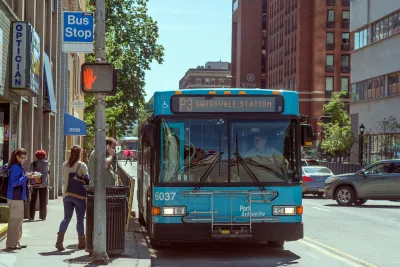
cut and 9 percent fare hike, but state leaders warn “neither the reversal nor capital funding are a long-term solution to the commonwealth’s transportation problems.”
As Christina Lengyel explains in The Center Square, “The House has passed several different funding proposals to resolve the situation, none of which have been taken up by the Senate. The upper chamber did pass a bill that would have used capital funding, but it was dead on arrival in the House, where Democrats said that taking money dedicated to other infrastructure improvement projects deepens the deficit without offering any recurring revenue and does nothing to help the rest of the state.”
PRT will be allowed to borrow from the state’s capital fund to maintain service, but state officials warn the fix is only temporary.
FULL STORY: Public transit service cuts reversed in Pittsburgh

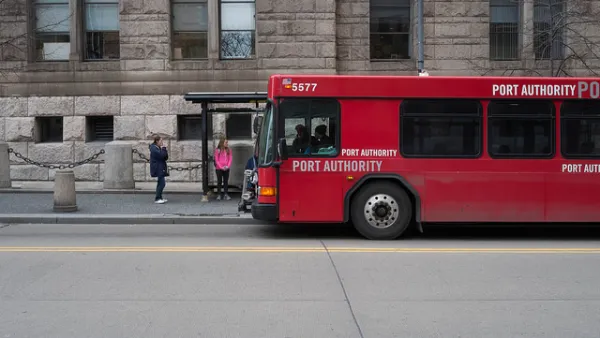
Downtown Pittsburgh to Oakland BRT Moving Forward, With or Without Federal Money
Expect more cities and transit agencies around the country to wrestle with funding quandaries if the Trump Administration gets its way with existing capital investment grants.
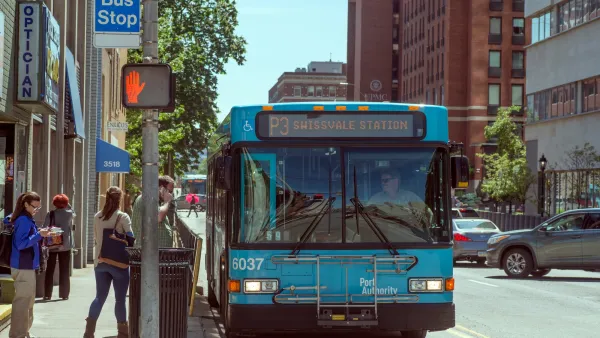
750 Pittsburgh city workers to get free transit passes
City employees working downtown will have access to free transit from Pittsburgh Regional Transit.
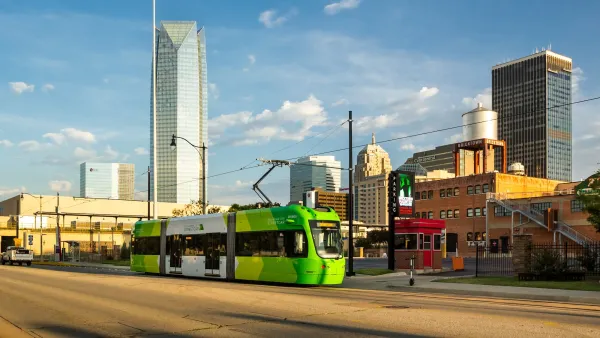
Oklahoma City bets on transit
The city's mayor is urging residents to support a new sales tax that would fund transit expansion in the growing city.

Planetizen Federal Action Tracker
A weekly monitor of how Trump’s orders and actions are impacting planners and planning in America.

The state-sanctioned urbicide of Austin
People don’t kill cities. Freeways do.

US to reduce Colorado River water deliveries to Mexico
A new Colorado Treaty amendment reduces Mexico’s Colorado River water allocation by 250,000 acre feet.

5 New England states march closer to 800 megawatt wind energy project
Securing federal approval for the project may be complicated under the Trump administration, which has historically been hostile towards domestic wind power.

Baltimore to break ground on $50 million Transit Priority Project
The project will bring faster bus trips, safer streets and better bike connections to Baltimore.

Airbnb launches $250 million 'last-dollar financing' housing accelerator, makes first investment in Austin
The company will put $6.4 million towards affordable housing development in Texas’ capital.

FREE Course: Walkable City 1: Why Walkability?
After describing his path towards focusing on walkability as the essence of good planning, Jeff Speck marches through his five principal reasons for making more walkable places.
Reinventing Malls: Planning Alchemy—Turning Gray Fields Into Gold
The course focuses on the opportunities and imperatives that shape reinvention of mall sites.

Eagle County Government
Harvard University Graduate School of Design
Nashville Planning Department
The Architects Foundation
University of Cincinnati Online
The Pocatello Development Authority
The Urban Renewal Agency of the City of Pocatello
Journal of the American Planning Association