With infrastructure and rider education lagging behind the growth of e-scooter systems, American ERs saw an 80 percent rise in e-scooter injuries between 2023 and 2024.


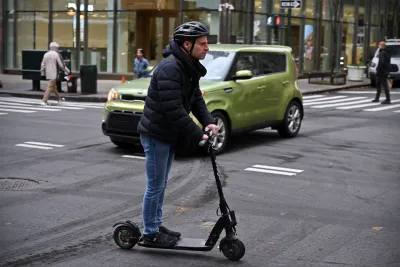
As the popularity of e-scooters has grown, so has the rate of injuries sustained on them, writes Dan Zukowski in Smart Cities Dive.
“The number of injuries incurred by electric scooter riders who were treated in U.S. emergency departments rose 80% from 2023 to 2024 and nearly 300% from 2020 to 2024, according to an August report from ERideHero, a company that tests e-scooters and related products.” Males accounted for two-thirds of injuries, while children under 14 accounted for 1 in 7.
According to the report, “safety legislation and user sophistication have lagged behind” as the devices have proliferated in shared mobility fleets. Meanwhile, most U.S. cities still lack safe, effective infrastructure for bikes and other small mobility devices.
FULL STORY: US e-scooter injuries treated in ERs rose 80% last year: report


NYC e-bike injury study highlights 'critical infrastructure deficiencies'
The sharp rise in e-mobility injuries points to a need for safer roads, not more punitive laws.

Shared Mobility Starts to Reach Critical Mass
The growing popularity of shared mobility modes, many small and highly efficient, could soon begin having a significant impact on urban transportation patterns.

Mamdani on E-bikes: Regulate the Apps, not the Delivery Workers
The NYC mayoral candidate and State Assemblymember says algorithms push workers into unsafe behavior at a systemic level.

The state-sanctioned urbicide of Austin
People don’t kill cities. Freeways do.

US to reduce Colorado River water deliveries to Mexico
A new Colorado Treaty amendment reduces Mexico’s Colorado River water allocation by 250,000 acre feet.

New Jersey’s second-largest city bans standalone data centers
Jersey City will continue to allow co-location facilities, such as those meant for research institutions that store their own data.

Amtrak not solely to blame for New Jersey commuter rail's unreliability, report finds
A new study from the Garden State Initiative found that NJ Transit’s budget grew 20% across a 4 year period, but reliability declined significantly over the same period.

EPA erases limits on planet-warming pollution from power plants
Under Monday’s plan, power plants would still have some limits on how much mercury, arsenic and other contaminants they can emit.

Phoenix announces new on-demand transit service, more frequent RAPID buses
Both new services will launch in October, and are part of Phoenix's Project Effective Access Solutions for Easing Congestion.

FREE Course: Walkable City 1: Why Walkability?
After describing his path towards focusing on walkability as the essence of good planning, Jeff Speck marches through his five principal reasons for making more walkable places.
Reinventing Malls: Planning Alchemy—Turning Gray Fields Into Gold
The course focuses on the opportunities and imperatives that shape reinvention of mall sites.

Eagle County Government
Harvard University Graduate School of Design
Nashville Planning Department
The Architects Foundation
University of Cincinnati Online
The Pocatello Development Authority
The Urban Renewal Agency of the City of Pocatello
Journal of the American Planning Association