Cars with illegal or missing license plates are more likely to drive dangerously and owe unpaid fines.


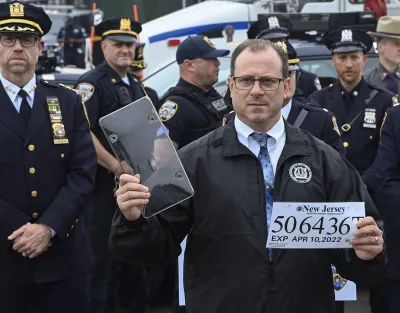
A report from the New York City Council reveals that drivers using illegal out-of-state license plates, or those with no license plates at all, are more likely to engage in dangerous driving behaviors.
Andrew Giambrone outlines the report’s findings in Gothamist, noting that those vehicles have “significantly more” speeding violations in school zones and blocking fire hydrants, and owe roughly 2.5 times more in unpaid fines.
“The report found these ‘ghost cars,’ as they’re commonly called by city officials, make it difficult for authorities to enforce the law because of their harder-to-trace nature. The vehicles also occupy limited parking space and cost the city millions of dollars in lost revenue each year.” Local officials say they are ramping up enforcement efforts, but the problem has proliferated. “The Bronx had the highest concentration of ghost cars, at 30%, followed closely by Brooklyn and Queens, at 28% each. Staten Island and Manhattan had far lower concentrations, at 15% and 1%, respectively, investigators found.”
FULL STORY: https://gothamist.com/news/nyc-ghost-cars-more-likely-to-drive-unsafely-or-owe-fines-report-finds

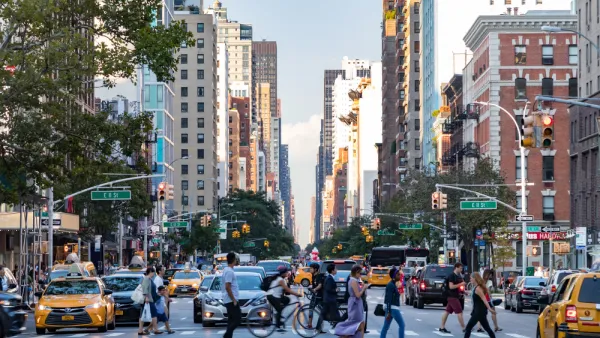
NYC Sees 127 Traffic Deaths in First Half of 2024
The number is the highest since the city pledged to end traffic deaths through Vision Zero policies a decade ago.
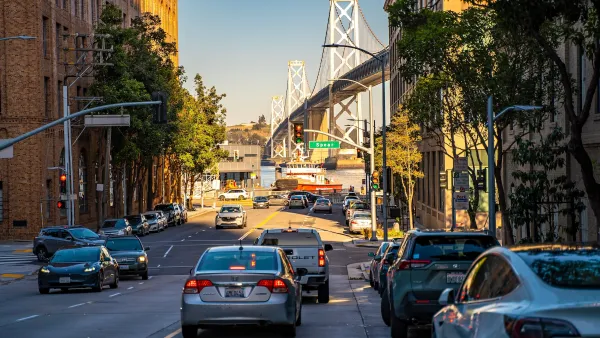
After San Francisco installed traffic cameras, speeding dropped by 80%
The city was allowed to install speed cameras as part of a five-year pilot program approved by California in 2023.
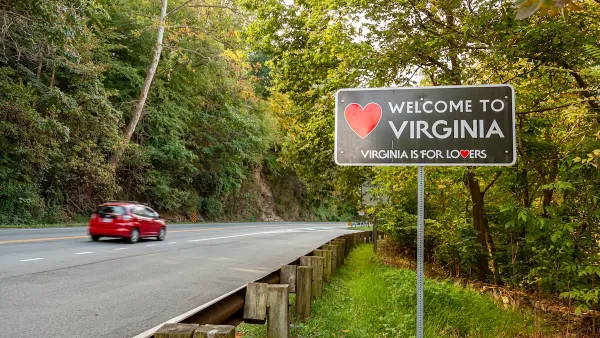
Virginia Law Allows Judges to Mandate Speed Limiters
The law could set a new precedent for speed limiting tech on U.S. vehicles.

Planetizen Federal Action Tracker
A weekly monitor of how Trump’s orders and actions are impacting planners and planning in America.

The state-sanctioned urbicide of Austin
People don’t kill cities. Freeways do.

US to reduce Colorado River water deliveries to Mexico
A new Colorado Treaty amendment reduces Mexico’s Colorado River water allocation by 250,000 acre feet.

5 New England states march closer to 800 megawatt wind energy project
Securing federal approval for the project may be complicated under the Trump administration, which has historically been hostile towards domestic wind power.

Baltimore to break ground on $50 million Transit Priority Project
The project will bring faster bus trips, safer streets and better bike connections to Baltimore.

Airbnb launches $250 million 'last-dollar financing' housing accelerator, makes first investment in Austin
The company will put $6.4 million towards affordable housing development in Texas’ capital.

FREE Course: Walkable City 1: Why Walkability?
After describing his path towards focusing on walkability as the essence of good planning, Jeff Speck marches through his five principal reasons for making more walkable places.
Reinventing Malls: Planning Alchemy—Turning Gray Fields Into Gold
The course focuses on the opportunities and imperatives that shape reinvention of mall sites.

Eagle County Government
Harvard University Graduate School of Design
Nashville Planning Department
The Architects Foundation
University of Cincinnati Online
The Pocatello Development Authority
The Urban Renewal Agency of the City of Pocatello
Journal of the American Planning Association