As autonomous carmakers deploy self-driving cars in more cities, states are scrambling to regulate the technology.


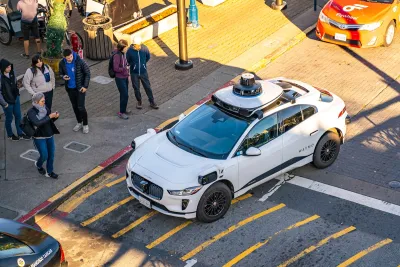
State lawmakers around the country are enacting legislation aimed at self-driving vehicles as the technology is rapidly deployed on urban streets, reports Madyson Fitzgerald in Governing.
“While much of the legislation aims to update existing law to include new definitions for autonomous vehicles, other measures put rules in place regarding insurance, permitting, licensing and road testing.” To date, lawmakers in 25 states have introduced 67 bills related to autonomous cars. Governors in Colorado and Virginia vetoed bills. This year, Arizona, Louisiana, Montana, Nevada and the District of Columbia passed laws regulating AVs.
Waymo is currently operating robotaxi service in Atlanta, Austin, Los Angeles, Phoenix, and San Francisco. Tesla says it plans to roll out a driverless taxi in Austin this year. “Between 2021 and 2024, there were 696 accidents reported that involved a Waymo vehicle, according to an analysis by California-based law firm DiMarco | Araujo | Montevideo.”
FULL STORY: States Move Swiftly to Regulate Self-Driving Cars as Technology Advances

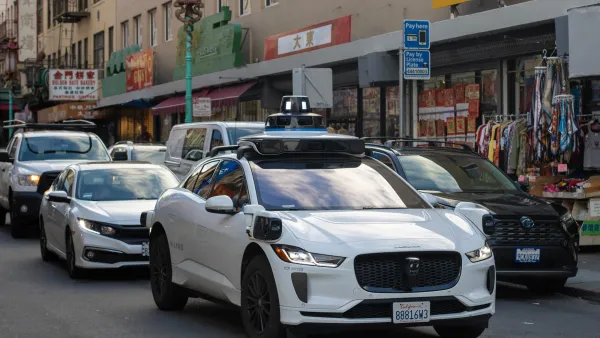
New Jersey bill would require AVs to use 3 sensing technologies — banning Tesla's robotaxi fleet
Elon Musk has been 'largely alone' in his conviction that radar and lidar sensors are not necessary for the safe operation of autonomous cars.
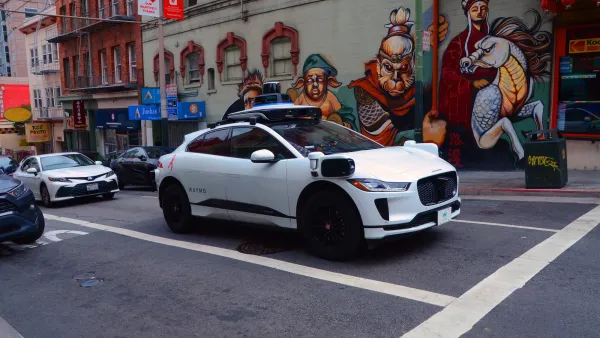
Feds say robotaxis interfering with first responders is a 'functional insufficiency,' demand solutions by August
The NHTSA issued a letter to autonomous carmakers, noting that 'Every second matters when law enforcement officers, firefighters, or paramedics are answering a call.'
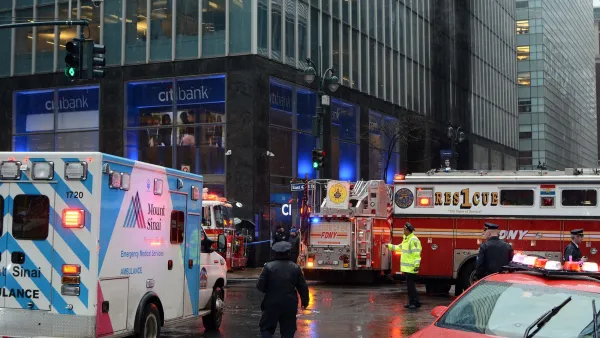
Waymo's troubles with emergency vehicles are getting worse
In one case, first responders waited 53 minutes to reach a Waymo support representative during an emergency.

Planetizen Federal Action Tracker
A weekly monitor of how Trump’s orders and actions are impacting planners and planning in America.

The state-sanctioned urbicide of Austin
People don’t kill cities. Freeways do.

US to reduce Colorado River water deliveries to Mexico
A new Colorado Treaty amendment reduces Mexico’s Colorado River water allocation by 250,000 acre feet.

5 New England states march closer to 800 megawatt wind energy project
Securing federal approval for the project may be complicated under the Trump administration, which has historically been hostile towards domestic wind power.

Baltimore to break ground on $50 million Transit Priority Project
The project will bring faster bus trips, safer streets and better bike connections to Baltimore.

Airbnb launches $250 million 'last-dollar financing' housing accelerator, makes first investment in Austin
The company will put $6.4 million towards affordable housing development in Texas’ capital.

FREE Course: Walkable City 1: Why Walkability?
After describing his path towards focusing on walkability as the essence of good planning, Jeff Speck marches through his five principal reasons for making more walkable places.
Reinventing Malls: Planning Alchemy—Turning Gray Fields Into Gold
The course focuses on the opportunities and imperatives that shape reinvention of mall sites.

Eagle County Government
Harvard University Graduate School of Design
Nashville Planning Department
The Architects Foundation
University of Cincinnati Online
The Pocatello Development Authority
The Urban Renewal Agency of the City of Pocatello
Journal of the American Planning Association