Speed humps offer a cheap, effective, and quick-build traffic calming intervention that receives less local pushback than road diets or traffic cameras.


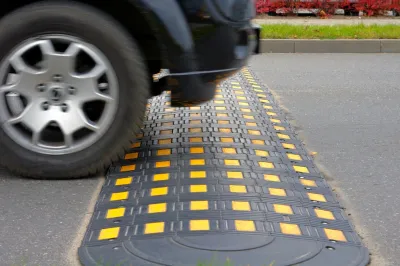
In a piece in Bloomberg, David Zipper expounds on the virtues of the humble speed hump, a simple-to-install, cost-effective, and (mostly) popular traffic control device that has proven to be one of the most effective way to slow dangerous traffic and improve road safety.
As Zipper explains, “Safety interventions like road diets, bike lanes and automatic red light cameras often trigger fierce opposition from neighbors and business owners; speed humps, on the other hand, tend to be wildly popular among those who live nearby.”
Speed humps are defined by the National Association of City Transportation Officials (NACTO) as “traffic calming devices between 3 and 4 inches tall and 12 to 14 feet wide, with a “ramp length” of 3 to 6 feet and a slope between 1:10 and 1:25.” This differentiates them from speed bumps, which are taller and usually located in parking lots. Speed humps typically cost roughly $5,000 to install, a much lower cost than many other traffic interventions.
Research shows that speed humps, particularly in a series, are effective at slowing down drivers. “ In Arlington, Virginia, the installation of speed humps led to a 43% reduction in drivers exceeding 20 miles per hour. A 2020 study of South Korea found that speed humps slowed vehicle speeds by 18.4% to 24%.” While they can’t be installed in all situations, speed humps can be a key part of an effective traffic calming strategy.
FULL STORY: All Hail the Humble Speed Hump

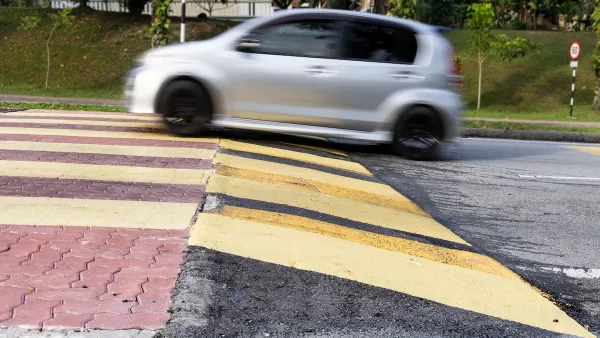
Maryland Plans Quick-Build Complete Streets Projects
The state will use low-cost interventions to improve road safety in five Maryland counties.
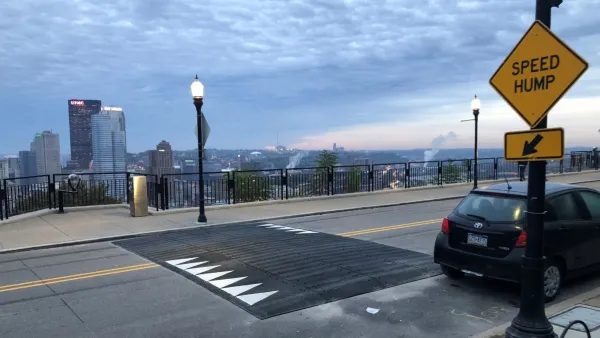
Pittsburgh Excels at Low-Cost, Quick-Build Traffic Calming
The city’s traffic calming initiative has led to a 6 percent average reduction in speeds on corridors with recent interventions.
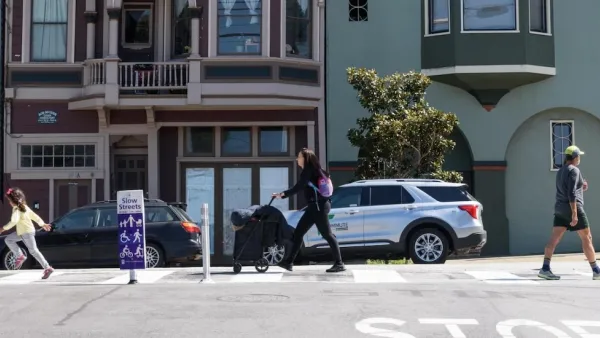
San Francisco Slow Streets Bucks Citywide Trend, Reducing Injuries by 61 Percent
Low-cost interventions aimed at slowing traffic are making a major impact on road safety.

Planetizen Federal Action Tracker
A weekly monitor of how Trump’s orders and actions are impacting planners and planning in America.

The state-sanctioned urbicide of Austin
People don’t kill cities. Freeways do.

US to reduce Colorado River water deliveries to Mexico
A new Colorado Treaty amendment reduces Mexico’s Colorado River water allocation by 250,000 acre feet.

5 New England states march closer to 800 megawatt wind energy project
Securing federal approval for the project may be complicated under the Trump administration, which has historically been hostile towards domestic wind power.

Baltimore to break ground on $50 million Transit Priority Project
The project will bring faster bus trips, safer streets and better bike connections to Baltimore.

Airbnb launches $250 million 'last-dollar financing' housing accelerator, makes first investment in Austin
The company will put $6.4 million towards affordable housing development in Texas’ capital.

FREE Course: Walkable City 1: Why Walkability?
After describing his path towards focusing on walkability as the essence of good planning, Jeff Speck marches through his five principal reasons for making more walkable places.
Reinventing Malls: Planning Alchemy—Turning Gray Fields Into Gold
The course focuses on the opportunities and imperatives that shape reinvention of mall sites.

Eagle County Government
Harvard University Graduate School of Design
Nashville Planning Department
The Architects Foundation
University of Cincinnati Online
The Pocatello Development Authority
The Urban Renewal Agency of the City of Pocatello
Journal of the American Planning Association