In LA County, even amid budget challenges, new parks are opening, targeted investments are being made in underserved communities, and long-term plans are guiding progress — demonstrating a sustained commitment to parks as essential infrastructure.



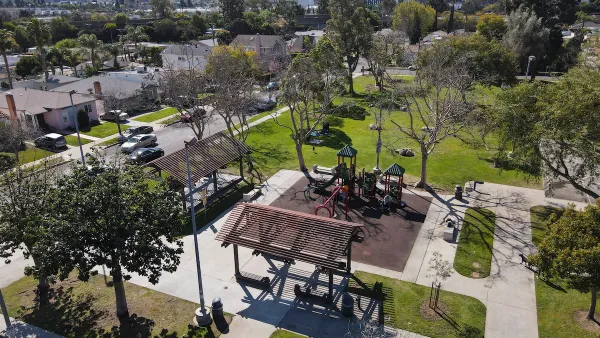
July’s Park and Recreation Month highlights the vital role parks play in community health, sustainability, and resilience — even amid financial challenges. In Los Angeles County, projects long in planning have come to fruition despite budget constraints, demonstrating a commitment to expanding equitable access to green space. Recent milestones include the opening of the Hilda L. Solis Aquatic Center in West Puente Valley, which provides much-needed water-based recreation, and the creation of a pocket park in West Athens-Westmont, a high-need community where the park now brings more residents within a 10-minute walk of green space.
Investment in parks is continuing through record-breaking funding initiatives like the $58 million round of competitive Measure A grants, the largest in the Los Angeles County Regional Park and Open Space District’s history. This funding, with at least 30% dedicated to high-need communities, is being used for planning, natural lands, multi-use trails, and water conservation projects. Despite reductions in programming and operational hours due to budget constraints, the county’s sustained investment underscores a commitment to equity and public access to recreational spaces.
The City of Los Angeles is also updating its Park Needs Assessment to ensure future investments reflect population growth, community voices, and equitable distribution of resources. These efforts are rooted in strong partnerships among government agencies, nonprofits, and residents, proving that progress is possible even in difficult times. As new facilities open and long-term plans take shape, Los Angeles County is demonstrating that parks are not just amenities but essential infrastructure that offer continuity, stability, and hope.
FULL STORY: Promises Kept: Parks and Progress in Uncertain Times


Parks for All: LA Looks to Residents to Help Shape Park Equity and Access
Los Angeles is launching a citywide park needs assessment to gather resident input on improving its park system, addressing inequities in access, and making the case for increased funding and long-term investments.
LA County Releases Funding for Parkland Acquisition in Underserved Communities
Los Angeles County has released $14.5 million in Measure A grant funds to support parkland acquisition in high-need areas, aiming to create additional green spaces and advance environmental justice and equity.

LA's Top Parks, Ranked
TimeOut just released its list of the top 26 parks in the L.A. area, which is home to some of the best green spaces around.

The state-sanctioned urbicide of Austin
People don’t kill cities. Freeways do.

US to reduce Colorado River water deliveries to Mexico
A new Colorado Treaty amendment reduces Mexico’s Colorado River water allocation by 250,000 acre feet.

New Jersey’s second-largest city bans standalone data centers
Jersey City will continue to allow co-location facilities, such as those meant for research institutions that store their own data.

Amtrak not solely to blame for New Jersey commuter rail's unreliability, report finds
A new study from the Garden State Initiative found that NJ Transit’s budget grew 20% across a 4 year period, but reliability declined significantly over the same period.

EPA erases limits on planet-warming pollution from power plants
Under Monday’s plan, power plants would still have some limits on how much mercury, arsenic and other contaminants they can emit.

Phoenix announces new on-demand transit service, more frequent RAPID buses
Both new services will launch in October, and are part of Phoenix's Project Effective Access Solutions for Easing Congestion.

FREE Course: Walkable City 1: Why Walkability?
After describing his path towards focusing on walkability as the essence of good planning, Jeff Speck marches through his five principal reasons for making more walkable places.
Reinventing Malls: Planning Alchemy—Turning Gray Fields Into Gold
The course focuses on the opportunities and imperatives that shape reinvention of mall sites.

Eagle County Government
Harvard University Graduate School of Design
Nashville Planning Department
The Architects Foundation
University of Cincinnati Online
The Pocatello Development Authority
The Urban Renewal Agency of the City of Pocatello
Journal of the American Planning Association