Road construction workers dug up buried streetcar rails and brickwork paving.


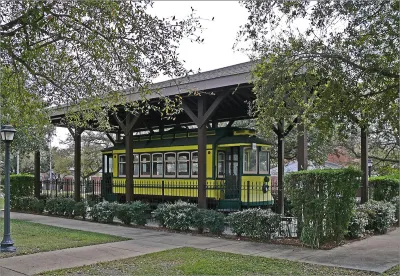
Construction work in Houston has unearthed old streetcar rails and brick pavers, begging the question: when did Houston have a streetcar?
Ariana Garcia describes the find for the Houston Chronicle, noting that “The discovery quickly drew attention online, prompting a wave of reactions from curious residents and nostalgic Houstonians. On Reddit, users expressed both surprise and regret over what had been lost and covered up.”
According to Garcia, “Streetcars operated in Houston from 1868 to 1940. According to the University of Houston's Houston History Magazine, the main line ran from downtown's Franklin Street, near Buffalo Bayou, up Washington Avenue and Heights Boulevard to 19th Street.” Today, some brick-paved roads remain — some as important historical markers of Houston’s Freedmen’s Town neighborhood, populated by formerly enslaved people — but the streetcars are long gone.
Earlier this month, construction workers also discovered defunct streetcar rails in Chicago.
Read the full story: Unexpected discovery at Houston worksite offers glimpse into city's history

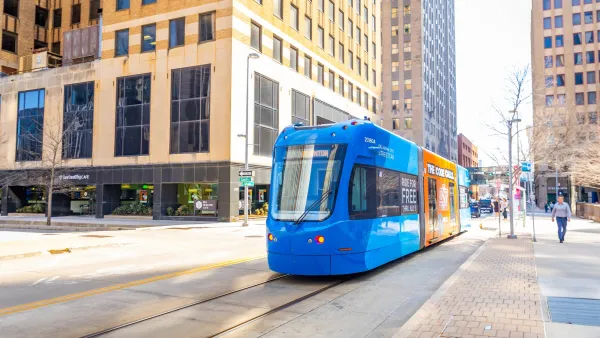
OKC streetcar will stay fare-free after ridership shot up 74%
The downtown streetcar saw a surge in ridership after it eliminated fares in January.
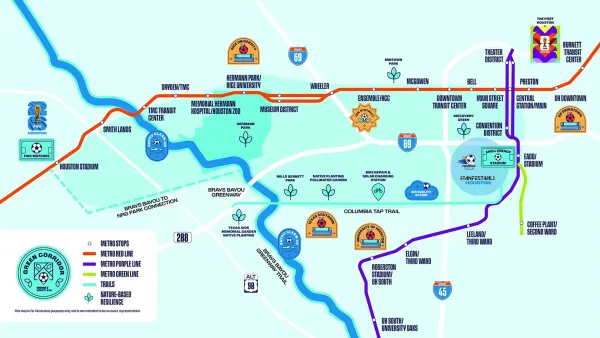
Houston improved walkability ahead of the World Cup. Will it last?
Some mobility advocates say the city's 'Green Corridor' amounts to 'lipstick on a pig' rather than a true commitment to better transit and walking infrastructure.
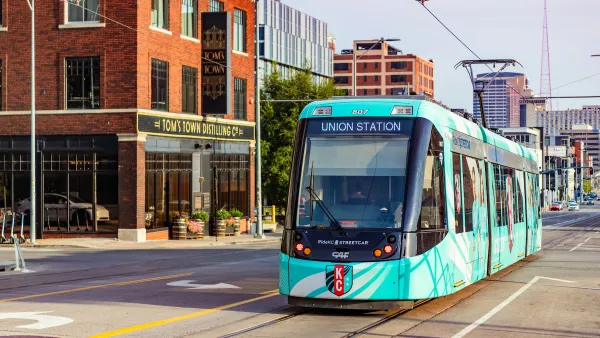
Kansas City completes riverfront streetcar extension
The streetcar line carries a third of the region's transit riders.

Planetizen Federal Action Tracker
A weekly monitor of how Trump’s orders and actions are impacting planners and planning in America.

The state-sanctioned urbicide of Austin
People don’t kill cities. Freeways do.

Colorado’s Largest Data Center Could Rise Next to Homes — Without a Public Hearing
The proposed campus would consume 11 times the power of Denver International Airport; as it has across the country, opposition mounts.

Nation's most wind-powered state turns to coal as data centers increase energy demand
For the first time in decades, Iowa has increased its generation of coal power.

NYC cools commuters with city's first rain garden above a bus stop
New York City officials say the plants in the rain garden can absorb 16 gallons of rainwater during heavy storms.

Brightline West’s future may rely on $6 billion federal loan
The company has until Nov. 2 to make a $400 million equity investment into its proposed high-speed rail line.

FREE Course: Walkable City 1: Why Walkability?
After describing his path towards focusing on walkability as the essence of good planning, Jeff Speck marches through his five principal reasons for making more walkable places.
Reinventing Malls: Planning Alchemy—Turning Gray Fields Into Gold
The course focuses on the opportunities and imperatives that shape reinvention of mall sites.


Greater Baltimore Committee
Eagle County Government
Harvard University Graduate School of Design
The Architects Foundation
University of Cincinnati Online
The Pocatello Development Authority
The Urban Renewal Agency of the City of Pocatello
Journal of the American Planning Association