Los Angeles has become a cultural stronghold for Native Hawaiians on the mainland, offering a sense of community, continuity, and connection for those living far from the Islands.


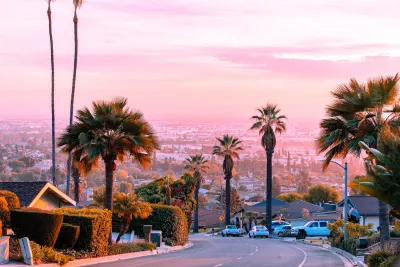
Each year, tens of thousands gather at Alondra Park in Lawndale, California, to celebrate the Ho'olaule'a Festival, the largest Hawaiian cultural event in Los Angeles. The vibrant festival is a powerful symbol of the enduring ties that Native Hawaiians maintain with their heritage — even 2,500 miles from the Islands. Southern California, especially LA County, now hosts the largest concentration of Native Hawaiians outside of Hawaii, a reflection of a decades-long migration driven by economic factors, educational opportunities, and a strong sense of community connection.
As reported by Christine Hitt, the draw of Los Angeles lies in its established Hawaiian cultural infrastructure, including hula schools, civic clubs, music concerts, and aloha festivals. These provide a “Hawaii-adjacent” life for many who feel cultural longing but find comfort in a robust pan-Pacific Islander community. Leaders like Ipo Alkhaldi and Heather Heleloa, both active in community-building and cultural preservation, help connect diasporic Hawaiians through digital platforms and civic engagement. Their work also highlights the evolving nature of Hawaiian identity, which now includes those born and raised on the mainland with varying degrees of connection to Hawaii itself.
While some Native Hawaiians relocate due to Hawaii's high cost of living and limited job prospects, many — like filmmaker Christen Marquez — grapple with broader issues of displacement tied to colonization and historical loss of land. Through storytelling, activism, and cultural expression, Marquez and others are reshaping the narrative of what it means to be Hawaiian in the diaspora. For them, Los Angeles is not just a place of residence — it’s a space where generations of Hawaiians continue to thrive, find solidarity, and preserve their culture far from home.
FULL STORY: Why Native Hawaiians are choosing a California city over Hawaii

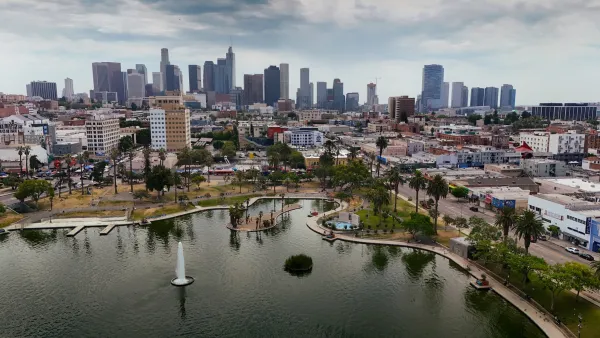
World Cup renews community spirit in LA's MacArthur Park
Soccer watch parties are bringing life back to the park that was recently the target of immigration raids and police actions.
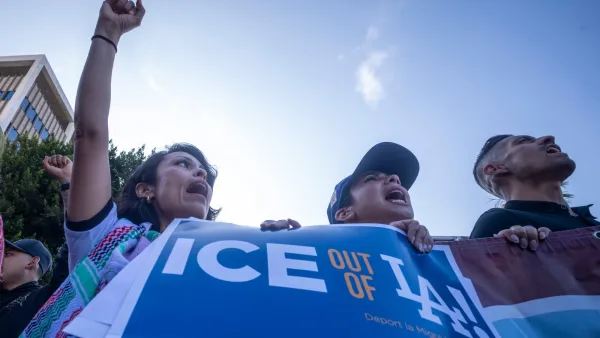
LA Considers Reviving Zoning Rule That Would Prohibit ICE Facilities for Children
A 2019 proposal would bar private detention facilities from contracting with federal agencies to detain minors.
US Population Growth Slowest Since 2020 Due to Declining Immigration
Net international migration dropped from 2.7 million to 1.3 million in the year spanning July 2024 to July 2025.

The state-sanctioned urbicide of Austin
People don’t kill cities. Freeways do.

US to reduce Colorado River water deliveries to Mexico
A new Colorado Treaty amendment reduces Mexico’s Colorado River water allocation by 250,000 acre feet.

New Jersey’s second-largest city bans standalone data centers
Jersey City will continue to allow co-location facilities, such as those meant for research institutions that store their own data.

Amtrak not solely to blame for New Jersey commuter rail's unreliability, report finds
A new study from the Garden State Initiative found that NJ Transit’s budget grew 20% across a 4 year period, but reliability declined significantly over the same period.

EPA erases limits on planet-warming pollution from power plants
Under Monday’s plan, power plants would still have some limits on how much mercury, arsenic and other contaminants they can emit.

Phoenix announces new on-demand transit service, more frequent RAPID buses
Both new services will launch in October, and are part of Phoenix's Project Effective Access Solutions for Easing Congestion.

FREE Course: Walkable City 1: Why Walkability?
After describing his path towards focusing on walkability as the essence of good planning, Jeff Speck marches through his five principal reasons for making more walkable places.
Reinventing Malls: Planning Alchemy—Turning Gray Fields Into Gold
The course focuses on the opportunities and imperatives that shape reinvention of mall sites.

Eagle County Government
Harvard University Graduate School of Design
Nashville Planning Department
The Architects Foundation
University of Cincinnati Online
The Pocatello Development Authority
The Urban Renewal Agency of the City of Pocatello
Journal of the American Planning Association