A bill that caps rent increases at 7 percent plus inflation is headed to the governor’s desk.


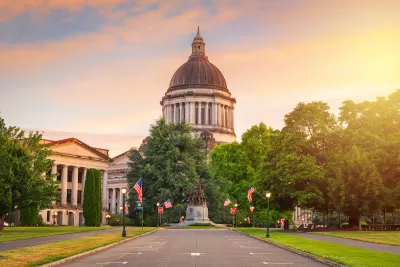
A Washington state bill that would cap rent increases is headed to the governor’s desk. “The House and Senate on Sunday, the last day of the legislative session, passed the rent increase limit at 7% plus inflation or 10%, whichever is lower,” explains Jake Goldstein-Street in the Washington State Standard.
The bill, HB 1217, would also cap rent increases for manufactured homes at 5 percent. Landlords are also not allowed to raise rent in the first year of tenancy.
However, the bill does not cover many single-family homes, and the cap was raised from the originally proposed 7 percent to gain enough political support. “Buildings owned by nonprofits or public housing authorities would be exempt from the limits. The same goes for duplexes, triplexes or fourplexes if the owner lives in one of the units, as well as new construction for its first dozen years.”
FULL STORY: Rent increase cap proposal heads to Washington governor

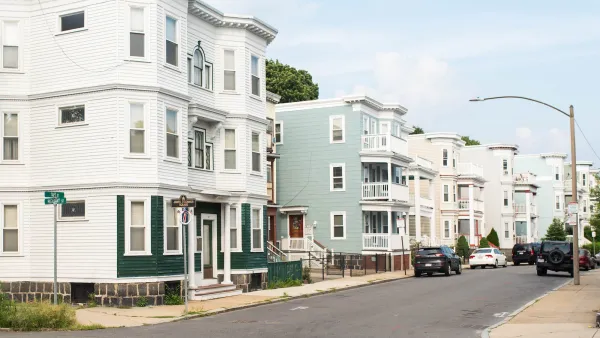
32 years after it was banned, could Massachusetts get rent control back?
In Massachusetts, the collection of more than 124,000 signatures makes it likely that a statewide rent control measure will be on the ballot in November.

Landlords Fined for First Time Under WA’s New Law Capping Rent Increases
For the first time, Washington’s attorney general has enforced the state’s new cap on rent hikes, fining eight landlords $2,000 each for violating the law.
Washington’s New Rent Cap Set Just Below 10% for 2026
Washington’s statewide cap on annual residential rent increases will be just shy of 10 percent next year, down slightly from its current level.

Planetizen Federal Action Tracker
A weekly monitor of how Trump’s orders and actions are impacting planners and planning in America.

The state-sanctioned urbicide of Austin
People don’t kill cities. Freeways do.

US to reduce Colorado River water deliveries to Mexico
A new Colorado Treaty amendment reduces Mexico’s Colorado River water allocation by 250,000 acre feet.

Baltimore to break ground on $50 million Transit Priority Project
The project will bring faster bus trips, safer streets and better bike connections to Baltimore.

Airbnb launches $250 million 'last-dollar financing' housing accelerator, makes first investment in Austin
The company will put $6.4 million towards affordable housing development in Texas’ capital.

Guerilla urbanists are building DIY bus stop benches in Chicago
A before-and-after of one of the bus stops with a new bench. The new benches are not officially sanctioned or permitted, but the residents who placed them hope they will be the start of a network of DIY benches across the city.

FREE Course: Walkable City 1: Why Walkability?
After describing his path towards focusing on walkability as the essence of good planning, Jeff Speck marches through his five principal reasons for making more walkable places.
Reinventing Malls: Planning Alchemy—Turning Gray Fields Into Gold
The course focuses on the opportunities and imperatives that shape reinvention of mall sites.

Eagle County Government
Harvard University Graduate School of Design
Nashville Planning Department
The Architects Foundation
University of Cincinnati Online
The Pocatello Development Authority
The Urban Renewal Agency of the City of Pocatello
Journal of the American Planning Association