Across the country, a median of 12.5 percent of workers continue to perform their jobs remotely.



A new list from SmartAsset reveals the U.S. cities with the highest percentage of remote workers. As Jaclyn DeJohn explains in The Herald Sun, a median of 12.5 percent of U.S. workers work from home.
The ranking shows that Frisco, Texas, part of the Dallas-Fort Worth metroplex, has the nation’s highest proportion of remote workers at 34.16 percent. In 22 other cities, over 25 percent of the workforce works from home. These include Seattle, Austin, Boulder, Portland (Oregon), and Atlanta. On the other end of the spectrum, just 1.58 percent of workers are remote in Odessa, Texas.
The five cities with the highest percentage of remote workers:
- Frisco Texas: 34.16 percent
- Berkeley, California: 31.29 percent
- Charlotte, North Carolina: 29.71 percent
- Carytown, North Carolina: 29.4 percent
- Carlsbad, California: 29.06 percent
This data can have major implications for cities. DeJohn notes that “the portion of workers operating remotely may impact the dynamics of a city. Where people spend most of their days may impact the food, transportation, and amenities sought by the population.”
Read the full story: Cities with the most people working from home


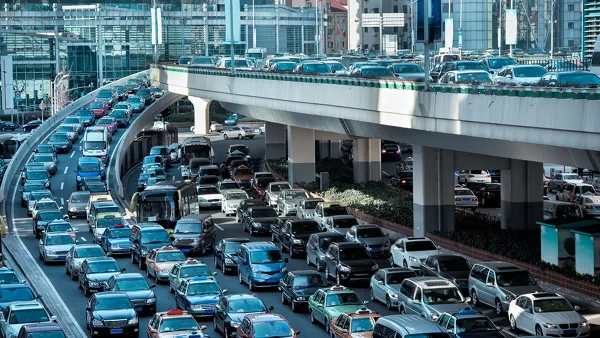
From 9-to-5 to Anytime: How Telecommuting Changes the Traffic Game
Not all cities have benefited equally from congestion relief brought on by shifting commuting patterns.
How Americans Spend Former Commute Time
Unsurprisingly, American workers whose commutes have been reduced or eliminated by new remote work arrangements are spending more time on rest, leisure, and childcare activities.
Some Commute Times Worsening Despite Remote Work Trends
The unpredictability of constantly changing commuting trends has some workers seeing much longer commute times as transportation agencies work to adjust to new travel patterns.

Planetizen Federal Action Tracker
A weekly monitor of how Trump’s orders and actions are impacting planners and planning in America.

‘Going backwards:’ Baltimore mayor, students rally against state's transit funding plan
Maryland's proposed six-year plan provides no funding for Baltimore’s BMORE bus program and reduces its road maintenance funding.

Detroit to transform waterfront with $2.2 billion investment
Developers will convert about 18 acres of unused parking lot space into civic spaces.

Newsom vetoes high-speed rail supervision bill after agency receives condemnatory audit
The audit found the CHSRA approved almost $600,000 in unallowable travel expenses.

Nation sees first electric plane-boat hybrid take off in public demo
The Viceroy Seaglider can fly at speeds of 180mph for up to 180 miles.

One of nation’s poorest counties to receive $6 billion data center
The developers estimate the project will create 200 permanent jobs and 1,000 temporary construction jobs.

FREE Course: Walkable City 1: Why Walkability?
After describing his path towards focusing on walkability as the essence of good planning, Jeff Speck marches through his five principal reasons for making more walkable places.
Reinventing Malls: Planning Alchemy—Turning Gray Fields Into Gold
The course focuses on the opportunities and imperatives that shape reinvention of mall sites.

City of Thousand Oaks
City of Wisconsin Rapids
Harvard University Graduate School of Design
The Architects Foundation
University of Cincinnati Online
Northern Illinois Transit Authority (NITA)
The Pocatello Development Authority
The Urban Renewal Agency of the City of Pocatello