The district’s fully electric fleet features vehicle-to-grid technology that lets buses act as batteries when not in use.


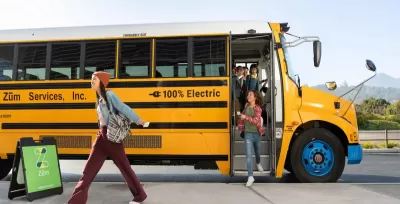
California’s Oakland Unified School District became the first in the nation to use a fully electric bus fleet to transport its students, according to an article in Grist by Matt Simon.
The buses not only replace dirtier diesel vehicles, but also serve as vehicle-to-grid batteries that can send energy back to the grid if needed. As Simon explains, “If every EV has V2G capability, that creates a distributed network of batteries for a utility to draw on when demand spikes. The nature of the school bus suits it perfectly for this, because it’s on a fixed schedule, making it a predictable resource for the utility.”
Because of their regular schedule and routes, school buses have ample extra power. The concept could expand to other types of vehicles such as garbage trucks, delivery vehicles, and passenger cars. “Basically, lots of batteries — big and small — parked idle at different times to send power back to the grid.”
FULL STORY: Oakland’s new school buses don’t just reduce pollution — they double as giant batteries

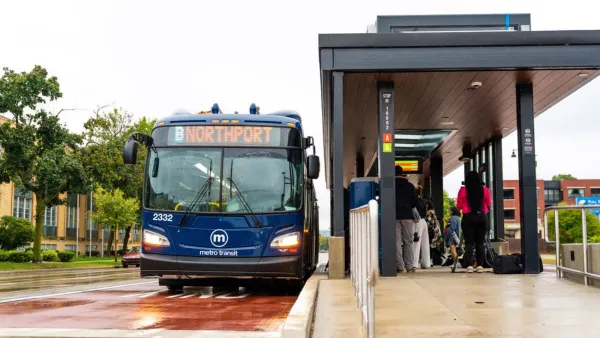
Madison’s Electric Buses Keep Running Through Brutal Freeze
A late January winter storm offered a key test for electric buses that often falter in cold temperatures.
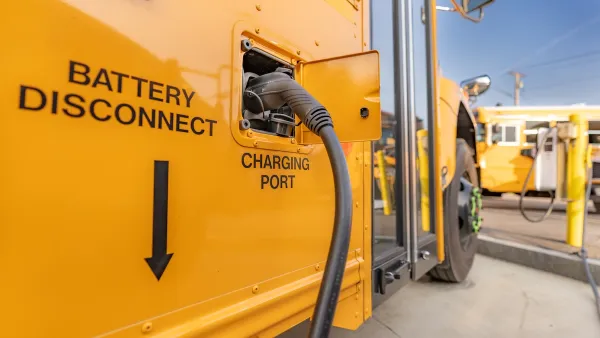
Opinion: Supporting Electric School Buses is the Right Thing to Do — and Fiscally Conservative
Why switching school bus fleets to electric vehicles is good for students, the environment, and school districts’ finances.

Rooftop Solar on Mexico City Market to Power 300 Transit Buses
A solar project atop a massive food market will provide electricity to Mexico City's public transit buses.

Planetizen Federal Action Tracker
A weekly monitor of how Trump’s orders and actions are impacting planners and planning in America.

The state-sanctioned urbicide of Austin
People don’t kill cities. Freeways do.

US to reduce Colorado River water deliveries to Mexico
A new Colorado Treaty amendment reduces Mexico’s Colorado River water allocation by 250,000 acre feet.

Baltimore to break ground on $50 million Transit Priority Project
The project will bring faster bus trips, safer streets and better bike connections to Baltimore.

Airbnb launches $250 million 'last-dollar financing' housing accelerator, makes first investment in Austin
The company will put $6.4 million towards affordable housing development in Texas’ capital.

Guerilla urbanists are building DIY bus stop benches in Chicago
A before-and-after of one of the bus stops with a new bench. The new benches are not officially sanctioned or permitted, but the residents who placed them hope they will be the start of a network of DIY benches across the city.

FREE Course: Walkable City 1: Why Walkability?
After describing his path towards focusing on walkability as the essence of good planning, Jeff Speck marches through his five principal reasons for making more walkable places.
Reinventing Malls: Planning Alchemy—Turning Gray Fields Into Gold
The course focuses on the opportunities and imperatives that shape reinvention of mall sites.

Eagle County Government
Harvard University Graduate School of Design
Nashville Planning Department
The Architects Foundation
University of Cincinnati Online
The Pocatello Development Authority
The Urban Renewal Agency of the City of Pocatello
Journal of the American Planning Association