The city aims to have a zero-emissions transit fleet by 2040.


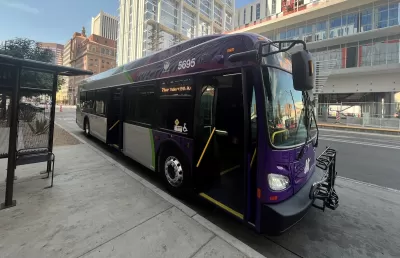
Phoenix is closer to its goal of a zero-emissions public transit fleet by 2040 as the first set of hybrid buses make their way onto the city’s streets.
“The city of Phoenix said the newly dispatched buses are equipped with a hybrid-electric motor and batteries and a biodiesel-fueled engine, a combination meant to produce greater fuel economy and less pollution,” according to an article from KTAR News.
The buses have a range of over 500 miles and can hold up to 53 passengers. The fleet is funded by a $16.3 million grant from the Federal Transit Administration. Phoenix Public Transit currently has a fleet of 500 buses that run on alternative fuels such as natural gas and biodiesel. The grant is aimed at replacing the entire fleet with clean vehicles and installing charging and maintenance infrastructure.
Read the full story: First batch of Phoenix Public Transit hybrid buses pass testing, active on city roads
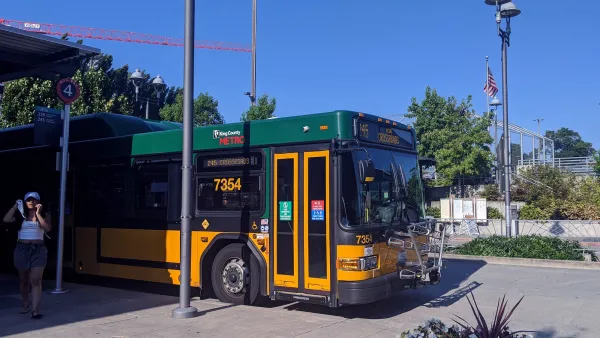
King County Metro adds 3,000 weekly bus trips, more connections to rail
King County Metro and Sound Transit are both making major adjustments to their bus networks to improve light rail connectivity across the region.
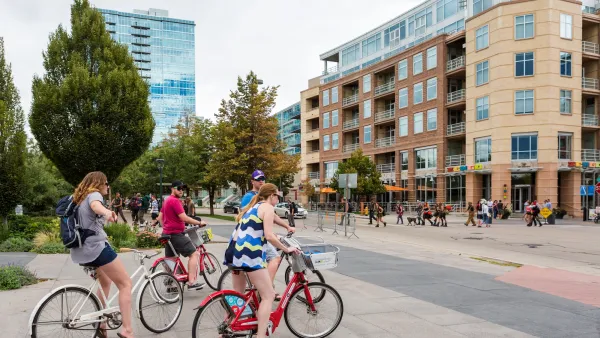
Denver mayor announces 'Mile High Line' vision for interconnected bike and transit routes
The mayor emphasized building more housing near transit lines and bike paths, but failed to address planned transit service cuts.
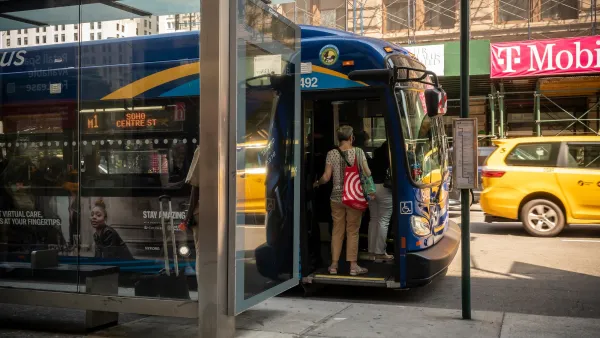
New NYC plan promises to speed up buses by up to 20%
Although the mayor's plan to make buses fare-free faces an uphill battle, a new proposal could make them significantly faster.

Planetizen Federal Action Tracker
A weekly monitor of how Trump’s orders and actions are impacting planners and planning in America.

California plans to bury El Niño’s downpour
If the state plays its cards right, it may be able to store a billion acre-feet of El Niño’s water in aquifers.

Desperate measures: Advocates weigh draining Lake Powell to fill Colorado River
Draining the reservoir could reduce evaporation losses by a couple hundred thousand acre-feet.

Mamdani’s pied-à-terre tax survives legal challenge
A panel of judges found that the plaintiffs failed to demonstrate injury as a result of New York City's implementation of the tax.

Eastern Nebraska is running out of electricity
Data centers and electrification are straining eastern Nebraska’s grid, throttling economic development.

Seattle passes record-breaking transit services expansion
Proposition 1 will double the city’s transit tax to add 95,000 more bus trips and preserve 180,000 bus trips annually.

FREE Course: Walkable City 1: Why Walkability?
After describing his path towards focusing on walkability as the essence of good planning, Jeff Speck marches through his five principal reasons for making more walkable places.
Reinventing Malls: Planning Alchemy—Turning Gray Fields Into Gold
The course focuses on the opportunities and imperatives that shape reinvention of mall sites.

City of Rosemead
Rutgers University, Edward J. Bloustein School of Planning and Public Policy
One Hundred Miles
University of Michigan School for Environment and Sustainability (SEAS)
Hunter College, City University of New York (CUNY)
The Architects Foundation
City of Cambridge
Montrose County
The Pocatello Development Authority