The law allows local jurisdictions to set tax rates for vacant lots and properties to discourage speculation and stimulate development.


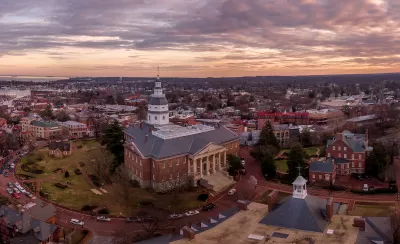
A new Maryland state law signed by Governor Wes Moore, House Bill 2, allows local governments to impose higher taxes on the owners of vacant properties, reports Danielle J. Brown for Maryland Matters.
The bill is part of an effort to reduce the number of underused and vacant lots and encourage development and housing construction. “Baltimore City Councilmember Odette Ramos explained that raising the taxes on vacant property could help reduce the number of abandoned houses and lots in two ways: to incentivize property owners to revitalize the lot for habitation and to make it easier for local jurisdictions to acquire the abandoned property.”
A legislative analysis reveals that there are 242,361 vacant properties across Maryland. Brown notes that “The law does not establish a required tax rate on vacant properties, but it provides the authority for local jurisdictions to do so at their own volition.” Higher taxes can speed up the process of “judicial in rem foreclosure,” letting the city acquire properties for redevelopment more quickly.
FULL STORY: New Maryland law enables local jurisdictions to impose higher taxes on vacant properties

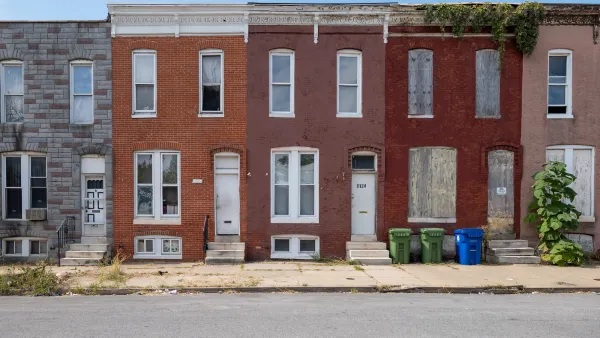
Baltimore Pushes ‘Whole Block’ Redevelopment Plan for Vacant Properties
The city will incentivize developers to take on projects that will renovate or redevelop unused city-owned properties.

How Effective are Philadelphia’s Keystone Opportunity Zones?
The impacts of a tax break designed to create jobs, stimulate development, and reduce blight are proving hard to track.

Detroit Mayor Proposes Vacant Lot Tax
A new tax plan would reform the city’s famously low vacancy tax rates in an effort to stimulate more housing development and limit speculation.

The state-sanctioned urbicide of Austin
People don’t kill cities. Freeways do.

US to reduce Colorado River water deliveries to Mexico
A new Colorado Treaty amendment reduces Mexico’s Colorado River water allocation by 250,000 acre feet.

New Jersey’s second-largest city bans standalone data centers
Jersey City will continue to allow co-location facilities, such as those meant for research institutions that store their own data.

Amtrak not solely to blame for New Jersey commuter rail's unreliability, report finds
A new study from the Garden State Initiative found that NJ Transit’s budget grew 20% across a 4 year period, but reliability declined significantly over the same period.

EPA erases limits on planet-warming pollution from power plants
Under Monday’s plan, power plants would still have some limits on how much mercury, arsenic and other contaminants they can emit.

Phoenix announces new on-demand transit service, more frequent RAPID buses
Both new services will launch in October, and are part of Phoenix's Project Effective Access Solutions for Easing Congestion.

FREE Course: Walkable City 1: Why Walkability?
After describing his path towards focusing on walkability as the essence of good planning, Jeff Speck marches through his five principal reasons for making more walkable places.
Reinventing Malls: Planning Alchemy—Turning Gray Fields Into Gold
The course focuses on the opportunities and imperatives that shape reinvention of mall sites.

Eagle County Government
Harvard University Graduate School of Design
Nashville Planning Department
The Architects Foundation
University of Cincinnati Online
The Pocatello Development Authority
The Urban Renewal Agency of the City of Pocatello
Journal of the American Planning Association