The directory aims to help governments and organizations improve planning practices to build healthier, more resilient communities.



The World Health Organization (WHO) has launched a resource directory to help planners and officials build healthier environments and reduce air pollution in urban spaces. “The directory, comprising nearly 200 open-access resources, serves as a vital online repository which offers invaluable insights and tools to promote the creation of healthier environments and enhance the well-being of communities worldwide.”
In a press release, the WHO highlights the link between planning and public health. “The way we plan and build our cities, towns or neighborhoods plays a big role in health promotion and disease prevention. Prioritizing health in the planning and design of our living environments is crucial to reduce health risks and improve the well-being of all communities.”
The directory is designed to be a centralized repository of resources such as “tools that quantify the health and/or socioeconomic impact of planning and designing urban areas from a health perspective,” successful examples, and training materials and webinars on urban planning and health.
FULL STORY: WHO launches directory of resources for planning healthy environments

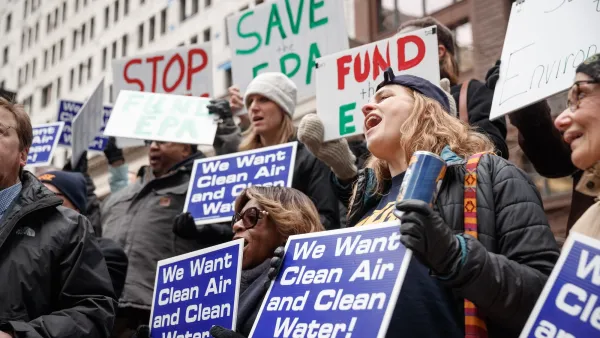
EPA Guts Emissions Regulations
The agency is eliminating the endangerment finding that underpins the agency’s authority to regulate greenhouse gas emissions.
‘Architectural Epidemiology:’ Centering Public Health in Urban Design
A new book asks, what if cities were designed around health equity?
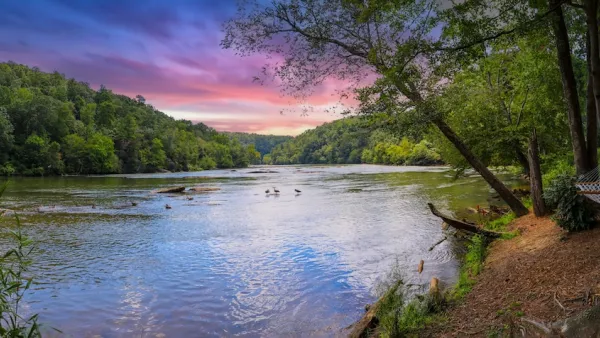
Comment: EPA Cuts will Send Atlanta Back to Eye-burning Ozone, Lung-damaging Smog, and Raw Sewage in the Chattahoochee River
A veteran political journalist takes stock of the hard-earned ground Georgia stands to lose with slashed environmental protection.

Planetizen Federal Action Tracker
A weekly monitor of how Trump’s orders and actions are impacting planners and planning in America.

The state-sanctioned urbicide of Austin
People don’t kill cities. Freeways do.

US to reduce Colorado River water deliveries to Mexico
A new Colorado Treaty amendment reduces Mexico’s Colorado River water allocation by 250,000 acre feet.

5 New England states march closer to 800 megawatt wind energy project
Securing federal approval for the project may be complicated under the Trump administration, which has historically been hostile towards domestic wind power.

Baltimore to break ground on $50 million Transit Priority Project
The project will bring faster bus trips, safer streets and better bike connections to Baltimore.

Airbnb launches $250 million 'last-dollar financing' housing accelerator, makes first investment in Austin
The company will put $6.4 million towards affordable housing development in Texas’ capital.

FREE Course: Walkable City 1: Why Walkability?
After describing his path towards focusing on walkability as the essence of good planning, Jeff Speck marches through his five principal reasons for making more walkable places.
Reinventing Malls: Planning Alchemy—Turning Gray Fields Into Gold
The course focuses on the opportunities and imperatives that shape reinvention of mall sites.

Eagle County Government
Harvard University Graduate School of Design
Nashville Planning Department
The Architects Foundation
University of Cincinnati Online
The Pocatello Development Authority
The Urban Renewal Agency of the City of Pocatello
Journal of the American Planning Association