Unlike many sports arenas surrounded by seas of concrete, the new CPKC Stadium has parking for just 2,000 vehicles, hoping most sports fans will arrive by transit.


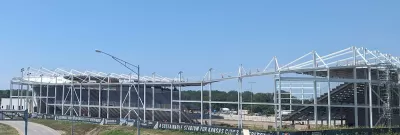
“CPKC Stadium, the new venue where the KC Current will play, can seat 11,500 fans but will only have parking available for 2,000 vehicles,” reports Mike Hendricks for the Kansas City Star, an unusual move for a major sports stadium.
The limited parking is a feature, not a bug, Hendricks adds. “Rather, the presumption from the beginning was that many fans would arrive by public bus, shuttle buses from remote parking locations, ride share services, bicycles and on foot, according to a 64-page traffic study dated last May.” However, a planned streetcar extension to the stadium has been delayed by as much as two years, and a route from the nearest streetcar stop lacks a sidewalk.
The article points out that the limited parking “was never a secret,” and the master plan calls for more parking and mixed-use structures in the area.
FULL STORY: Minimal parking at the new KC Current stadium is no mistake — it was part of the plan

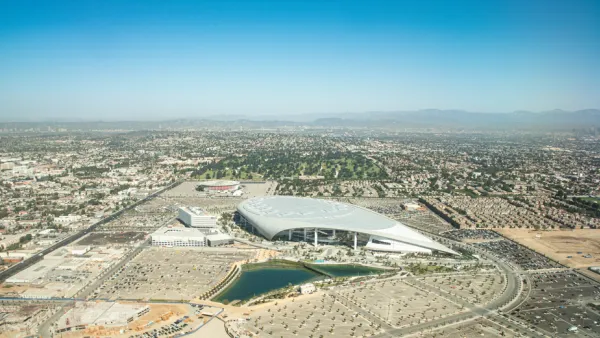
Stadiums, Space, and the City
Stadium footprints are enormous. It's time to get smarter about how they are used.

Parking Is King in Kansas City
Huge amounts of land are dedicated to asphalt in Kansas City—about twice as much land than is dedicated to buildings. Fiscal dependence on vehicular infrastructure, however, is not unique to Kansas City.
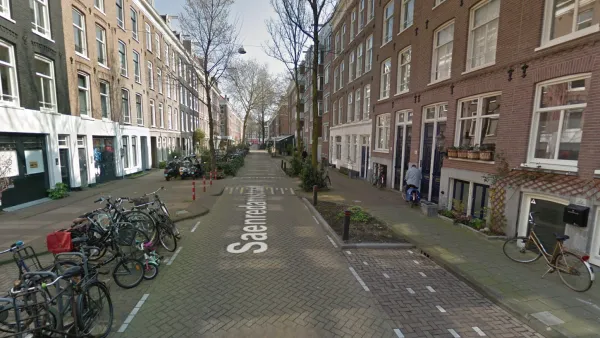
Watch: How to Remove Thousands of Parking Spaces
What the city of Amsterdam will gain by removing cars from on-street parking space.

Planetizen Federal Action Tracker
A weekly monitor of how Trump’s orders and actions are impacting planners and planning in America.

The state-sanctioned urbicide of Austin
People don’t kill cities. Freeways do.

US to reduce Colorado River water deliveries to Mexico
A new Colorado Treaty amendment reduces Mexico’s Colorado River water allocation by 250,000 acre feet.

5 New England states march closer to 800 megawatt wind energy project
Securing federal approval for the project may be complicated under the Trump administration, which has historically been hostile towards domestic wind power.

Baltimore to break ground on $50 million Transit Priority Project
The project will bring faster bus trips, safer streets and better bike connections to Baltimore.

Airbnb launches $250 million 'last-dollar financing' housing accelerator, makes first investment in Austin
The company will put $6.4 million towards affordable housing development in Texas’ capital.

FREE Course: Walkable City 1: Why Walkability?
After describing his path towards focusing on walkability as the essence of good planning, Jeff Speck marches through his five principal reasons for making more walkable places.
Reinventing Malls: Planning Alchemy—Turning Gray Fields Into Gold
The course focuses on the opportunities and imperatives that shape reinvention of mall sites.


Eagle County Government
Harvard University Graduate School of Design
Nashville Planning Department
The Architects Foundation
University of Cincinnati Online
The Pocatello Development Authority
The Urban Renewal Agency of the City of Pocatello
Journal of the American Planning Association