A vast majority of residents support a plan to limit vehicular traffic through the city’s center.


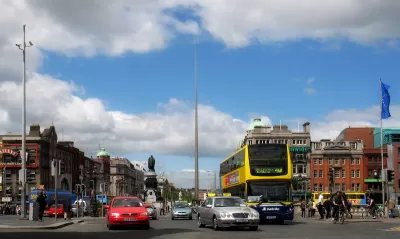
The Irish capital of Dublin will start prohibiting vehicles from passing through its city center unless their final destination is there, reports Feargus O'Sullivan in Bloomberg CityLab.
“By displacing vehicles merely passing through on their way to somewhere else to beltways further out, the plan promises to both ease current traffic congestion and allow for the creation of new pedestrian streets and plazas that will make Dublin’s heart an altogether more pleasant place to linger.” Officials say the goal of the plan is to reduce traffic by 60 percent downtown.
As O’Sullivan explains, “The tools used to achieve this are fairly simple: two “bus gates” on either bank of the River Liffey will prevent private vehicles from crossing, and several streets will be reconfigured so that vehicles traveling into downtown are routed along loops that ultimately direct them back out in the same direction.”
Cities like Paris, Amsterdam, and London have enacted policies limiting vehicular traffic in their central cores or charging cordon pricing. Unlike in other places, the plan has overwhelming support from Dublin residents.
Read the full story: Dublin to Ban Driving Through Its City Center

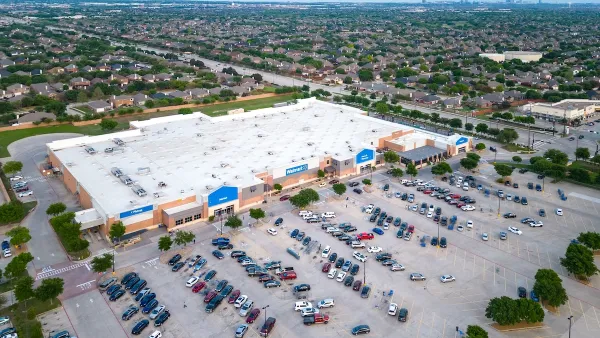
Is Driving Traffic to Big Box Stores True Economic Development?
Strong Towns’ Charles Marohn argues that planning for ‘commerce’ perpetuates an unsustainable, car-centric development model.
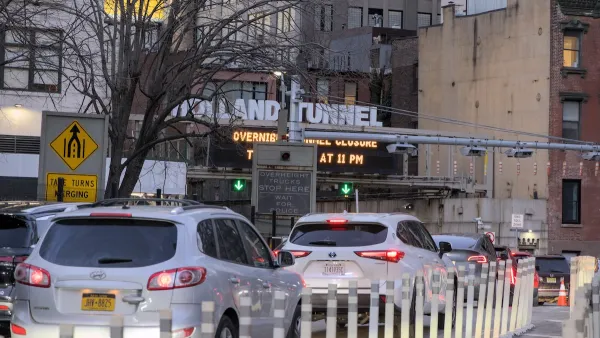
NYC Congestion Pricing Continues to Show Positive Results
While the Trump administration attempts to revoke the program’s federal approval, congestion pricing continues to reduce traffic, speed up bus travel times, and improve air quality in Manhattan.
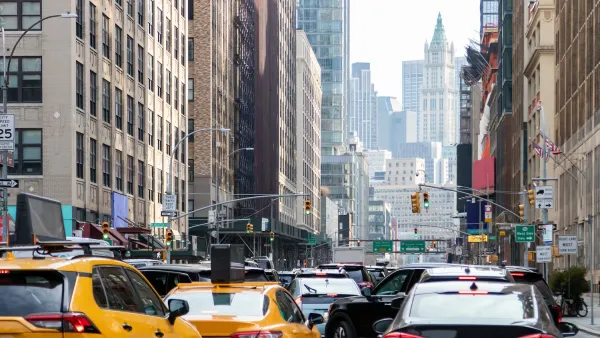
Agreement Keeps NYC Congestion Pricing Alive Through Summer
The tolling program will continue while a court considers the city’s lawsuit against the Trump administration.

Planetizen Federal Action Tracker
A weekly monitor of how Trump’s orders and actions are impacting planners and planning in America.

The state-sanctioned urbicide of Austin
People don’t kill cities. Freeways do.

US to reduce Colorado River water deliveries to Mexico
A new Colorado Treaty amendment reduces Mexico’s Colorado River water allocation by 250,000 acre feet.

Nation's most wind-powered state turns to coal as data centers increase energy demand
For the first time in decades, Iowa has increased its generation of coal power.

NYC cools commuters with city's first rain garden above a bus stop
New York City officials say the plants in the rain garden can absorb 16 gallons of rainwater during heavy storms.

Brightline West’s future may rely on $6 billion federal loan
The company has until Nov. 2 to make a $400 million equity investment into its proposed high-speed rail line.

FREE Course: Walkable City 1: Why Walkability?
After describing his path towards focusing on walkability as the essence of good planning, Jeff Speck marches through his five principal reasons for making more walkable places.
Reinventing Malls: Planning Alchemy—Turning Gray Fields Into Gold
The course focuses on the opportunities and imperatives that shape reinvention of mall sites.

Eagle County Government
Harvard University Graduate School of Design
Nashville Planning Department
The Architects Foundation
University of Cincinnati Online
The Pocatello Development Authority
The Urban Renewal Agency of the City of Pocatello
Journal of the American Planning Association