The proposal would eliminate minimum lot sizes, setback requirements of more than five feet, minimum square footage, and “neighborhood character” requirements.


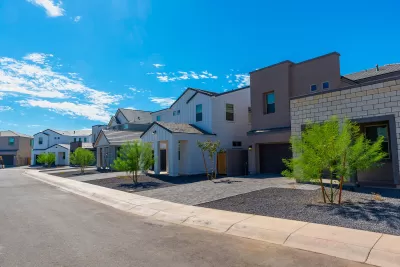
Concerned that home ownership is becoming increasingly unaffordable, “Republicans in the Arizona Legislature are trying for a second time to limit the ability of cities and towns to set minimum standards for single-family homes,” according to a recent article in the East Valley Tribune. The first attempt, an even more far-reaching plan, failed last year. This latest attempt joins other legislation currently being considered by Arizona lawmakers in an attempt to address barriers to housing production.
Two identical bills, HB 2570 and SB 1112, were introduced in both state legislative chambers and would affect cities of 50,000 residents or more. If passed, it would erase minimum lot sizes, eliminate any setback requirement of more than five feet for new development, bar cities from setting minimum square footage for new homes, and block limits on how much of the lot around the home beyond the minimum street setback. In addition, it prevents cities from adopting “neighborhood character” requirements that dictate specific aesthetic elements.
The intent behind the bills is to encourage development of smaller, more affordable “starter homes,” reports Bob Christie of Capitol Media Services, which Arizona Senate President Warren Petersen says cities and counties have caused a shortage of because of lengthy approval processes, city-imposed “impact fees,” and design reviews, which drive costs up for developers.
Critics of the proposals say it would effectively strip municipalities of their zoning rights and local residents’ voice in them via the planning process.
State preemption of local zoning as a solution to the housing affordability crisis is a growing trend of late. Legislators in Nebraska and Colorado also recently pursued state zoning regulations that superseded local regulations, with much pushback at the local level.
Read the full story: Cities, towns fear state powerplay on zoning
Poll: 2/3 of Virginians Don’t Trust Local Governments to Address Housing Crisis
Three-quarters of residents say the state needs to do more to address housing supply and affordability.

State-Level Land Use Reform Gains Strength
More state legislatures are considering stricter land use and zoning regulations as a solution to the housing crisis. Some local jurisdictions are pushing back.

Colorado Lawmakers Renew Zoning Reform Efforts
The state legislature will consider a package of land use laws aimed at increasing the housing supply and reducing housing costs.

Planetizen Federal Action Tracker
A weekly monitor of how Trump’s orders and actions are impacting planners and planning in America.

California plans to bury El Niño’s downpour
If the state plays its cards right, it may be able to store a billion acre-feet of El Niño’s water in aquifers.

Desperate measures: Advocates weigh draining Lake Powell to fill Colorado River
Draining the reservoir could reduce evaporation losses by a couple hundred thousand acre-feet.

Chicago voters approve permanent festival grounds, penalty for vacant property owners
Currently, major summer and fall festivals take over public parks for weeks at a time, drawing criticism from nearby residents

NYC votes to cut outdoor dining red tape, speed up permitting
New York City also voted to allow the Department of Transportation to begin work on urgent projects before notifying elected officials.

California appears to reject Prop. 45
The proposition would have expanded the projects that qualify for a streamlined environmental review, effectively paring down the California Environmental Quality Act.

FREE Course: Walkable City 1: Why Walkability?
After describing his path towards focusing on walkability as the essence of good planning, Jeff Speck marches through his five principal reasons for making more walkable places.
Reinventing Malls: Planning Alchemy—Turning Gray Fields Into Gold
The course focuses on the opportunities and imperatives that shape reinvention of mall sites.

City of Rosemead
Rutgers University, Edward J. Bloustein School of Planning and Public Policy
One Hundred Miles
Hunter College, City University of New York (CUNY)
The Architects Foundation
University of Cincinnati Online
City of Cambridge
Montrose County
The Pocatello Development Authority