Regulations that prohibit multifamily housing and smaller lot sizes contribute to a growing gulf between housing supply and demand.


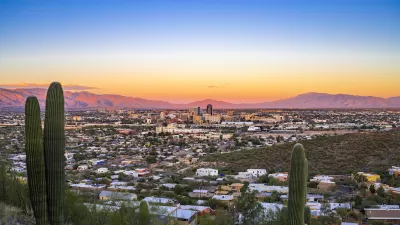
According to an article by Alex Horowitz & Tushar Kansal for Pew, research shows that restrictive zoning laws are limiting new housing development in Arizona, driving up housing costs.
“Fundamentally, Arizona has too few homes available for sale or rent. The state’s population grew 14.7% from 2010 to 2022, but its housing stock increased by only 11.9%.” Homelessness in the state rose by 51.5 percent between 2017 and 2022. However, “Throughout Arizona, numerous cities and towns reserve substantial portions of residential land for the construction of the most expensive housing: single-unit detached homes, often with large lots and substantial parking requirements.” In Tucson, multifamily housing is permitted on just 12 percent of land.
Larger homes and lots also prompt higher usage of water, an increasingly scarce resource in Arizona and the Southwest. “A nationwide study that included data from Phoenix Water Services found that single-family homes in Phoenix used an average of 331 gallons per day, whereas each home in a multifamily development used 182 gallons per day (45% less).”
FULL STORY: Restrictive Zoning Is Raising Housing Costs and Homelessness in Arizona


DC Residents Want Affordability Over ‘Character’
A poll finds that most residents want to see changes in zoning and land use laws that unlock more housing construction in the District and improve affordability.
New Jersey Calls for 85,000 New Housing Units
A state law known as the Mount Laurel Doctrine mandates that each jurisdiction accommodate enough new housing units to meet the local demand for affordable housing.
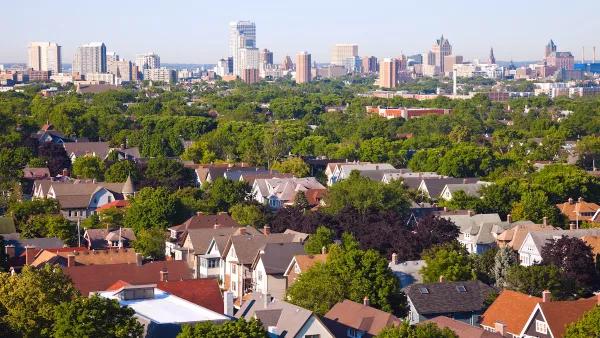
‘Growing MKE’ Zoning Reform Plan Would Expand Milwaukee Housing Options
Proponents of the plan say the changes would help reverse decades of discriminatory housing policies.

Planetizen Federal Action Tracker
A weekly monitor of how Trump’s orders and actions are impacting planners and planning in America.

The state-sanctioned urbicide of Austin
People don’t kill cities. Freeways do.

US to reduce Colorado River water deliveries to Mexico
A new Colorado Treaty amendment reduces Mexico’s Colorado River water allocation by 250,000 acre feet.

5 New England states march closer to 800 megawatt wind energy project
Securing federal approval for the project may be complicated under the Trump administration, which has historically been hostile towards domestic wind power.

Baltimore to break ground on $50 million Transit Priority Project
The project will bring faster bus trips, safer streets and better bike connections to Baltimore.

Airbnb launches $250 million 'last-dollar financing' housing accelerator, makes first investment in Austin
The company will put $6.4 million towards affordable housing development in Texas’ capital.

FREE Course: Walkable City 1: Why Walkability?
After describing his path towards focusing on walkability as the essence of good planning, Jeff Speck marches through his five principal reasons for making more walkable places.
Reinventing Malls: Planning Alchemy—Turning Gray Fields Into Gold
The course focuses on the opportunities and imperatives that shape reinvention of mall sites.

Eagle County Government
Harvard University Graduate School of Design
Nashville Planning Department
The Architects Foundation
University of Cincinnati Online
The Pocatello Development Authority
The Urban Renewal Agency of the City of Pocatello
Journal of the American Planning Association