Proposals to narrow streets often meet resistance from emergency responders concerned about safety and access.


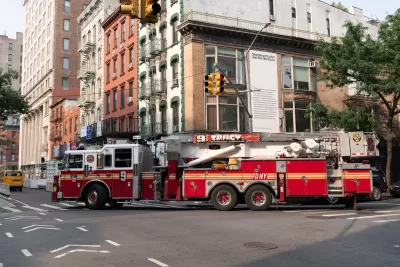
In an article for Strong Towns, Asia Mieleszko outlines how road safety advocates can collaborate with local fire departments to support traffic calming methods and narrower streets without compromising emergency response.
For example, in Jersey City, “the city would erect short-term installations—‘for as little as six hours’—and invite first responders to maneuver the simulation. Sometimes these installations would take place on city streets and other times in municipal parking lots, something she notes any city could replicate.” This helped fire department officials understand how the adjusted lanes would impact their operations. Barkha Patel, Jersey City’s director of infrastructure, says the same is true of other city programs, such as parklets.
“Involving city agencies on the ground floor of the city’s plans has been indispensable to the city’s Vision Zero strategy,” Mieleszko writes. “Coupled with very temporary installations, the city figured out an inexpensive yet productive way to nurture buy-in not only from emergency services but also the broader community.”
FULL STORY: How To Get Your Fire Department on Board With Narrowing Streets

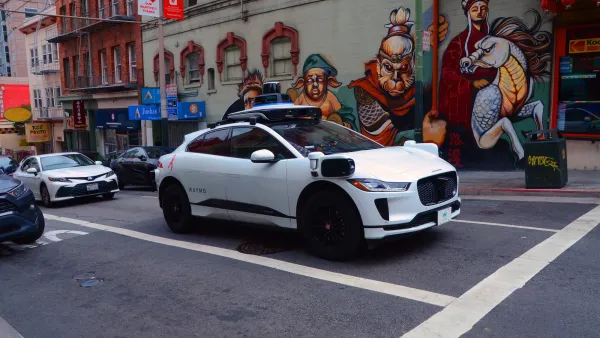
Feds say robotaxis interfering with first responders is a 'functional insufficiency,' demand solutions by August
The NHTSA issued a letter to autonomous carmakers, noting that 'Every second matters when law enforcement officers, firefighters, or paramedics are answering a call.'
New Federal Grant Rules Could Kill Detroit Road Diets
Millions in federal dollars for safe streets could be in jeopardy after federal agencies changed conditions for grant funding.
Study: Bike Lanes, Traffic Calming Don’t Impact First Responders
Despite common concerns that narrower traffic lanes and bike infrastructure can slow emergency response, response times in one study didn’t change.

The state-sanctioned urbicide of Austin
People don’t kill cities. Freeways do.

US to reduce Colorado River water deliveries to Mexico
A new Colorado Treaty amendment reduces Mexico’s Colorado River water allocation by 250,000 acre feet.

New Jersey’s second-largest city bans standalone data centers
Jersey City will continue to allow co-location facilities, such as those meant for research institutions that store their own data.

Amtrak not solely to blame for New Jersey commuter rail's unreliability, report finds
A new study from the Garden State Initiative found that NJ Transit’s budget grew 20% across a 4 year period, but reliability declined significantly over the same period.

EPA erases limits on planet-warming pollution from power plants
Under Monday’s plan, power plants would still have some limits on how much mercury, arsenic and other contaminants they can emit.

Phoenix announces new on-demand transit service, more frequent RAPID buses
Both new services will launch in October, and are part of Phoenix's Project Effective Access Solutions for Easing Congestion.

FREE Course: Walkable City 1: Why Walkability?
After describing his path towards focusing on walkability as the essence of good planning, Jeff Speck marches through his five principal reasons for making more walkable places.
Reinventing Malls: Planning Alchemy—Turning Gray Fields Into Gold
The course focuses on the opportunities and imperatives that shape reinvention of mall sites.

Eagle County Government
Harvard University Graduate School of Design
Nashville Planning Department
The Architects Foundation
University of Cincinnati Online
The Pocatello Development Authority
The Urban Renewal Agency of the City of Pocatello
Journal of the American Planning Association