Central Ohio needs roughly 14,000 new housing units every year to keep up with demand.



Central Ohio will need 14,000 new homes per year for the next decade to keep up with its growing population, reports Kate Siefert for ABC 6. The region’s population is expected to reach above 3 million by 2050.
Like other regions around the country, the Columbus area has seen a spike in population growth as remote work shifts the equation for many workers and opens up new housing markets, in many cases raising prices and threatening to displace long-time residents. A majority of respondents to an ABC 6 poll in Central Ohio said they spend more than 30 percent of their income on housing, considered ‘housing insecure’ by federal measures.
A housing initiative proposed by the Columbus City Council calls for investment in affordable housing incentives and other ways to preserve current housing stock and ensure equity in housing. “Council has also proposed a vacant and foreclosure registry and said it would give the ability to have up-to-date contact information for the owners of foreclosed or vacant properties and legally hold property owners responsible for leaving abandoned properties in disrepair.”
FULL STORY: Columbus continues to battle affordable housing crisis amid surging population growth

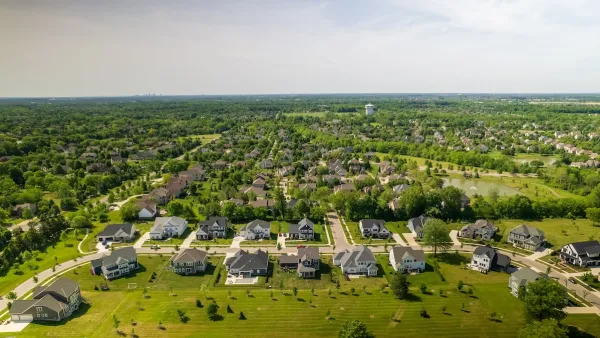
Central Ohio Leaders Form Regional Housing Partnership
A new coalition will seek to address growing housing needs and improve affordability by supporting new housing development across the region.

Central Ohio Housing Production Struggles to Keep up With Demand
The region’s population growth is outstripping the pace of housing construction.

Analysis: DC needs tens of thousands of new homes — not just 'zoned capacity'
Estimates for Washington DC's housing needs range from 15,000 to 170,000.

Planetizen Federal Action Tracker
A weekly monitor of how Trump’s orders and actions are impacting planners and planning in America.

The state-sanctioned urbicide of Austin
People don’t kill cities. Freeways do.

US to reduce Colorado River water deliveries to Mexico
A new Colorado Treaty amendment reduces Mexico’s Colorado River water allocation by 250,000 acre feet.

5 New England states march closer to 800 megawatt wind energy project
Securing federal approval for the project may be complicated under the Trump administration, which has historically been hostile towards domestic wind power.

Baltimore to break ground on $50 million Transit Priority Project
The project will bring faster bus trips, safer streets and better bike connections to Baltimore.

Airbnb launches $250 million 'last-dollar financing' housing accelerator, makes first investment in Austin
The company will put $6.4 million towards affordable housing development in Texas’ capital.

FREE Course: Walkable City 1: Why Walkability?
After describing his path towards focusing on walkability as the essence of good planning, Jeff Speck marches through his five principal reasons for making more walkable places.
Reinventing Malls: Planning Alchemy—Turning Gray Fields Into Gold
The course focuses on the opportunities and imperatives that shape reinvention of mall sites.

Eagle County Government
Harvard University Graduate School of Design
Nashville Planning Department
The Architects Foundation
University of Cincinnati Online
The Pocatello Development Authority
The Urban Renewal Agency of the City of Pocatello
Journal of the American Planning Association