The region’s population growth is outstripping the pace of housing construction.



Writing in The Columbus Dispatch, Jim Weiker wonders why the number of permits for new housing units in central Ohio is “well below where experts say construction needs to be.”
According to Erin Prosser, assistant director of housing strategies for the city of Columbus, “in 2010, central Ohio had 7% more homes than households. By 2020, following years of construction shortages and population growth, that number shrunk to 2%.” Yet only 8,033 permits for new homes were issued between January and August of this year.
This amounts to roughly 12,000 new homes per year, but the region needs 14,000 to 19,000 to keep up with demand. “Communities typically want the income tax that comes with jobs and offices, but are less interested in housing, noted Jon Melchi, executive director of the Building Industry of Central Ohio trade association.”
However, the Columbus area is issuing many more permits than other cities in the region, which are facing their own acute housing shortages, and the city approved $200 million in new affordable housing bonds. “In addition, the city is looking to revamp its zoning code to encourage more housing, especially more apartments along busy corridors such as Main and Broad streets.”
FULL STORY: Central Ohio needs more homes, so why aren't we seeing them?


Columbus City Council Proposes Actions to Stem Housing Crisis
Central Ohio needs roughly 14,000 new housing units every year to keep up with demand.
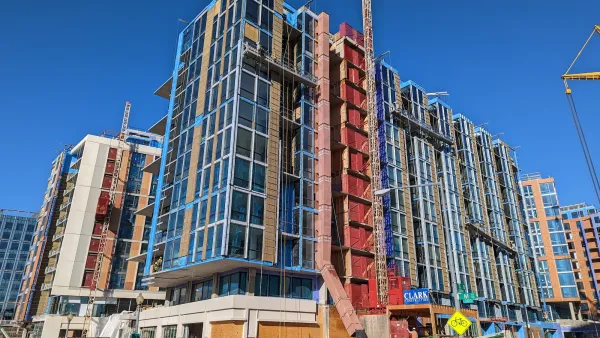
Analysis: DC needs tens of thousands of new homes — not just 'zoned capacity'
Estimates for Washington DC's housing needs range from 15,000 to 170,000.

Zero New Housing Permits Issued in Manhattan Last Month
July was a dead month when it comes to approving new housing units.

Planetizen Federal Action Tracker
A weekly monitor of how Trump’s orders and actions are impacting planners and planning in America.

The state-sanctioned urbicide of Austin
People don’t kill cities. Freeways do.

US to reduce Colorado River water deliveries to Mexico
A new Colorado Treaty amendment reduces Mexico’s Colorado River water allocation by 250,000 acre feet.

5 New England states march closer to 800 megawatt wind energy project
Securing federal approval for the project may be complicated under the Trump administration, which has historically been hostile towards domestic wind power.

Baltimore to break ground on $50 million Transit Priority Project
The project will bring faster bus trips, safer streets and better bike connections to Baltimore.

Airbnb launches $250 million 'last-dollar financing' housing accelerator, makes first investment in Austin
The company will put $6.4 million towards affordable housing development in Texas’ capital.

FREE Course: Walkable City 1: Why Walkability?
After describing his path towards focusing on walkability as the essence of good planning, Jeff Speck marches through his five principal reasons for making more walkable places.
Reinventing Malls: Planning Alchemy—Turning Gray Fields Into Gold
The course focuses on the opportunities and imperatives that shape reinvention of mall sites.

Eagle County Government
Harvard University Graduate School of Design
Nashville Planning Department
The Architects Foundation
University of Cincinnati Online
The Pocatello Development Authority
The Urban Renewal Agency of the City of Pocatello
Journal of the American Planning Association