The California train will begin using fuel made from used cooking oil and other non-fossil fuel sources.



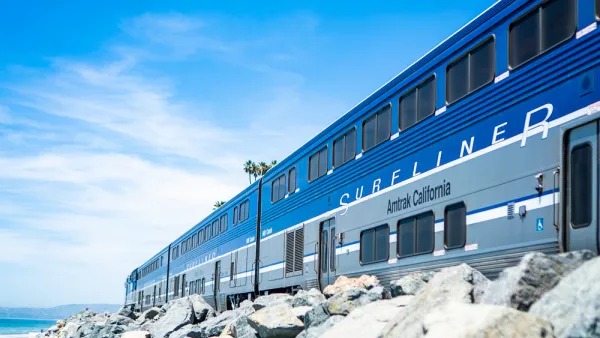
Amtrak will start using ‘renewable’ diesel oil in its Pacific Surfliner trails, reports Dan Zukowski in Smart Cities Dive.
The fuel will come from sources such as used cooking oil, which the Los Angeles—San Diego—San Luis Obispo (LOSSAN) Rail Corridor Agency claims will cut greenhouse gas emissions by 63 percent throughout its life cycle. “According to a LOSSAN spokesperson, no changes were needed for the locomotives to run on renewable diesel, and the cost per gallon is comparable to fossil-fuel-derived diesel fuel.”
The U.S. Department of Energy says while the net supply of renewable diesel has grown from 58 million gallons in 2011 to almost 1.9 billion in 2022, demand could soon outpace supply as more transit agencies look to replace fossil fuels with other sources. “‘Fuels made from wastes and residues are in particularly high demand because they satisfy GHG and feedstock policy objectives in the United States and Europe,’ according to a 2022 IEA report.”
FULL STORY: Amtrak switches to renewable diesel fuel for ‘Pacific Surfliner’ trains

Sea Level Rise Threatens an Iconic California Train
A scenic Southern California line could require relocation as rising sea levels destabilize the coastal soil that supports its tracks.

Amtrak unveils proposal to restructure, split into 3 divisions
Agency officials say the new structure would offer more transparency and accountability.

Amtrak makes over 160 stations fully accessible
Upgrades include new elevators, signage and accessible restrooms.

Planetizen Federal Action Tracker
A weekly monitor of how Trump’s orders and actions are impacting planners and planning in America.

The state-sanctioned urbicide of Austin
People don’t kill cities. Freeways do.

US to reduce Colorado River water deliveries to Mexico
A new Colorado Treaty amendment reduces Mexico’s Colorado River water allocation by 250,000 acre feet.

5 New England states march closer to 800 megawatt wind energy project
Securing federal approval for the project may be complicated under the Trump administration, which has historically been hostile towards domestic wind power.

Baltimore to break ground on $50 million Transit Priority Project
The project will bring faster bus trips, safer streets and better bike connections to Baltimore.

Airbnb launches $250 million 'last-dollar financing' housing accelerator, makes first investment in Austin
The company will put $6.4 million towards affordable housing development in Texas’ capital.

FREE Course: Walkable City 1: Why Walkability?
After describing his path towards focusing on walkability as the essence of good planning, Jeff Speck marches through his five principal reasons for making more walkable places.
Reinventing Malls: Planning Alchemy—Turning Gray Fields Into Gold
The course focuses on the opportunities and imperatives that shape reinvention of mall sites.

Eagle County Government
Harvard University Graduate School of Design
Nashville Planning Department
The Architects Foundation
University of Cincinnati Online
The Pocatello Development Authority
The Urban Renewal Agency of the City of Pocatello
Journal of the American Planning Association