With all apologies to the late great Fred Rogers.


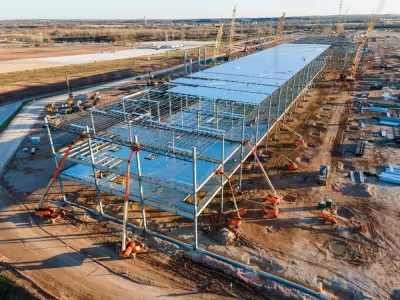
Elon Musk has paired up with Lennar, the nation’s second-largest home builder, to build a subdivision outside Austin, Texas, where Musk recently relocated some of his companies’ facilities. As Alissa Walker writes in Curbed, “The proposal is called Project Amazing, because — like all of Musk’s endeavors — it begins with a stupid joke.”
Details on the development—also like many of Musk’s endeavors—remain murky at this stage. As Walker points out, “Musk has built quite a bit of housing on the actual Boring Company campus, where rows of manufactured housing installed on the property as well as common areas including a playground are easily observable from the road.”
Read the full story: Elon Musk Is Building a Neighborhood

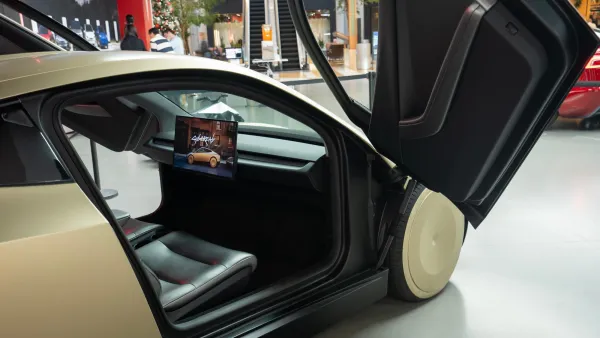
Tesla's steering wheel-less Cybercabs spotted on Austin streets
The company is testing 34 of its robotaxis in downtown Austin, but they have not been approved for public use.
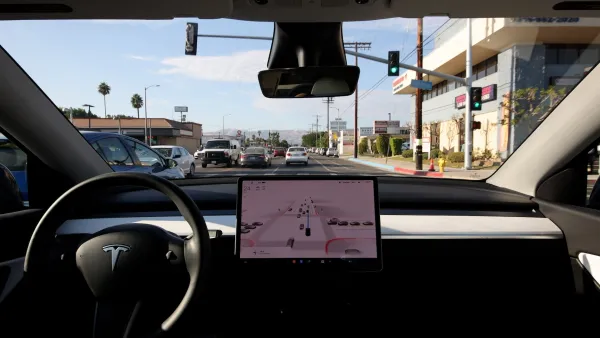
Tesla Launches Unsupervised Robotaxis in Austin
The company has been operating autonomous taxis with human safety drivers in the car in Austin since last June.
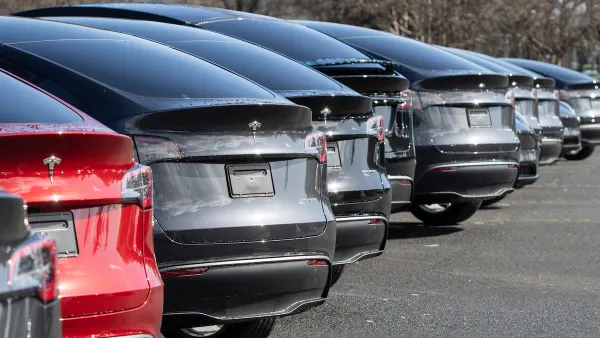
Texas Safety Advocates Raise Alarm in Advance of Tesla Robotaxi Launch
The company plans to deploy self-driving taxis in Austin with no oversight from state or local transportation agencies.

Planetizen Federal Action Tracker
A weekly monitor of how Trump’s orders and actions are impacting planners and planning in America.

The state-sanctioned urbicide of Austin
People don’t kill cities. Freeways do.

Colorado’s Largest Data Center Could Rise Next to Homes — Without a Public Hearing
The proposed campus would consume 11 times the power of Denver International Airport; as it has across the country, opposition mounts.

Nation's most wind-powered state turns to coal as data centers increase energy demand
For the first time in decades, Iowa has increased its generation of coal power.

NYC cools commuters with city's first rain garden above a bus stop
New York City officials say the plants in the rain garden can absorb 16 gallons of rainwater during heavy storms.

Brightline West’s future may rely on $6 billion federal loan
The company has until Nov. 2 to make a $400 million equity investment into its proposed high-speed rail line.

FREE Course: Walkable City 1: Why Walkability?
After describing his path towards focusing on walkability as the essence of good planning, Jeff Speck marches through his five principal reasons for making more walkable places.
Reinventing Malls: Planning Alchemy—Turning Gray Fields Into Gold
The course focuses on the opportunities and imperatives that shape reinvention of mall sites.

Greater Baltimore Committee
Eagle County Government
Harvard University Graduate School of Design
The Architects Foundation
University of Cincinnati Online
The Pocatello Development Authority
The Urban Renewal Agency of the City of Pocatello
Journal of the American Planning Association