Restaurant owners argue that new requirements for the city’s permanent outdoor dining program are practically impossible for most of them to meet.


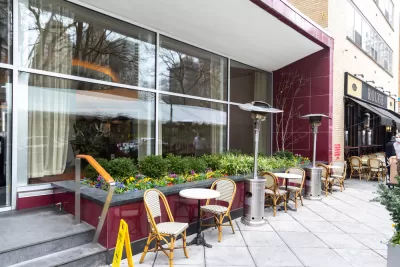
In an opinion piece for Philadelphia Magazine, Mike Strauss, co-owner of two Philadelphia restaurants, denounces the city’s updates to outdoor dining rules that, according to Strauss, “made it impossible for most restaurants to meet the requirements by the January 9th deadline.” According to Strauss, “When the city made the outdoor dining program permanent, it felt like they were telling us: ‘We are here to help, but only 10 percent of you.’”
As Strauss points out, other cities are treating the issue differently. “In New York City, the city has spent over a year speaking with legislative groups, neighborhood associations and businesses (not just restaurants) to come up with a program that could benefit small businesses while addressing concerns over traffic safety and accessibility.” But as cities decide the future of these programs, restaurant owners in other cities have experienced similar sticker shock when new requirements were issued.
Strauss stresses the importance of vibrant public spaces, including outdoor dining. As he puts it, “Philly is a great place to visit not because it’s a great place to park. Seeing people outside — enjoying themselves, laughing, eating — is much better than staring at cars.” Research bears this out, indicating that outdoor dining and open streets boost local business and economic activity.
FULL STORY: Our City Chose Illegal Parking Over Its Vibrant Dining Scene

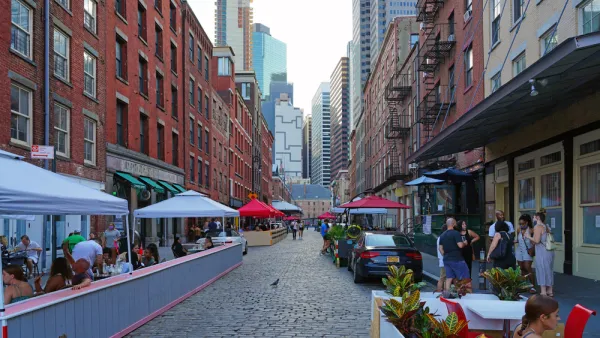
New York Outdoor Dining, Open Streets Programs Now Permanent
New York City will now be measurably less car-centric for the indefinite future.
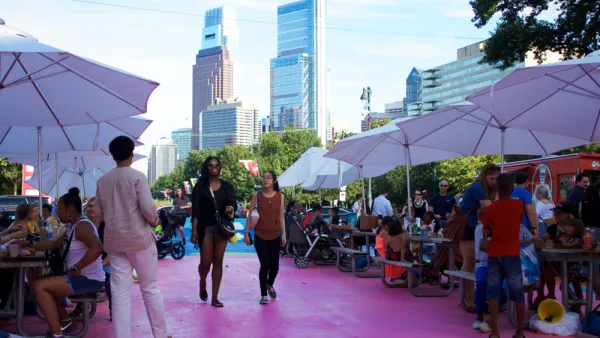
Covid-19 Outdoor Dining Rules Could Last Through 2021 in Philadelphia
Emergency outdoor dining regulations approved in June and set to expired in December could now be extended through the coming year.
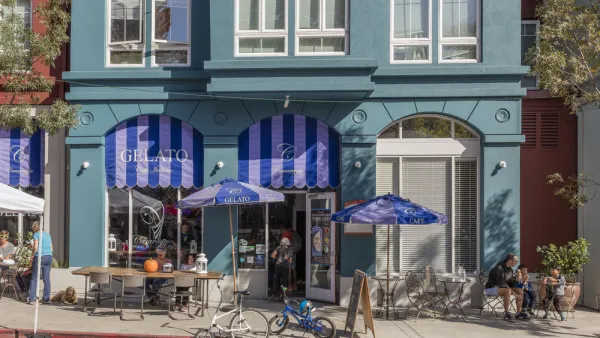
Berkeley Could Redefine the Al Fresco Streets Movement
The city of Berkeley is pursuing an aggressive plan to open the streets for outdoor dining as an economic development tool for local commercial businesses.

Planetizen Federal Action Tracker
A weekly monitor of how Trump’s orders and actions are impacting planners and planning in America.

The state-sanctioned urbicide of Austin
People don’t kill cities. Freeways do.

US to reduce Colorado River water deliveries to Mexico
A new Colorado Treaty amendment reduces Mexico’s Colorado River water allocation by 250,000 acre feet.

5 New England states march closer to 800 megawatt wind energy project
Securing federal approval for the project may be complicated under the Trump administration, which has historically been hostile towards domestic wind power.

Baltimore to break ground on $50 million Transit Priority Project
The project will bring faster bus trips, safer streets and better bike connections to Baltimore.

Airbnb launches $250 million 'last-dollar financing' housing accelerator, makes first investment in Austin
The company will put $6.4 million towards affordable housing development in Texas’ capital.

FREE Course: Walkable City 1: Why Walkability?
After describing his path towards focusing on walkability as the essence of good planning, Jeff Speck marches through his five principal reasons for making more walkable places.
Reinventing Malls: Planning Alchemy—Turning Gray Fields Into Gold
The course focuses on the opportunities and imperatives that shape reinvention of mall sites.

Eagle County Government
Harvard University Graduate School of Design
Nashville Planning Department
The Architects Foundation
University of Cincinnati Online
The Pocatello Development Authority
The Urban Renewal Agency of the City of Pocatello
Journal of the American Planning Association