The city is building on a smaller test project that uses sensors to gather data about traffic movement to help transportation planners make more informed traffic management decisions.


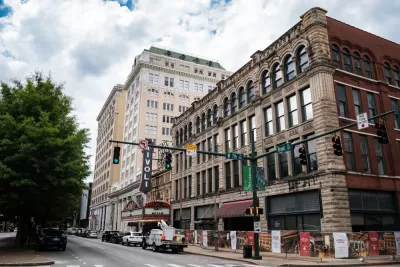
A ‘smart cities’ project in Chattanooga, Tennessee is creating a network of over 100 ‘smart intersections’ designed to inform better traffic management and map potential electric vehicle charging station locations.
According to an article by Maria Rachal in Smart Cities Dive, “The Chattanooga Department of Innovation Delivery and Performance, working with Seoul Robotics and the Center of Urban Informatics and Progress at the University of Tennessee at Chattanooga, are installing sensing technology in 86 downtown intersections, building on a testbed established in 2019.”
As part of the program, “sensors track and predict the movement of pedestrians and vehicles, which partners say allows them to better understand traffic flow and road user interactions, and identify potentially unsafe incidents.” The real-world data informs a ‘digital twin,’ a technology used to model potential outcomes. “The digital twin allows them to test and see how a change in traffic light timing, for example, could affect traffic flow.”
“While the earlier focus of the testbed largely centered on understanding safety issues surrounding vulnerable road users, [Center of Urban Informatics and Progress Founding Director Mina Sartipi] said this next phase of the testbed and its growing footprint will allow researchers to focus on ‘next-generation transportation,’ including electrification, connected vehicles, and potentially automated vehicles.”
Read the full story: Chattanooga building out ‘smart intersection network’

Maryland Adopts Smart Signals to Keep Traffic Flowing
The new signals will respond to congestion in real time throughout the day.
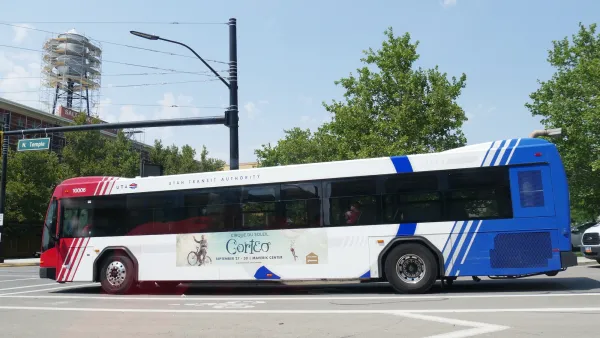
Salt Lake City debuts new bus rapid transit line
The third BRT line in the Utah Transit Authority system connects destinations from Taylorsville to the West Valley.
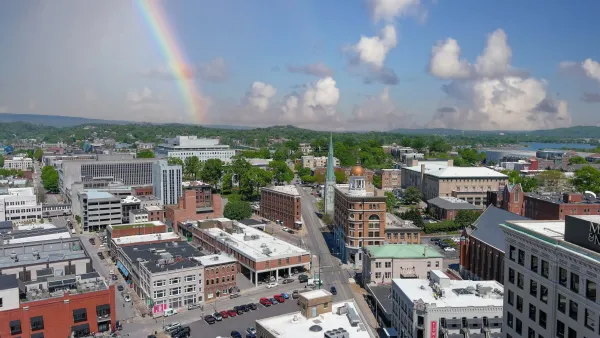
Chattanooga selects churches to build up to 400 affordable homes
Eight churches will move forward with plans to develop housing, from emergency shelter to single-family homes, on their properties.

Planetizen Federal Action Tracker
A weekly monitor of how Trump’s orders and actions are impacting planners and planning in America.

Eastern Nebraska is running out of electricity
Data centers and electrification are straining eastern Nebraska’s grid, throttling economic development.
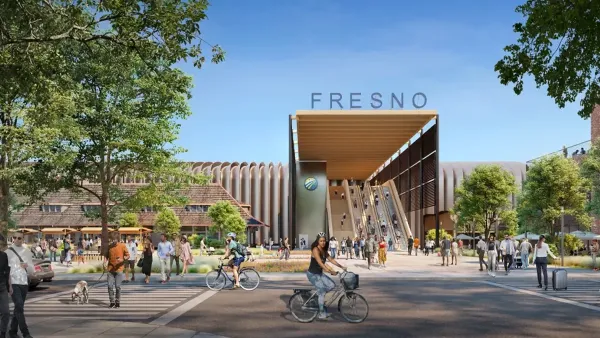
California High-Speed Rail Authority picks trainset manufacturer
The California High-Speed Rail Authority aims to start servicing passengers by 2033.

What could the future of LA transit look like under Raman?
The mayor-elect views broken sidewalks and potholes as crises that can be fixed with better governance.

States are counting on battery farms. Some towns don’t want them.
While fire safety has improved, some communities are still wary.

Dallas releases zoning code overhaul to officials
The drafted overhaul is over 400 pages long.

FREE Course: Walkable City 1: Why Walkability?
After describing his path towards focusing on walkability as the essence of good planning, Jeff Speck marches through his five principal reasons for making more walkable places.
Reinventing Malls: Planning Alchemy—Turning Gray Fields Into Gold
The course focuses on the opportunities and imperatives that shape reinvention of mall sites.

City of Rosemead
Rutgers University, Edward J. Bloustein School of Planning and Public Policy
One Hundred Miles
University of Michigan School for Environment and Sustainability (SEAS)
Hunter College, City University of New York (CUNY)
The Architects Foundation
City of Cambridge
The Pocatello Development Authority
The Urban Renewal Agency of the City of Pocatello