A new state program provides forgivable loans for residential repairs and retrofits to landlords who don’t raise rents by more than 3 percent.


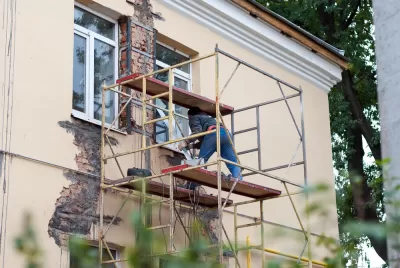
A new Pennsylvania state law aims to encourage property owners to repair and retrofit aging homes and buildings and simultaneously keep rents affordable for tenants. As Roshan Abraham explains in Next City, “The Whole Home Repair Act sets aside $125 million for grants to low and middle-income homeowners and forgivable loans for small landlords to repair or retrofit homes, along with money for staff and workforce development for three years.”
The program also bars landlords from raising rents by more than 3 percent annually to qualify for loan forgiveness. “In addition to the 3% limit on rent increases, small landlords who want their loans forgiven must offer a three-year lease renewal to tenants living in the unit receiving the repairs.” Low- and middle-income homeowners can access forgivable loans for repairs that many of them couldn’t afford to make otherwise.
Proponents of the law say that despite not being aimed at new construction, the legislation could still help alleviate the state’s housing shortage by keeping older units habitable and preventing them from becoming abandoned, but due to the scale of the need, the program is “not expected to meet the outstanding need for repair among Pennsylvania’s homes.”
Read the full story: A Pennsylvania Program Will Provide Free Repairs – So Long As Landlords Don’t Hike Rents

NYC landlords sue Mamdani administration over rent freeze
The suit charges the administration with unfairly promoting the rent freeze and accuses the city's Rent Guidelines Board of yielding to pressure from the mayor.

Affordable Housing Renovations Halt Mid-Air Amidst DOGE Clawbacks
HUD may rescind over a billion dollars earmarked for green building upgrades.

Preserving Houston’s ‘Naturally Occurring Affordable Housing’
Unsubsidized, low-cost rental housing is a significant source of affordable housing for Houston households, but the supply is declining as units fall into disrepair or are redeveloped into more expensive units.

Planetizen Federal Action Tracker
A weekly monitor of how Trump’s orders and actions are impacting planners and planning in America.

California plans to bury El Niño’s downpour
If the state plays its cards right, it may be able to store a billion acre-feet of El Niño’s water in aquifers.

Desperate measures: Advocates weigh draining Lake Powell to fill Colorado River
Draining the reservoir could reduce evaporation losses by a couple hundred thousand acre-feet.

Mamdani’s pied-à-terre tax survives legal challenge
A panel of judges found that the plaintiffs failed to demonstrate injury as a result of New York City's implementation of the tax.

Eastern Nebraska is running out of electricity
Data centers and electrification are straining eastern Nebraska’s grid, throttling economic development.

Seattle passes record-breaking transit services expansion
Proposition 1 will double the city’s transit tax to add 95,000 more bus trips and preserve 180,000 bus trips annually.

FREE Course: Walkable City 1: Why Walkability?
After describing his path towards focusing on walkability as the essence of good planning, Jeff Speck marches through his five principal reasons for making more walkable places.
Reinventing Malls: Planning Alchemy—Turning Gray Fields Into Gold
The course focuses on the opportunities and imperatives that shape reinvention of mall sites.

City of Rosemead
Rutgers University, Edward J. Bloustein School of Planning and Public Policy
One Hundred Miles
University of Michigan School for Environment and Sustainability (SEAS)
Hunter College, City University of New York (CUNY)
The Architects Foundation
City of Cambridge
Montrose County
The Pocatello Development Authority