The Biden administration announced guidance for $7.3 billion in funding under the PROTECT Formula Program at the end of July.


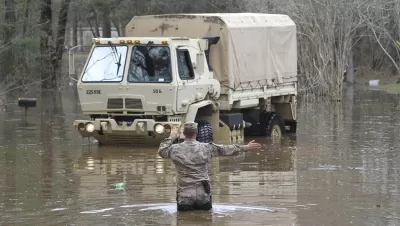
The U.S. Department of Transportation’s Federal Highway Administration (FHWA) recently announced new guidance and $7.3 billion in funding for the PROTECT Formula Program. PROTECT is a first-of-its kind program, made possible by the Infrastructure Investment and Jobs Act, “to help states and communities better prepare for and respond to extreme weather events like wildfires, flooding, and extreme heat,” according to an FHWA press release published on July 29.
“The new Promoting Resilient Operations for Transformative, Efficient, and Cost-Saving Transportation (PROTECT) Formula Program funding is available to states over five years to make transportation infrastructure more resilient to future weather events and other natural disasters by focusing on resilience planning, making resilience improvements to existing transportation assets and evacuation routes, and addressing at-risk highway infrastructure,” according to the press release.
The press release also indicates that transit projects, bicycle and pedestrian facilities, and port facilities will all be eligible for funding under the program.
“Eligible resilience improvements can involve adapting existing transportation infrastructure or new construction to keep communities safe by bolstering infrastructure’s ability to withstand extreme weather events and other physical hazards that are becoming more common and intense. Eligible project choices may include the use of natural or green infrastructure to buffer future storm surges and provide flood protection, as well as aquatic ecosystem restoration. PROTECT projects can also help improve the resilience of transportation networks that serve traditionally underserved and underrepresented communities, particularly during natural disasters and evacuations,” according to the press release.
More details of the PROTECT program are available on the FHWA website.
Read the full story: Biden Administration Announces New PROTECT Formula Program, $7.3 Billion from Bipartisan Infrastructure Law to Help Communities Build Resilient Infrastructure

$50 Billion 'Wildfire Risk Strategy' Targets the Wildland-Urban Interface
The U.S. Department of Agriculture in January announced an ambitious, and only partially funded, new plan to reduce wildfire risks for communities around the United States.
Coronavirus a Major New Complication for Extreme Weather Events
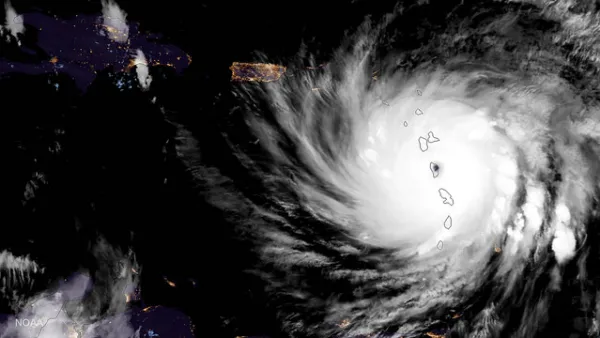
Climate change might not allow the relief from the pandemic that many have been hoping for as the country enters the summer months, as evacuations during the hurricane, tornado, and fire seasons will take on new elements of risk.
Over a Quarter of US Homes Face ‘Severe or Extreme’ Climate Risk
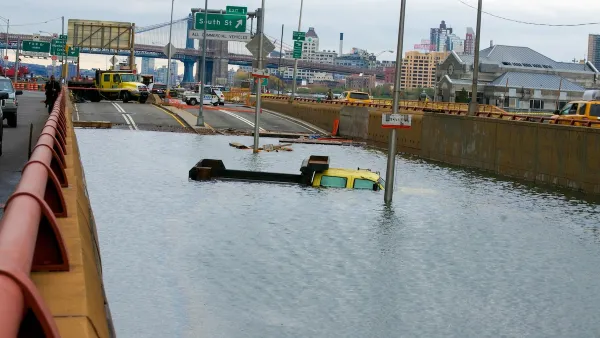
The number of U.S. homes at risk from hurricanes, fires, or flooding is valued at close to $13 trillion.

Planetizen Federal Action Tracker
A weekly monitor of how Trump’s orders and actions are impacting planners and planning in America.

Eastern Nebraska is running out of electricity
Data centers and electrification are straining eastern Nebraska’s grid, throttling economic development.

California High-Speed Rail Authority picks trainset manufacturer
The California High-Speed Rail Authority aims to start servicing passengers by 2033.

States are counting on battery farms. Some towns don’t want them.
While fire safety has improved, some communities are still wary.

Dallas releases zoning code overhaul to officials
The drafted overhaul is over 400 pages long.

NYC renovations for dangerous, ‘mercilessly crammed’ street delayed until 2027
Construction was supposed to begin this fall.

FREE Course: Walkable City 1: Why Walkability?
After describing his path towards focusing on walkability as the essence of good planning, Jeff Speck marches through his five principal reasons for making more walkable places.
Reinventing Malls: Planning Alchemy—Turning Gray Fields Into Gold
The course focuses on the opportunities and imperatives that shape reinvention of mall sites.

City of Rosemead
Rutgers University, Edward J. Bloustein School of Planning and Public Policy
One Hundred Miles
University of Michigan School for Environment and Sustainability (SEAS)
Hunter College, City University of New York (CUNY)
The Architects Foundation
City of Cambridge
The Pocatello Development Authority
The Urban Renewal Agency of the City of Pocatello