The largest undeveloped private property in L.A. County is now part of a protected ecological area that will preserve habitat and expand wildlife corridors between the San Gabriel, Sierra Madre, and Santa Susanna mountains.


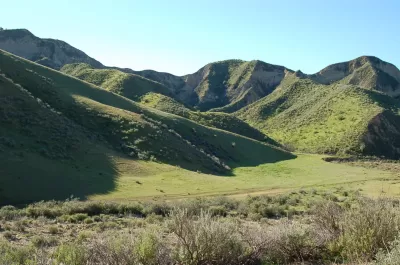
With the acquisition of 6,000 acres of open space, California is a step closer in its effort to conserve 30 percent of the state’s land and coastal waters by 2030, also referred to as the 30×30 initiative. The largest undeveloped private property in Los Angeles County is now part of a protected ecological area that will preserve habitat and expand wildlife corridors between the San Gabriel, Sierra Madre, and Santa Susanna mountains.
The 6,006-acre Hathaway/Temescal Ranch property is 40 miles northwest of downtown Los Angeles and adjacent to both the Angeles National Forest and the Los Padres National Forest between Castaic Reservoir and Lake Piru. Hathaway/Temescal Ranch is land that has been used for ranching and grazing, but other than a modest ranch home, it is undeveloped. The property includes wetlands, rolling hills and is within the flight path for condors from the nearby Sespe Condor Sanctuary.
The property was acquired in three phases by the nonprofit Trust for Public Land, and transferred to the Mountains Recreation and Conservation Authority, a local government agency exercising joint powers of the Santa Monica Mountains Conservancy, and the Conejo and Rancho Simi Recreation and Park Districts. The California Wildlife Conservation Board was key to acquiring the land and funded nearly half of the purchase, including $3.5 million to secure the final phase.
The property sits within a Los Angeles County-designated “Significant Ecological Area.” It helps create critical east to west linkage between the San Gabriel and Sierra Madre mountains as well as a north to south linkage between the Sierra Madre and Santa Susanna mountains, both highlighted in the South Coast Missing Linkages Project, which is a comprehensive plan for a regional network that would maintain and restore critical habitat linkages between existing reserves. These linkages form the backbone of a conservation strategy for Southern California.
The acquisition is another step forward toward California’s 30×30 conservation goals. This commitment is part of an international movement to protect nature across the planet. A few months ago, the California Natural Resources Agency released Pathways to 30×30: Accelerating Conservation of California’s Nature, responding to Governor Gavin Newsom’s nature-based solutions executive order, which identified California’s lands as a critical yet underutilized sector in the fight against climate change.
Read the full story: 6,000+ acres of LA County ranch land purchased for preservation
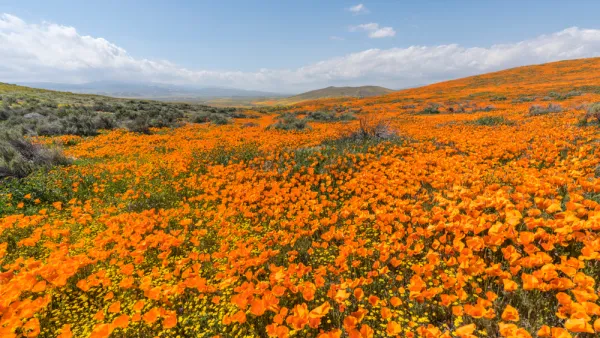
L.A.’s 30x30 Goals: Conservation and Restoration
Learn more about Los Angeles County's Parks Needs Assessment Plus (PNA+) which focuses on land conservation and restoration, regional recreation, and rural recreation to address climate change, protect biodiversity, and meet the needs of residents.
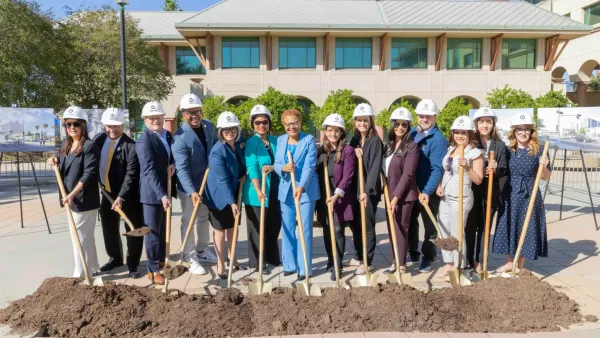
LA begins work on $4 billion light rail through San Fernando Valley
The project will be the areas first light rail service since the termination of the Pacific Electric Railway in the 1950s.
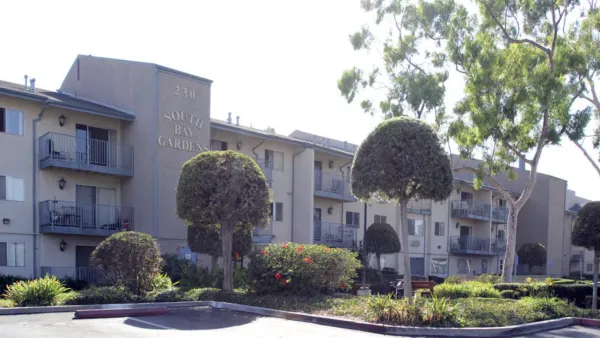
Los Angeles opens public housing waitlist for first time in over two years
The 16 properties with newly available waitlist spots accept families and senior residents.

Planetizen Federal Action Tracker
A weekly monitor of how Trump’s orders and actions are impacting planners and planning in America.

California plans to bury El Niño’s downpour
If the state plays its cards right, it may be able to store a billion acre-feet of El Niño’s water in aquifers.

Desperate measures: Advocates weigh draining Lake Powell to fill Colorado River
Draining the reservoir could reduce evaporation losses by a couple hundred thousand acre-feet.

Bay area voters pass ‘crucial lifeline’ for transit
Proposition RTM, which will fund Bay Area transit, has approval from 61% of voters as of 9:45 p.m. on Nov. 3.

Voters across the country reject data centers
Dozens of communities voted on measures to restrict the buildout of data centers.

US buildings threatened, destroyed by fires set to triple by 2060
Researchers found a high fire risk for socioeconomically vulnerable neighborhoods in the American West.

FREE Course: Walkable City 1: Why Walkability?
After describing his path towards focusing on walkability as the essence of good planning, Jeff Speck marches through his five principal reasons for making more walkable places.
Reinventing Malls: Planning Alchemy—Turning Gray Fields Into Gold
The course focuses on the opportunities and imperatives that shape reinvention of mall sites.

City of Rosemead
Rutgers University, Edward J. Bloustein School of Planning and Public Policy
One Hundred Miles
Hunter College, City University of New York (CUNY)
The Architects Foundation
University of Cincinnati Online
City of Cambridge
Montrose County
The Pocatello Development Authority