As the region’s population swells and demand for housing grows, Arlington County considers zoning reform to boost its affordable housing stock.


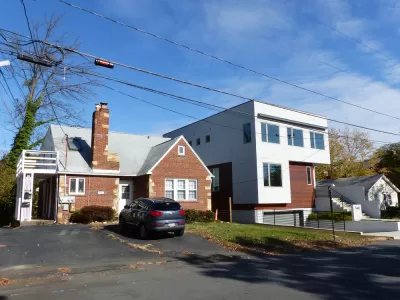
Officials in Arlington County, Virginia “are finding it increasingly difficult to maintain their affordable housing goals as many low- and middle-income workers are being forced to move further out, becoming innocent bystanders of the county’s — and the region’s — success.” According to an article by Ethan Goffman in Greater Greater Washington,
In recent years, low-income housing from the free market has all but disappeared. As Arlington’s 2015 Affordable Housing Master Plan (AHMP) explains, “From 2000 to 2013, Arlington County lost 13,500 affordable housing units, primarily to rent increases.” Meanwhile, “the median home sale price in Arlington increased by 140.3%, while the average rent increased by 90.9%.”
As Goffman writes, “Regionally, the situation can only be expected to get worse, as jobs pour into the region faster than housing can keep up.” To address the crisis, the county has committed “to reach 17.7% of housing affordable to 60% or below AMI by 2040,” but their budget falls short of the $37.4 to $49.5 million needed to build or acquire the 8,650 units needed to meet that goal.
The article points out that the region is quickly becoming unaffordable to middle-income residents and suggests zoning reform as one solution for increasing the supply of affordable housing. The county is undertaking a study to understand the potential impact of legalizing missing middle housing.
FULL STORY: Arlington’s ambitious affordable-housing program may be overwhelmed by the county’s success

Alexandria Set to Reveal Zoning Reform Details
The city will hold a series of public meetings this fall to explain its efforts to boost housing production and affordability.
Connecticut Zoning Bills in Peril Near End of Legislative Session
Two bills that would change zoning rules to encourage more housing production and denser zoning are still in limbo as the legislature prepares to go on recess.
Lawsuit Challenges Arlington County Zoning Reforms
A lawsuit brought by residents charges the county with failing to follow statutory procedures and provide accurate information about recently passed ‘missing middle housing’ reforms.

The state-sanctioned urbicide of Austin
People don’t kill cities. Freeways do.

US to reduce Colorado River water deliveries to Mexico
A new Colorado Treaty amendment reduces Mexico’s Colorado River water allocation by 250,000 acre feet.

New Jersey’s second-largest city bans standalone data centers
Jersey City will continue to allow co-location facilities, such as those meant for research institutions that store their own data.

Amtrak not solely to blame for New Jersey commuter rail's unreliability, report finds
A new study from the Garden State Initiative found that NJ Transit’s budget grew 20% across a 4 year period, but reliability declined significantly over the same period.

EPA erases limits on planet-warming pollution from power plants
Under Monday’s plan, power plants would still have some limits on how much mercury, arsenic and other contaminants they can emit.

Phoenix announces new on-demand transit service, more frequent RAPID buses
Both new services will launch in October, and are part of Phoenix's Project Effective Access Solutions for Easing Congestion.

FREE Course: Walkable City 1: Why Walkability?
After describing his path towards focusing on walkability as the essence of good planning, Jeff Speck marches through his five principal reasons for making more walkable places.
Reinventing Malls: Planning Alchemy—Turning Gray Fields Into Gold
The course focuses on the opportunities and imperatives that shape reinvention of mall sites.

Eagle County Government
Harvard University Graduate School of Design
Nashville Planning Department
The Architects Foundation
University of Cincinnati Online
The Pocatello Development Authority
The Urban Renewal Agency of the City of Pocatello
Journal of the American Planning Association