An elevated park in Rotterdam shows how green roofs can cool cities and create public parks in tight quarters.


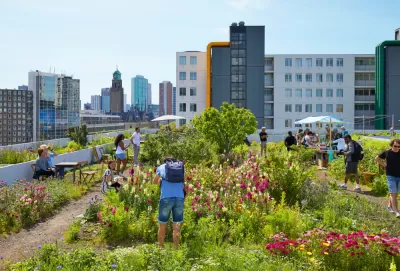
The Dutch city of Rotterdam is ramping up its green roof program by connecting roofs into an elevated park via a colorful path, reports Ryan Waddoups for Surface Magazine. “Called Rotterdam Rooftop Days and designed by Dutch firm MVRDV, the path is an inventive example of adaptive reuse to address environmental issues like heat stress and flooding while providing a valuable outdoor community hub.”
The city’s small geographic footprint makes it essential to utilize spaces like rooftops efficiently. “Rotterdam Rooftop Days is open until June 24 but for locals, the conversation is ongoing. More than 90 percent of the Dutch city lies below sea level, so urban planners are already devising clever solutions for water management like sponge parks and sunken squares.”
Green roofs can also mitigate the urban heat island effect. “In a recent study published in Sustainable Cities and Society, NASA found that rooftop gardens can substantially reduce temperatures during summer months.”
Christian Braneon, a climate scientist and co-author of the NASA study, said cities can use green roofs as one tool to fight climate change. “In the context of more frequent heatwaves and more extreme heat, it’s important to understand how these urban design interventions can be effective.”
FULL STORY: A New Elevated Park Offers a Blueprint to Cooling Cities

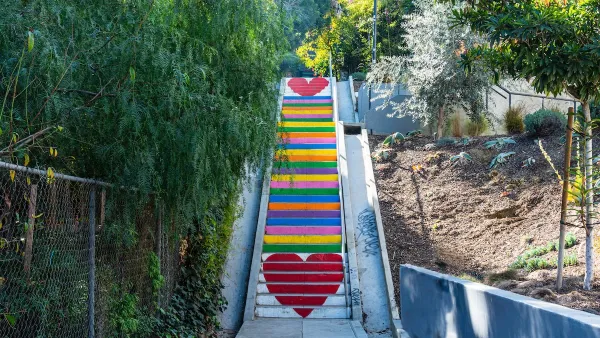
A Framework for Inclusive Tree Planting in Los Angeles
The Los Angeles Urban Forest Equity Collective has developed an equity-centered tree-planting framework and toolkit to address historic underinvestment and mitigate extreme heat in vulnerable neighborhoods.
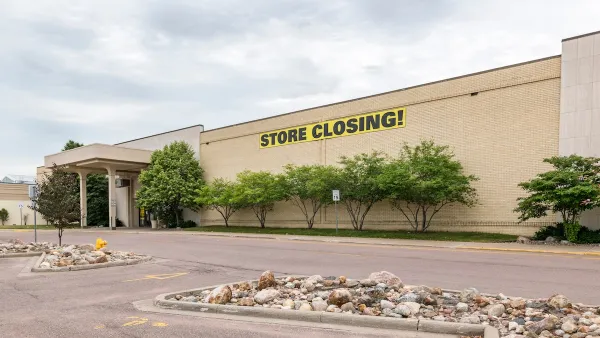
Shifts in Shopping: Transforming Malls Into Parks
Maybe zombie malls still have a second life — one with a little greenery.
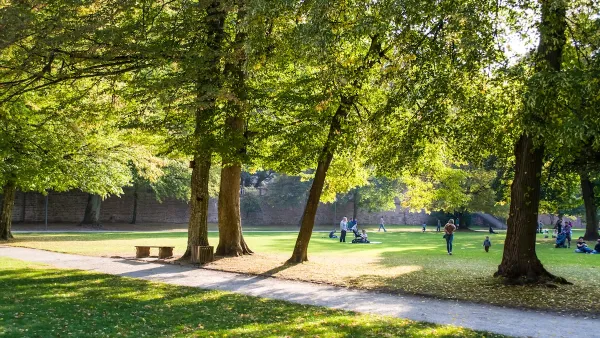
Advancing Sustainability and Resilience Through Parks
The Urban Land Institute offers fact sheets describing five innovative ways that parks can reduce carbon emissions and mitigate climate threats while advancing health, equity, and quality of life in urban areas.

Planetizen Federal Action Tracker
A weekly monitor of how Trump’s orders and actions are impacting planners and planning in America.

The state-sanctioned urbicide of Austin
People don’t kill cities. Freeways do.

US to reduce Colorado River water deliveries to Mexico
A new Colorado Treaty amendment reduces Mexico’s Colorado River water allocation by 250,000 acre feet.

5 New England states march closer to 800 megawatt wind energy project
Securing federal approval for the project may be complicated under the Trump administration, which has historically been hostile towards domestic wind power.

Baltimore to break ground on $50 million Transit Priority Project
The project will bring faster bus trips, safer streets and better bike connections to Baltimore.

Airbnb launches $250 million 'last-dollar financing' housing accelerator, makes first investment in Austin
The company will put $6.4 million towards affordable housing development in Texas’ capital.

FREE Course: Walkable City 1: Why Walkability?
After describing his path towards focusing on walkability as the essence of good planning, Jeff Speck marches through his five principal reasons for making more walkable places.
Reinventing Malls: Planning Alchemy—Turning Gray Fields Into Gold
The course focuses on the opportunities and imperatives that shape reinvention of mall sites.

Eagle County Government
Harvard University Graduate School of Design
Nashville Planning Department
The Architects Foundation
University of Cincinnati Online
The Pocatello Development Authority
The Urban Renewal Agency of the City of Pocatello
Journal of the American Planning Association