The quickly rising cost of housing in Texas comes with consequences. Rising property taxes have become a central issue in the state gubernatorial campaign.


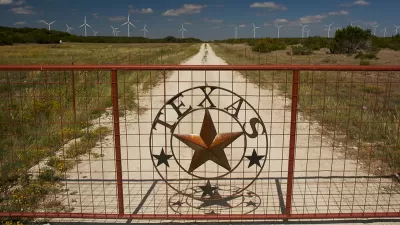
Texas homeowners are dealing with “sticker shock” as rising appraised home values come with a corresponding rise in property taxes, according to an article by Joshua Fechter for the Texas Tribune.
“The growth rate of home values in the state’s major metropolitan areas has surged by double digits. In Harris County, the state’s most populous county, residential values have risen between 15% and 30%, according to Roland Altinger, the county’s chief appraiser,” writes Fechter.
The median home value in Bexar County is up 25 percent. The median home value in Travis County is up 50 percent.
Texas Governor Greg Abbott has made calls for property tax reductions a talking point on the campaign trail as he seeks re-election next year. His opponent, Beto O’Rourke, has blamed Gov. Abbot for the increasing cost of living in the state, which includes the increasing property tax rates.
Texas depends on property taxes more than any almost every other state in the country—only New Hampshire, New Jersey, and Alaska rely more on property taxes to generate revenue for governments, according to a 2021 report by the Tax Foundation (the Lincoln Institute of Land Policy also offers an interactive state-by-state comparison tool for exploring property taxes.
The article includes a section devoted to the proposed policy reforms meant to address rising property taxes in Texas. Among policies implemented are a homestead exemption of $25,000 and a property tax cap of 10 percent in a given year. Gov. Abbott is proposing a “taxpayer bill of rights” that would “further reduce school property tax rates, make property appraisals more transparent and limit local governments from taking on new debt without voter approval,” according to Fechter.
O’Rourke, on the other hand, is proposing a tax reform package that includes “making sure that the state picks up 50% of the tab for public schools, expanding Medicaid to ease the property tax bill for publicly funded hospitals, plus legalizing marijuana and taxing its sale,” according to Fechter. “He also floated the idea of legalizing casino gambling and sports betting as a way of generating more tax revenue.”
A lot more detail and discussion can be found at the source article below.
Read the full story: As Texas home values skyrocket, state officials wrestle with how to slow property tax increases

Opinion: How to Rebuild the ‘Starter Home’ Market
Large minimum lot sizes and restrictions on multi-unit housing put an artificial floor under home costs. Is it time to eliminate them?
Home Prices Continue to Rise Across the Nation
The pandemic’s effects continue to impact housing markets, with formerly affordable cities seeing a steep rise in housing costs.
High Housing Costs Top of Mind for Voters
More and more Americans fear they won’t be able to afford housing.

Planetizen Federal Action Tracker
A weekly monitor of how Trump’s orders and actions are impacting planners and planning in America.

California plans to bury El Niño’s downpour
If the state plays its cards right, it may be able to store a billion acre-feet of El Niño’s water in aquifers.

Desperate measures: Advocates weigh draining Lake Powell to fill Colorado River
Draining the reservoir could reduce evaporation losses by a couple hundred thousand acre-feet.

California city breaks ground on transit connector
The project includes three mobility hubs and a pedestrian bridge.

After public outcry, Massachusetts city releases housing development tracker
Cambridge’s tracker currently shows 250 housing projects in various stages of development.

40 years after approval, Chicago breaks ground on new park
The park honors Jean Baptiste Point du Sable, the city’s first permanent non-native settler.

FREE Course: Walkable City 1: Why Walkability?
After describing his path towards focusing on walkability as the essence of good planning, Jeff Speck marches through his five principal reasons for making more walkable places.
Reinventing Malls: Planning Alchemy—Turning Gray Fields Into Gold
The course focuses on the opportunities and imperatives that shape reinvention of mall sites.

City of Rosemead
Rutgers University, Edward J. Bloustein School of Planning and Public Policy
One Hundred Miles
Hunter College, City University of New York (CUNY)
The Architects Foundation
University of Cincinnati Online
City of Cambridge
Montrose County
The Pocatello Development Authority