A massive interactive feature published by the New York Times tells 193 stories—for 193 countries—to illustrate the ravages of climate change in every corner of the globe.



"Postcards From a World on Fire," reads the headline of a provocative and devastating feature from The New York Times opinion pages. The page starts off with more provocations: "Cities swallowed by dust," Human history drowned by the sea," and "Economies devastated, lives ruined." This isn't Octavia Butler or Kim Stanley Robinson, however, this is real life, happening in real time, in the real world. The article tells, and shows, 193 stories—one for each country in the world.
For the United States, the article allows the reader to sort by county, presenting the most dangerous climate risks for each county. In Los Angeles, the highest risk is wildfire. In New York, the highest risks are from heat waves. In Wayne County, Michigan, the highest risk is flooding. Etc. Etc.
Seeing is believing. Click through at the link below to see for yourself.
Read the full story: Postcards From a World on Fire


FTA Kills ‘Social Cost of Carbon’ in Transit Grant Criteria
The Capital Investments Grant program will no longer factor in the future impacts of carbon emissions.
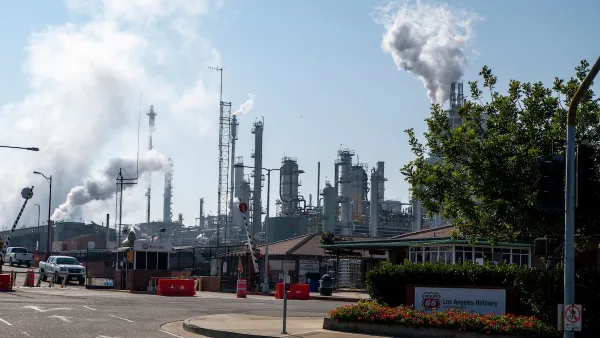
California’s Cap and Trade Program Up in the Air
The state’s carbon trading program is being attacked as ineffective from one side and overly onerous from the other.
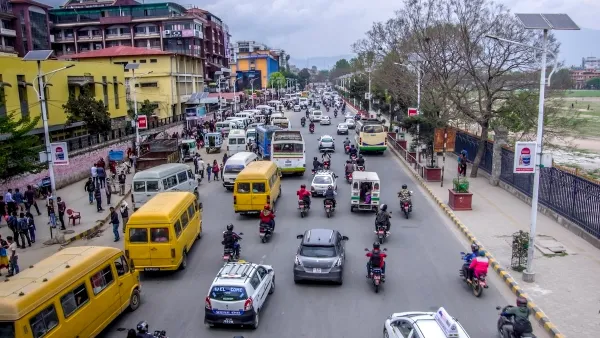
The Small South Asian Republic Going all in on EVs
Thanks to one simple policy change less than five years ago, 65% of new cars in this Himalayan country are now electric.

Planetizen Federal Action Tracker
A weekly monitor of how Trump’s orders and actions are impacting planners and planning in America.

Northwest rail fans eager for Sept. 30 debut of Amtrak’s Airo fleet
Get ready for that new train smell and more seats. But they won’t go faster or run more frequently on the Cascades route in Washington and Oregon.
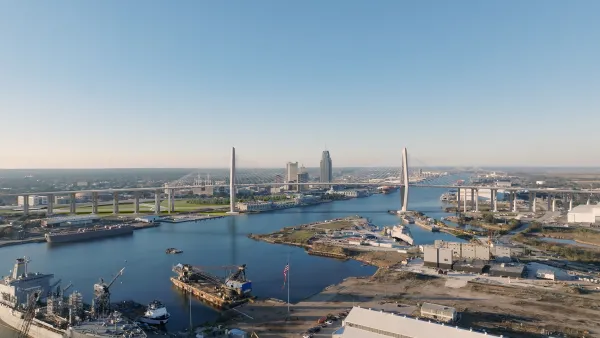
Alabama scores up to $2.5 billion federal loan for largest infrastructure project in state’s history
The Mobile River Bridge and Bayway Project aims to ease congestion at Alabama’s worst bottleneck.

Novel study finds extreme state-by-state disparity in housing construction timelines
The first comprehensive working paper on U.S. construction timelines also found that the permitting process for multi-family projects has slowed nationwide.

California may destroy its beaches trying to save homes from El Niño
Boulders and seawalls can protect homes from waves, but ultimately destroy sandy beaches.

California high-speed rail accomplishes only one legislative goal in 2026
The majority of the agency's failed pitches were never developed into written proposals.

FREE Course: Walkable City 1: Why Walkability?
After describing his path towards focusing on walkability as the essence of good planning, Jeff Speck marches through his five principal reasons for making more walkable places.
Reinventing Malls: Planning Alchemy—Turning Gray Fields Into Gold
The course focuses on the opportunities and imperatives that shape reinvention of mall sites.

City of Thousand Oaks
City of Wisconsin Rapids
Harvard University Graduate School of Design
The Architects Foundation
University of Cincinnati Online
Northern Illinois Transit Authority (NITA)
The Pocatello Development Authority
The Urban Renewal Agency of the City of Pocatello