The funding was directed to congestion mitigation, air quality, and transportation alternatives projects.


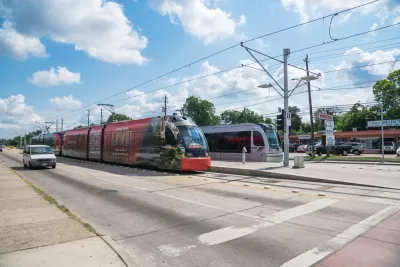
The Houston region lost $64 million in federal "use-it-or-lose-it" transportation funding last year, reports Dug Begley, due to delays and "lax oversight" of proposed projects. "Roughly $45 million in congestion mitigation and air quality funds and $19 million in transportation alternatives money was forfeited because it was not spent within the prescribed time on eligible projects, according to state and local officials." The funding was either not attached to specific projects, or the projects it was slated for were pushed to a later year, said TxDOT officials.
"[T]he region lost the money because no one was making sure it was getting spent on time, leading to a backlog of committed money that has yet to go to construction," said Catherine McCreight, senior transportation planner for TxDOT's Houston office. "Losing federal money this way is a first for the region in more than a decade, as the area’s rapid growth typically has meant there are enough projects to redirect money to if needed," but a lack of oversight meant many projects got delayed.
"The Houston area has a 25-year, $75 billion plan filled with ways to spend the money. What it lacks, officials said, are ready projects that can use the money right now in a way that conforms with state and federal rules when other projects hit a hurdle."
McCreight said the loss deals a blow to projects still on the books and sends "a message to the feds that we didn’t need that amount of money," which is not the case. "What Houston lacks, or does not have established processes for, are benchmarks so when projects are delayed it does not jeopardize funding."
To keep projects on track, "regional transportation officials are likely to approve a replacement of the lost money with other federal funds," but those programs also come with deadlines.
Officials predict that to prevent the same issue in the future, "H-GAC [Houston-Galveston Area Council] will set policies requiring projects to meet a criteria for readiness before they are put in the pipeline for new money."
FULL STORY: Delayed projects, lax oversight cost Houston region $64M in federal transportation funds

Federal Carbon Reduction Funds Could Finance Highway Projects in Texas
Transit advocates say the state’s carbon reduction strategy reveals a continued preference for car-oriented infrastructure.
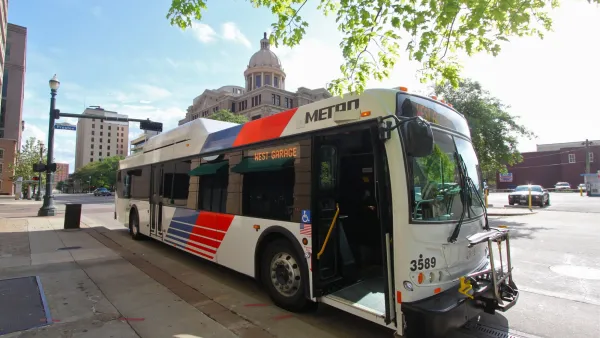
Houston Transit Agencies Offer ‘Free Fare Fridays’ for Ozone Action Month
Harris County is one of several Texas counties that failed EPA standards for clean air in recent years.
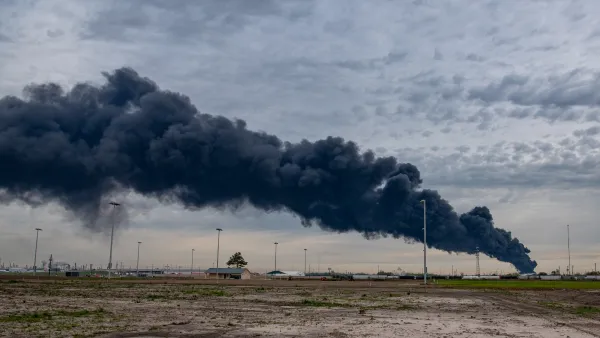
EPA Grant Will Fund Air Pollution Tracking in Houston
The city wants to monitor air quality and measure cancer-causing emissions near two petrochemical plants, one of which announced plans for expansion last year.

The state-sanctioned urbicide of Austin
People don’t kill cities. Freeways do.

US to reduce Colorado River water deliveries to Mexico
A new Colorado Treaty amendment reduces Mexico’s Colorado River water allocation by 250,000 acre feet.

New Jersey’s second-largest city bans standalone data centers
Jersey City will continue to allow co-location facilities, such as those meant for research institutions that store their own data.

Amtrak not solely to blame for New Jersey commuter rail's unreliability, report finds
A new study from the Garden State Initiative found that NJ Transit’s budget grew 20% across a 4 year period, but reliability declined significantly over the same period.

EPA erases limits on planet-warming pollution from power plants
Under Monday’s plan, power plants would still have some limits on how much mercury, arsenic and other contaminants they can emit.

Phoenix announces new on-demand transit service, more frequent RAPID buses
Both new services will launch in October, and are part of Phoenix's Project Effective Access Solutions for Easing Congestion.

FREE Course: Walkable City 1: Why Walkability?
After describing his path towards focusing on walkability as the essence of good planning, Jeff Speck marches through his five principal reasons for making more walkable places.
Reinventing Malls: Planning Alchemy—Turning Gray Fields Into Gold
The course focuses on the opportunities and imperatives that shape reinvention of mall sites.

Eagle County Government
Harvard University Graduate School of Design
Nashville Planning Department
The Architects Foundation
University of Cincinnati Online
The Pocatello Development Authority
The Urban Renewal Agency of the City of Pocatello
Journal of the American Planning Association