A whole bunch of money is on the table in Congress.


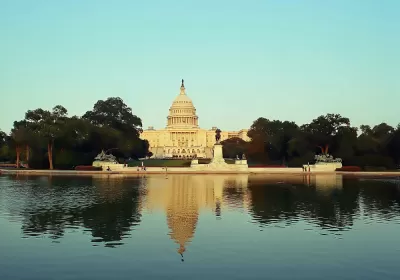
"The House Ways and Means Committee late Friday released an additional tranche of its portion of Democrats’ $3.5 trillion social spending package, covering a wide range of issues such as the child tax credit, infrastructure financing, clean energy incentives and health care," reports Naomi Jagoda.
The $3.5 trillion package will include the closely watched Infrastructure Investment and Jobs Act, approved by the Senate in August 2021, but much of the focus in this article is on the bill's extension (until 2025) of the child tax credit enacted earlier this year. "The bill would also make permanent expansions of the earned income tax credit and the child and dependent care tax credit. Those two credits and the child tax credit had been expanded as part of the $1.9 trillion coronavirus relief law that Biden signed in March," according to Jagoda.
Regarding infrastructure financing and housing, however: "The bill includes several provisions focused on tax-advantaged bonds, including the creation of a bond program that is similar to the Build America Bonds that were part of President Obama’s 2009 stimulus law."
"The bill also would expand the low income housing tax credit that benefits developers of affordable rental units," adds Jagoda. "The bill would extend a number of tax incentives for clean energy, and would create new tax credits for electric-vehicle owners."
FULL STORY: House panel releases spending bill section on child tax credit, infrastructure financing

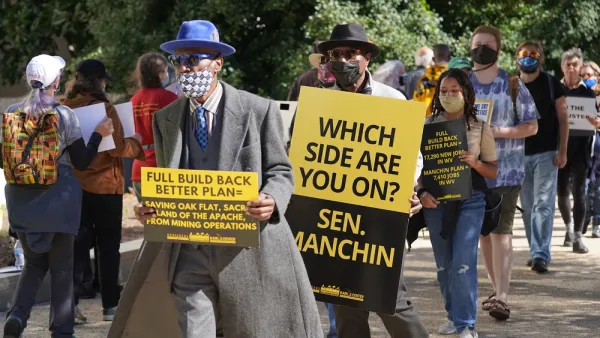
Build Back Almost: Historic Legislation Falls One Vote Short
A roundup of news on the planning-related consequences of the reported demise of the Build Back Better Act—a $2 trillion social spending bill intended to accompany the Infrastructure Investment and Jobs Act approved earlier this year.
Year in Review: Urban Planning in 2021
Part one of two of Planetizen's review of 2021—re-assessing failed predictions and daylighting the biggest planning stories of the year.
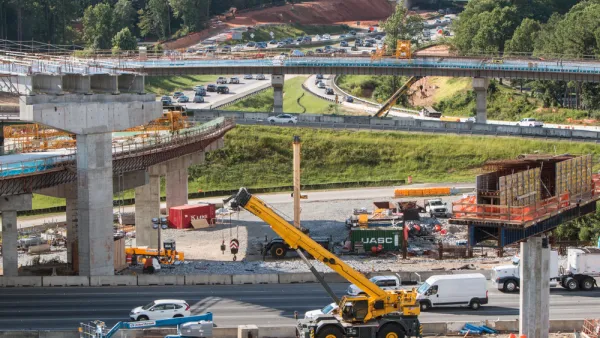
Key Details of the $1.2 Trillion Federal Infrastructure Bill
With President Joe Biden scheduled to sign the Infrastructure Investment and Jobs Act today in Washington, D.C., Planetizen shares insight into the fine print of the historic bill.

The state-sanctioned urbicide of Austin
People don’t kill cities. Freeways do.

US to reduce Colorado River water deliveries to Mexico
A new Colorado Treaty amendment reduces Mexico’s Colorado River water allocation by 250,000 acre feet.

New Jersey’s second-largest city bans standalone data centers
Jersey City will continue to allow co-location facilities, such as those meant for research institutions that store their own data.

Amtrak not solely to blame for New Jersey commuter rail's unreliability, report finds
A new study from the Garden State Initiative found that NJ Transit’s budget grew 20% across a 4 year period, but reliability declined significantly over the same period.

EPA erases limits on planet-warming pollution from power plants
Under Monday’s plan, power plants would still have some limits on how much mercury, arsenic and other contaminants they can emit.

Phoenix announces new on-demand transit service, more frequent RAPID buses
Both new services will launch in October, and are part of Phoenix's Project Effective Access Solutions for Easing Congestion.

FREE Course: Walkable City 1: Why Walkability?
After describing his path towards focusing on walkability as the essence of good planning, Jeff Speck marches through his five principal reasons for making more walkable places.
Reinventing Malls: Planning Alchemy—Turning Gray Fields Into Gold
The course focuses on the opportunities and imperatives that shape reinvention of mall sites.

Eagle County Government
Harvard University Graduate School of Design
Nashville Planning Department
The Architects Foundation
University of Cincinnati Online
The Pocatello Development Authority
The Urban Renewal Agency of the City of Pocatello
Journal of the American Planning Association