Dallas is amidst a process for electing a new City Council, and one local writer sees the transition as an opportunity to present an ambitious agenda for also overhauling the city's local dining scene.


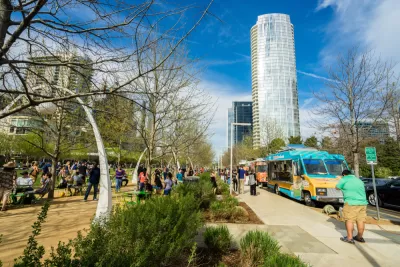
Brian Reinhart proposes a bold policy agenda for the incoming members of the Dallas City Council—one focused on improving the city's culinary scene. Reinhart's proposals include numerous intersections with the purview of the Dallas Planning and Urban Design Department.
But first, the political context. As Reinhart explains, "Dallas is halfway through electing a new slate of city council members. Most of the seats were decided in the May 1 general election, with six to be decided by runoffs on June 5."
Before laying out a culinary agenda, Reinhart suggests naming the proposed legislative package the Enabling New Culinary and Hospitality Innovation and Leadership Across Dallas Act (ENCHILADA). The list reads as follows, with more details in the source article:
- Fix the permitting process
- Eliminate minimum parking requirements
- Open up the food truck universe
- Put "scores on the doors"
- Put a cap on the fees charged by delivery apps
- Do literally anything to reduce Dallas's physical segregation
- Make decisions based on real knowledge and data.
By my unofficial count, planners have a role in all but two of those proposals. And it's surpassingly notable that the parking reform movement has gained traction in this famously car-centric city not just for the connection between parking and increased housing costs, but also because parking requirements create obstacles to the creation of new small businesses.
FULL STORY: Here's a Culinary Agenda for the Next Dallas City Council

Dallas Considers Nixing Parking Requirements
According to one local official, Dallas projects routinely build 20 to 30 percent more parking than they need, driving up the cost of housing and leading to unsustainable land use patterns.
Updated: Proposed Parking Reforms Spark Controversy in Dallas
An ordinance under consideration by the Dallas City Council would change the parking requirements in the zoning code to allow for more density in exchange for affordable housing.
Fixing Decades-Old Parking Regulations in Dallas
Dallas has launched an effort to reform its "burdensome" parking policies, which have been left largely in the hands of local development districts.

Planetizen Federal Action Tracker
A weekly monitor of how Trump’s orders and actions are impacting planners and planning in America.

The state-sanctioned urbicide of Austin
People don’t kill cities. Freeways do.

US to reduce Colorado River water deliveries to Mexico
A new Colorado Treaty amendment reduces Mexico’s Colorado River water allocation by 250,000 acre feet.

5 New England states march closer to 800 megawatt wind energy project
Securing federal approval for the project may be complicated under the Trump administration, which has historically been hostile towards domestic wind power.

Baltimore to break ground on $50 million Transit Priority Project
The project will bring faster bus trips, safer streets and better bike connections to Baltimore.

Airbnb launches $250 million 'last-dollar financing' housing accelerator, makes first investment in Austin
The company will put $6.4 million towards affordable housing development in Texas’ capital.

FREE Course: Walkable City 1: Why Walkability?
After describing his path towards focusing on walkability as the essence of good planning, Jeff Speck marches through his five principal reasons for making more walkable places.
Reinventing Malls: Planning Alchemy—Turning Gray Fields Into Gold
The course focuses on the opportunities and imperatives that shape reinvention of mall sites.

Eagle County Government
Harvard University Graduate School of Design
Nashville Planning Department
The Architects Foundation
University of Cincinnati Online
The Pocatello Development Authority
The Urban Renewal Agency of the City of Pocatello
Journal of the American Planning Association