Home builders are building a record number of single-family rentals, and young, modest-income households with children are more likely to live in those new homes.


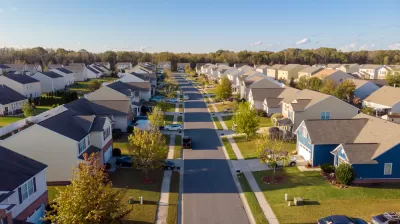
"While still a relatively small share of all new housing, record numbers of single-family rentals were built in 2020," according to Alexander Hermann, who is sharing the findings of recent analysis by the Joint Center for Housing Studies of Harvard University.
"According to our tabulations of Census Bureau New Residential Construction data, 49,000 single-family rentals were started last year, up from 14,000 at the bottom in 2009 and surpassing the previous high of 47,000 in 2003 (Figure 1). However, single-family rentals remained just under 4 percent of total housing construction and 12 percent of rental construction."
As noted by Hermann, single-family rentals provide young, relatively modest families with children much-needed housing options. The Covid-19 pandemic has only spurred demand, resulting in the increased pace of construction, for single-family rentals.
"Indeed, single-family homes provide additional space for home offices, exercise, and remote learning; offer access to private outdoor space; and are often located in suburban areas—all characteristics associated with rising demand over the past year. At the same time, home prices have risen considerably in the for-sale market, making homebuying difficult for many moderate-income families who cannot afford rising prices and larger downpayments."
The prospect of more American families renting, rather than buying, homes has been framed as a red flag in the housing market in discussions about the growing footprint of Wall Street and large, institutional investors in the housing market. Many of those institutional acquisitions are happening at the low end of the market in suburban, single-family neighborhoods, according to recent reporting by the Wall Street Journal. Hermann's presentation of single-family rentals as a housing opportunity, thus, stands in contrast to the threat implied by the response to the news about the growing number of rental houses in the existing housing stock.
Read the full story: YOUNG FAMILIES AND THE GROWING NUMBER OF NEW SINGLE-FAMILY RENTALS

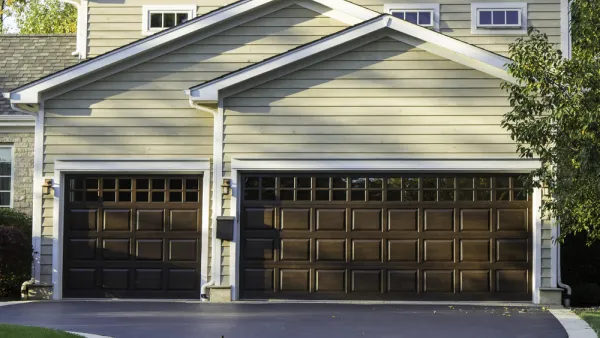
Single-Family and Build-to-Rent Homes Growing in Size
As people perform more daily functions at home, homeowners and renters are seeking larger footprints to accommodate a broader range of uses.
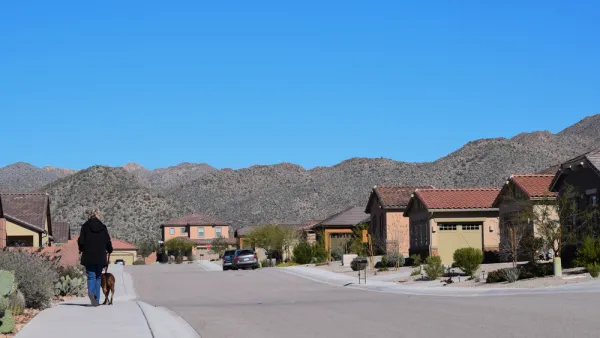
Institutional Investors Gaining a Larger Footprint in the Housing Market, Report Says
The locations with the fastest growing populations are seeing the most dramatic increase in investor-owned single-family housing rentals.
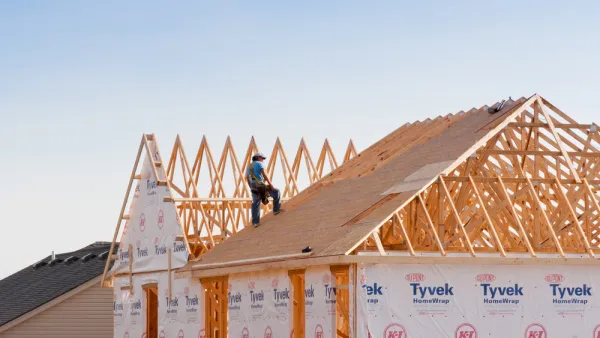
Housing Construction More and More Frequently the Product of Two Companies
The history of U.S. housing construction has traditionally been the story of many companies building a few homes a year. Now two companies alone are out-building the rest of the top ten homebuilders combined.

Planetizen Federal Action Tracker
A weekly monitor of how Trump’s orders and actions are impacting planners and planning in America.

California plans to bury El Niño’s downpour
If the state plays its cards right, it may be able to store a billion acre-feet of El Niño’s water in aquifers.

Chicago breaks ground on $3 billion megadevelopment
The new neighborhood, titled Foundry Park, will one day host 3,700 residences.

Satanic Place Names
From streams and lakes to valleys and canyons, I mapped more than 1,000 places named after the Devil.

California High-Speed Rail Authority CEO resigns after $600,000 scandal
Under Ian Choudri, the authority used taxpayer dollars to fund first class flights and trips to nightclubs.

Want to study the Missouri River? Soon, you may need unanimous approval from 10 states
Legislation would require 10 governors’ permission to study or build projects moving water outside the basin.

FREE Course: Walkable City 1: Why Walkability?
After describing his path towards focusing on walkability as the essence of good planning, Jeff Speck marches through his five principal reasons for making more walkable places.
Reinventing Malls: Planning Alchemy—Turning Gray Fields Into Gold
The course focuses on the opportunities and imperatives that shape reinvention of mall sites.

City of Rosemead
Rutgers University, Edward J. Bloustein School of Planning and Public Policy
One Hundred Miles
Hunter College, City University of New York (CUNY)
The Architects Foundation
University of Cincinnati Online
City of Cambridge
Montrose County
The Pocatello Development Authority