Murals do more than bring joy to onlookers. Public art can also be a source of healing, a point of reflection, and a cause for conversation.


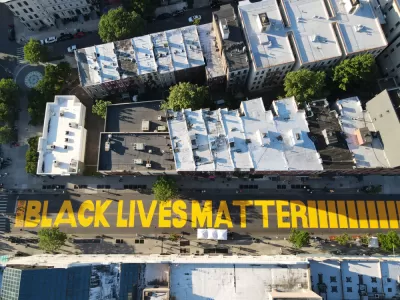
What do an office building in Downtown Spokane and the streets of Kansas City, Missouri have in common? Both are the homes of murals addressing themes of social justice. Liza Weisstuch writes that the May police killing of George Floyd spurred a movement that spurred a transformation of cities through an avalanche of street art.
"Among the most influential works from these protests: The 50-foot, visible-from-space yellow letters spelling “Black Lives Matter” that Washington D.C., painted on the asphalt near Lafayette Square, just hours after the Trump administration used tear gas to clear protesters in June," writes Weisstuch.
Weisstuch describes the legacy of street art and "of artists harnessing the collaborative power of public art and image-making to mobilize communities." According to Weisstuch, street art is a documentation of historical moments and emphasizes the value of public space.
The Black Lives Matter movement has even used public art to reclaim space and address shared trauma stemming from hundreds of years of systemic racism and overt oppression in the United States.
Weisstuch's article depicts the ways in which street art can promote healing and stand as a social centerpiece, and spark important conversations.
Read the full story: Amid Crisis, a Renaissance for Street Art

Equity and 'Righting Past Wrongs' to Start the 2021 National Planning Conference
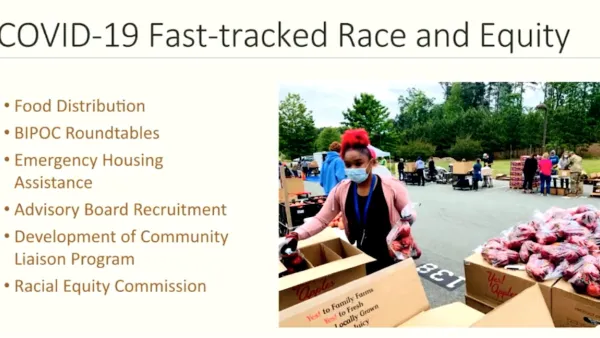
The American Planning Association's 2021 National Planning Conference started streaming this morning, with an obvious focus on equity and the historical role of the planning profession in perpetuating systemic racism.
Biden Signs Legislation Ending Covid 19 National Emergency
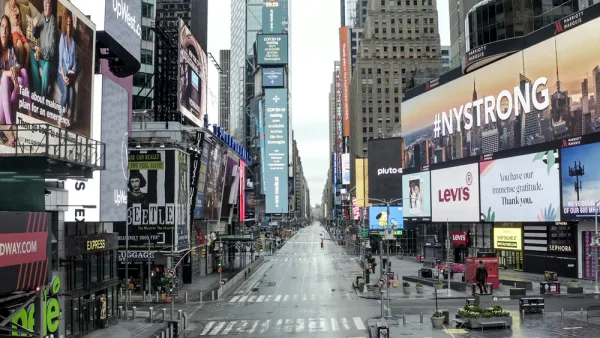
The Covid 19 national emergency enacted by then-President Donald Trump in March 2020 was officially ended on Monday by President Joe Biden.
Friday Eye Candy: Covid-19, Then and Now
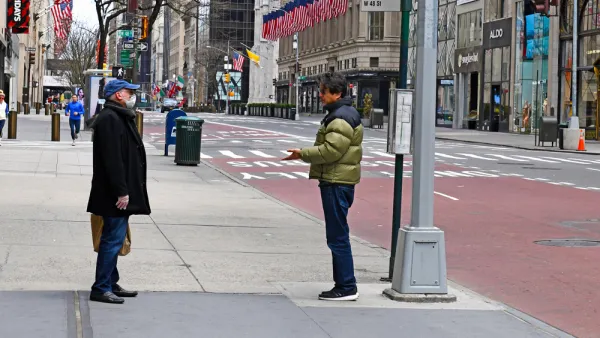
The New York Times compared images from readers portraying similar scenes in 2020 and 2022.

Planetizen Federal Action Tracker
A weekly monitor of how Trump’s orders and actions are impacting planners and planning in America.

The state-sanctioned urbicide of Austin
People don’t kill cities. Freeways do.

US to reduce Colorado River water deliveries to Mexico
A new Colorado Treaty amendment reduces Mexico’s Colorado River water allocation by 250,000 acre feet.

Nation's most wind-powered state turns to coal as data centers increase energy demand
For the first time in decades, Iowa has increased its generation of coal power.

NYC cools commuters with city's first rain garden above a bus stop
New York City officials say the plants in the rain garden can absorb 16 gallons of rainwater during heavy storms.

Brightline West’s future may rely on $6 billion federal loan
The company has until Nov. 2 to make a $400 million equity investment into its proposed high-speed rail line.

FREE Course: Walkable City 1: Why Walkability?
After describing his path towards focusing on walkability as the essence of good planning, Jeff Speck marches through his five principal reasons for making more walkable places.
Reinventing Malls: Planning Alchemy—Turning Gray Fields Into Gold
The course focuses on the opportunities and imperatives that shape reinvention of mall sites.

Greater Baltimore Committee
Eagle County Government
Harvard University Graduate School of Design
The Architects Foundation
University of Cincinnati Online
The Pocatello Development Authority
The Urban Renewal Agency of the City of Pocatello
Journal of the American Planning Association