The work of Chicago urban planner and developer Theaster Gates provides a proof of concept in a new report from the Urban Land Institute.


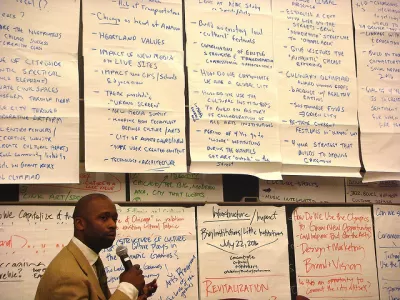
Artistic and cultural projects and programs are key to stimulating more equitable real estate development, according to a new report released by the Urban Land Institute that focuses specifically on the work of Theaster Gates on the South Side of Chicago.
"The report reflects three years of studying creative placemaking and the impact it has on communities," explains an article by Darcel Rockett. "ULI reports that cities are finding success with the concept of placemaking, in which developers, designers, planners and investors come together to sync up their efforts in residential, commercial and public sectors to produce active, mixed-use spaces and reverse the effects of historic disinvestment."
The work of developer and urban planner Theaster Gates occupies a central role in the report, according to Rockett. Gates is the 2018 winner of ULI's Prize for Visionaries in Urban Development. "Gates has been doing creative placemaking on the city’s South Side for years," according to Rockett. Through the Rebuild Foundation, Gates transforms abandoned buildings "into beloved community spaces in the Grand Crossing neighborhood."
The article includes a lot more information about the past accomplishments and future plans of the Rebuild Foundation, which a spokesperson describes in the article as a master planning exercise.
The ULI report is a boon for creative placemakers who find hard evidence of the benefits of this approach hard to come by. "[R]eports like ULI’s and those from Chicago Made, an initiative from World Business Chicago to support entrepreneurs in the creative industries, are changing that and offering numerous case studies of creative placemaking happening throughout the country," writes Rockett.
Read the full story: Equitable real estate development on Chicago’s South Side is possible. Artist Theaster Gates has shown the way.

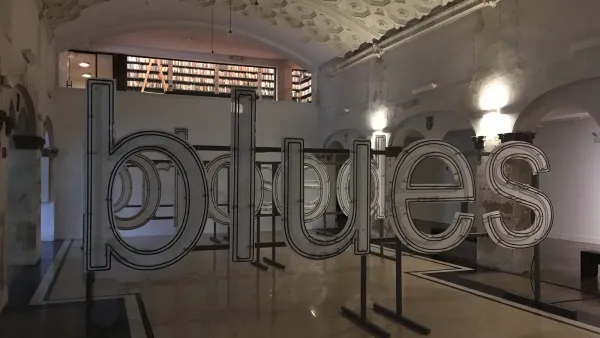
Theaster Gates Brings Together Planning and Art to Empower Communities
His work in Chicago has created spaces that protect and celebrate black lives and experience.
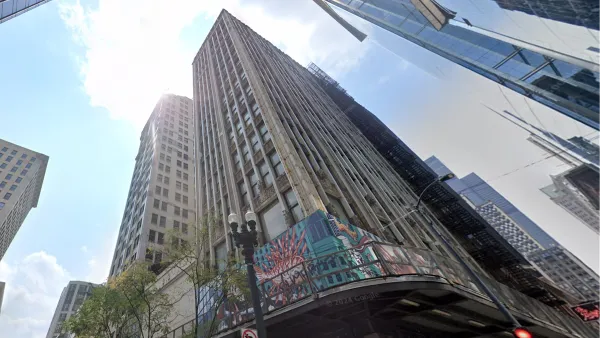
Chicago Towers Recommended for Adaptive Reuse
Once slated for demolition, two historic buildings owned by the federal government will be restored for new uses.
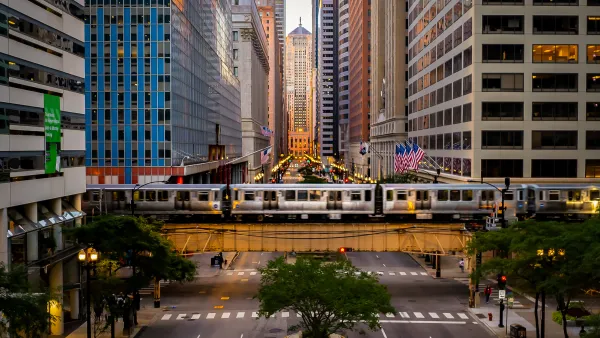
Chicago to Turn High-Rise Offices into Housing
Four commercial buildings in the Chicago Loop have been approved for redevelopment into housing in a bid to revitalize the city’s downtown post-pandemic.

Planetizen Federal Action Tracker
A weekly monitor of how Trump’s orders and actions are impacting planners and planning in America.

Data reveals that NYC’s bet on congestion pricing has paid off
After almost two years of the program, reports show positive impacts on traffic and air quality and no disruptions to parking.

Denver is solving homelessness. Why aren't the rest of us?
Since 2023, Denver's street homeless population has decreased by 64%, proving that effective tools exist to support those in need of housing.

Michigan needs billions to save its water infrastructure. The state won't fund it
Michigan needs to invest $2.8 billion per year over the next 20 years to fix its water infrastructure. The FY 2027 budget allocates only $27.9 million.

Trump asks Supreme Court to allow border wall through Texas national park
Judge Kathleen Cardone previously blocked the Big Bend border wall project, and Texas’ Land Commissioner has spoken out against it as well.

This MA town is drowning in its own sewage — and residents like it that way
Susan Murcott, a waste water expert, said if Carlisle didn't address their leaking sewage, the problem could turn “deadly.”

FREE Course: Walkable City 1: Why Walkability?
After describing his path towards focusing on walkability as the essence of good planning, Jeff Speck marches through his five principal reasons for making more walkable places.
Reinventing Malls: Planning Alchemy—Turning Gray Fields Into Gold
The course focuses on the opportunities and imperatives that shape reinvention of mall sites.

City of Rosemead
Rutgers University, Edward J. Bloustein School of Planning and Public Policy
One Hundred Miles
The Architects Foundation
University of Cincinnati Online
Montrose County
Northern Illinois Transit Authority (NITA)
The Pocatello Development Authority