Covington, Kentucky, located just across the Ohio River from Cincinnati, has implemented a fundamental shift in the city's planning philosophy by adopting a new form-based Neighborhood Development Code.



"The Covington city commission last week approved a new Neighborhood Development Code (NDC) to replace the previous zoning ordinance," according to an article published by the River City News.
"The 'outgoing' Zoning Ordinance, adopted in 2006 and changed numerous times, separated Covington into parcels of land based on single, allowed 'uses.' The new 'form-based' or 'character-based' development code focuses on how structures relate to the surrounding public realm like the 'character' of the neighborhood," according to the article.
A press release from the city called the new NDC, "a fundamental change in philosophy and approach whose impact will be felt in every project, ranging from a homeowner adding a porch to a developer building a subdivision to an entrepreneur locating a new business."
The city worked with Kendig Keast Collaborative to complete the multi-year process of overhauling the city's development code. The approved version fo the NDC is available online, and the city is promising to release articles in the coming weeks and months to describe how the new NDC will work for businesses and residents of Covington.
Read the full story: Covington Approves Neighborhood Development Code, Ditches Old Zoning Ordinance


Form-Based Codes Explained as Covington's Neighborhood Development Code Takes Effect
The new form-based code for the Kentucky city of Covington went into effect on October 15. Officials are promoting the simplicity of the new code to the public.
Form at the Forefront of Zoning Code Rewrite in Covington, Kentucky
The city of Covington is conducting public hearings to gather feedback on at the outset of an 18-month process of rewriting its zoning code.
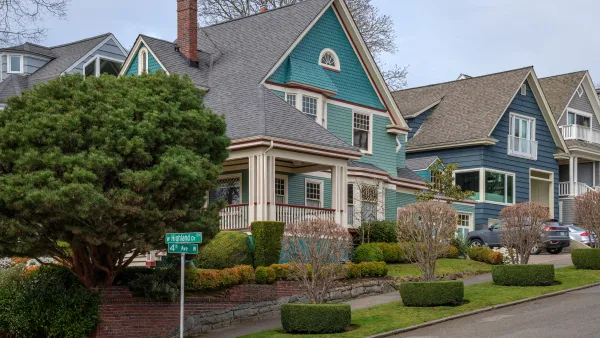
Opinion: Form-Based Codes Could Harm Seattle’s Housing Affordability
Form-based zoning codes can encourage mixed-use development and walkable neighborhoods, but focusing too much on aesthetic elements can drive up the cost of housing.

Planetizen Federal Action Tracker
A weekly monitor of how Trump’s orders and actions are impacting planners and planning in America.

The state-sanctioned urbicide of Austin
People don’t kill cities. Freeways do.

US to reduce Colorado River water deliveries to Mexico
A new Colorado Treaty amendment reduces Mexico’s Colorado River water allocation by 250,000 acre feet.

Nation's most wind-powered state turns to coal as data centers increase energy demand
For the first time in decades, Iowa has increased its generation of coal power.

NYC cools commuters with city's first rain garden above a bus stop
New York City officials say the plants in the rain garden can absorb 16 gallons of rainwater during heavy storms.

Brightline West’s future may rely on $6 billion federal loan
The company has until Nov. 2 to make a $400 million equity investment into its proposed high-speed rail line.

FREE Course: Walkable City 1: Why Walkability?
After describing his path towards focusing on walkability as the essence of good planning, Jeff Speck marches through his five principal reasons for making more walkable places.
Reinventing Malls: Planning Alchemy—Turning Gray Fields Into Gold
The course focuses on the opportunities and imperatives that shape reinvention of mall sites.

Greater Baltimore Committee
Eagle County Government
Harvard University Graduate School of Design
The Architects Foundation
University of Cincinnati Online
The Pocatello Development Authority
The Urban Renewal Agency of the City of Pocatello
Journal of the American Planning Association