A must-watch conversation between BIPOC researchers and advocates working in the realm of planning and urbanism is available to watch on YouTube.



Jay Pitter moderated a recent online discussion to address the question: "How do we respond to anti-Black racism in urbanist practices and conversations?"
Pitter, who penned one of the defining articles of this conversation in April, before the killing of George Floyd by Minneapolis police officers sparked waves of protest around the world, moderates a discussion that also includes:
- Orlando Bailey, director of engagement for BridgeDetroit, and the Detroit host for Urban Consulate
- Tamika Butler, director of planning for California and the director of equity and inclusion for Toole Design
- Anthonia Ogundele, founder of Ethós Lab
- Will Prosper, co-founder of Montréal-Nord Républik and Hoodstock
The event, hosted by the Canadian Urban Institute, has been made available to view for free on YouTube.
Read the full story: How do we respond to anti-Black racism in urbanist practices and conversations?

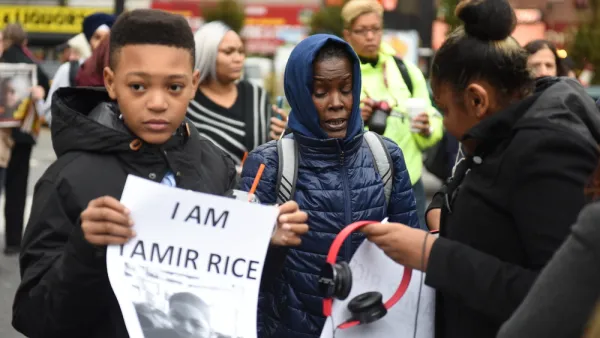
Planning Beyond Mass Incarceration
Sheryl-Ann Simpson from Carleton University, Justin Steil from MIT, and Aditi Mehta from the University of Toronto write about a recent article they co-authored in the Journal of Planning Education and Research.
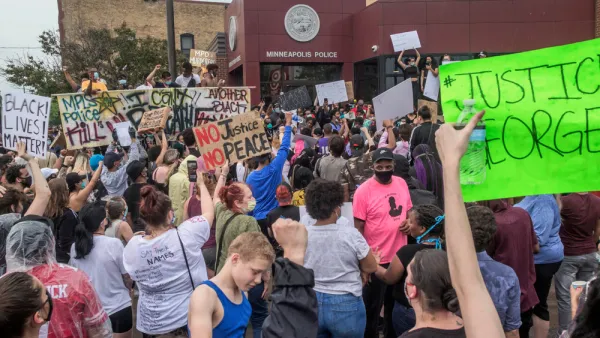
Violence Against Black Americans a Moment of Reckoning for the Planning Profession
After a wave violence against Black men in the United States, it is the duty of the planning profession to consider its role in perpetuating institutional racism.
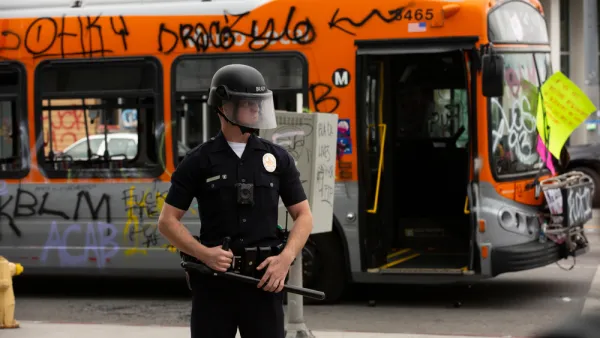
Planners Call for Deep Police Reforms
A letter signed by over 600 planners calls on the American Planning Association to advocate for fundamental police reforms, in other words, to defund the police.

Planetizen Federal Action Tracker
A weekly monitor of how Trump’s orders and actions are impacting planners and planning in America.

California plans to bury El Niño’s downpour
If the state plays its cards right, it may be able to store a billion acre-feet of El Niño’s water in aquifers.

Desperate measures: Advocates weigh draining Lake Powell to fill Colorado River
Draining the reservoir could reduce evaporation losses by a couple hundred thousand acre-feet.

MTA gives itself 30 days to transform pit into basketball court
The site has been under construction since 2022; the city originally estimated it would finish the court in 2024.

Non-stop party: Chicago voters weigh permanent festival grounds
A stable place for bleachers, stages and drainage may streamline the setup and teardown of large events.

Metra may invest $9.1 billion in regional rail
The agency released a draft of a study examining potential ways to offer more frequent train service.

FREE Course: Walkable City 1: Why Walkability?
After describing his path towards focusing on walkability as the essence of good planning, Jeff Speck marches through his five principal reasons for making more walkable places.
Reinventing Malls: Planning Alchemy—Turning Gray Fields Into Gold
The course focuses on the opportunities and imperatives that shape reinvention of mall sites.

City of Rosemead
Rutgers University, Edward J. Bloustein School of Planning and Public Policy
One Hundred Miles
Hunter College, City University of New York (CUNY)
The Architects Foundation
University of Cincinnati Online
City of Cambridge
Montrose County
The Pocatello Development Authority