Shoreview, Minnesota has one of the most extensive permeable pavement systems in the United States. This technology has reduced the need for expensive grey infrastructure like stormwater sewer systems.



Freelance journalist Cinnamon Janzer writes in Next City's online web page: "After Shoreview’s first permeable pavement project in 2009, the city sent out mailers to tell neighbors about their permeable streets and what they can do to help it function sustainably, like not blowing dirt into the street. Since then, the city has added five more stretches of permeable pavement as part of larger road reconstruction projects and demand is growing."
As a winter city, Shoreview has been pleased with how its permeable pavement is holding up in winter conditions. "After four Minnesota winters of dramatically differing duration, precipitation, freeze-thaw cycles, soil moisture levels, and snowplow events, we are quite pleased with the performance of this pervious concrete roadway/drainage system. It is being used as intended with no unusual operational issues to date,” Shoreview's Public Works director Mark Maloney wrote in 2013. "The pervious concrete pavement in the Woodbridge Neighborhood is functioning as intended and still stands as the most successful example of the use of pervious concrete for public roadway infrastructure."
FULL STORY: How a Twin Cities Suburb Has Led The Way With Permeable Pavement

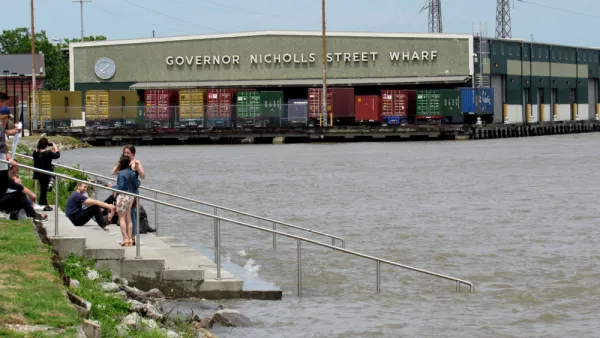
Permeable Pavements Required for Parking, Sidewalks in New Orleans
New Orleans is looking for new ways to mitigate the effects of stormwater that regularly floods the city.
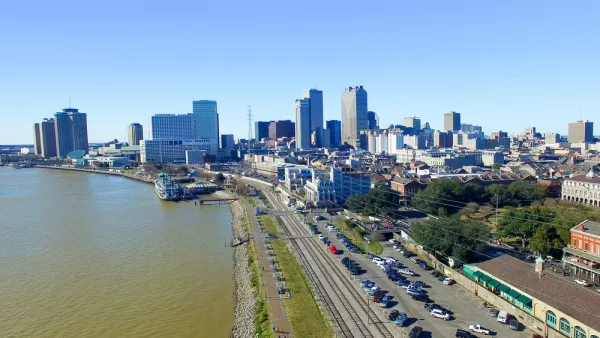
All New Commercial Developments Require Porous Pavement in New Orleans
After the challenges of a rainy season with persistent flooding last year, New Orleans is ensuring that the future of its development is more stormwater friendly than its past.
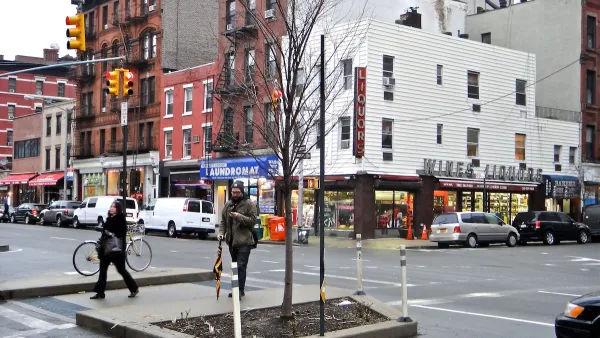
Opinion: NYC Daylighting Law Would Double as Flood Protection
How a proposed law banning parking in the 20’ of curb next to an intersection throughout NYC would improve road safety and free up space for rain gardens and other green infrastructure.

Planetizen Federal Action Tracker
A weekly monitor of how Trump’s orders and actions are impacting planners and planning in America.

The state-sanctioned urbicide of Austin
People don’t kill cities. Freeways do.

US to reduce Colorado River water deliveries to Mexico
A new Colorado Treaty amendment reduces Mexico’s Colorado River water allocation by 250,000 acre feet.

5 New England states march closer to 800 megawatt wind energy project
Securing federal approval for the project may be complicated under the Trump administration, which has historically been hostile towards domestic wind power.

Baltimore to break ground on $50 million Transit Priority Project
The project will bring faster bus trips, safer streets and better bike connections to Baltimore.

Airbnb launches $250 million 'last-dollar financing' housing accelerator, makes first investment in Austin
The company will put $6.4 million towards affordable housing development in Texas’ capital.

FREE Course: Walkable City 1: Why Walkability?
After describing his path towards focusing on walkability as the essence of good planning, Jeff Speck marches through his five principal reasons for making more walkable places.
Reinventing Malls: Planning Alchemy—Turning Gray Fields Into Gold
The course focuses on the opportunities and imperatives that shape reinvention of mall sites.

Eagle County Government
Harvard University Graduate School of Design
Nashville Planning Department
The Architects Foundation
University of Cincinnati Online
The Pocatello Development Authority
The Urban Renewal Agency of the City of Pocatello
Journal of the American Planning Association