If passed, a new law would require homeless shelter developments in New York City to undergo the full Uniform Land Use Review Procedure.


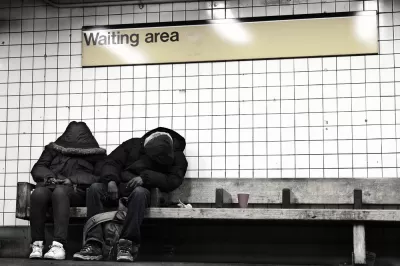
Sydney Kashiwagi reports: "After Staten Islanders and the borough’s elected officials say they were left in the dark about the city’s plan for a 200-family homeless shelter at 44 Victory Blvd., two North Shore state lawmakers have introduced legislation that would increase public scrutiny of shelter developments, using the city’s Uniform Land Use Review Procedure (ULURP)."
"Because homeless shelters are considered emergency resources, they currently do not face the same level of review as other types of major construction projects -- instead, the city is only required to give a community 30 days notice to voice any potential concerns about a site before it opens," explains Kashiwagi. The ULURP public review process, by comparison, takes a year.
State Senator Diane Savino and Assemblymember Charles Fall proposed the new bill in the New York State Assembly, but the law would change the city's administrative code to require ULURP review.
The law was proposed in New York the same month as a proposed bill in California would relax required environmental review for homeless shelters—the opposite effect.
FULL STORY: Savino, Fall introduce legislation that would make homeless shelters subject to public land use review

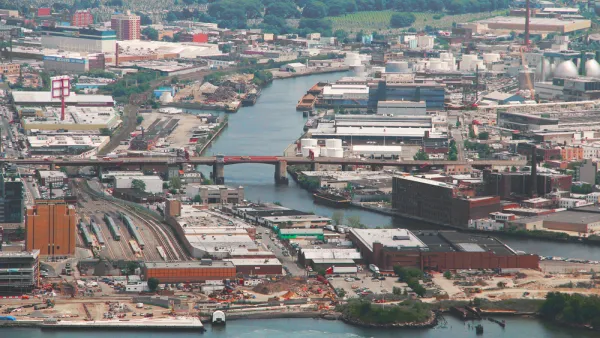
How Broken Planning and Development Processes Hobble the Potential of Neighborhoods
A stinging critique of the public review process in New York City.
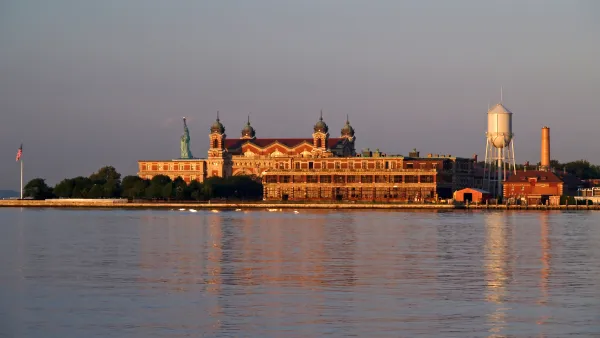
New York Suspends Land Use Reviews for Shelters
The Adams administration in New York City will relax the review process for homeless shelters to create new space for arriving asylum seekers.
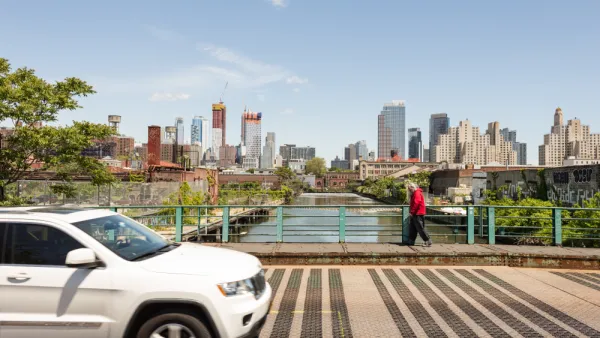
Planning via Zoom: Legal Scrutiny for Pandemic Realities in New York City
The question of whether a public review process conducted by Zoom is sufficient to approve a sweeping rezoning plan is a matter of no small legal concern in New York City.

Planetizen Federal Action Tracker
A weekly monitor of how Trump’s orders and actions are impacting planners and planning in America.

The state-sanctioned urbicide of Austin
People don’t kill cities. Freeways do.

US to reduce Colorado River water deliveries to Mexico
A new Colorado Treaty amendment reduces Mexico’s Colorado River water allocation by 250,000 acre feet.

5 New England states march closer to 800 megawatt wind energy project
Securing federal approval for the project may be complicated under the Trump administration, which has historically been hostile towards domestic wind power.

Baltimore to break ground on $50 million Transit Priority Project
The project will bring faster bus trips, safer streets and better bike connections to Baltimore.

Airbnb launches $250 million 'last-dollar financing' housing accelerator, makes first investment in Austin
The company will put $6.4 million towards affordable housing development in Texas’ capital.

FREE Course: Walkable City 1: Why Walkability?
After describing his path towards focusing on walkability as the essence of good planning, Jeff Speck marches through his five principal reasons for making more walkable places.
Reinventing Malls: Planning Alchemy—Turning Gray Fields Into Gold
The course focuses on the opportunities and imperatives that shape reinvention of mall sites.

Eagle County Government
Harvard University Graduate School of Design
Nashville Planning Department
The Architects Foundation
University of Cincinnati Online
The Pocatello Development Authority
The Urban Renewal Agency of the City of Pocatello
Journal of the American Planning Association