Toyota plans to break ground on the "Woven City" future city prototype in 2021.


"Toyota revealed plans to build a prototype 'city' of the future on a 175-acre site at the base of Mt. Fuji in Japan," according to a press release coinciding with the announcement at CES in Las Vegas.
"Called the Woven City, [the prototype city] will be a fully connected ecosystem powered by hydrogen fuel cells," according to the press release
"Envisioned as a "living laboratory," the Woven City will serve as a home to full-time residents and researchers who will be able to test and develop technologies such as autonomy, robotics, personal mobility, smart homes and artificial intelligence in a real-world environment."
The press release includes details on the master plan of the city, including a scheme to create a taxonomy of street types based on vehicle speeds. Details on how the city would achieve sustainability are also included.
Hat tip to Katie Pyzyk, who reports the news including details of the company's presentation at CES.
Read the full story: Jan. 07, 2020 Toyota to Build Prototype City of the Future

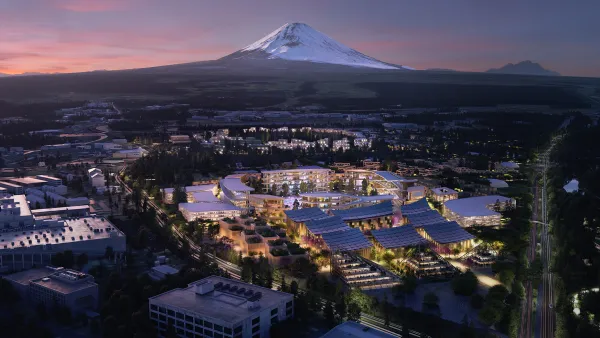
Toyota Working on the Smartest City Yet, Built From Scratch
Checking in with Toyota's plans for an interconnected smart "city of the future" means considering how their approach might differ from other attempts at similar projects.
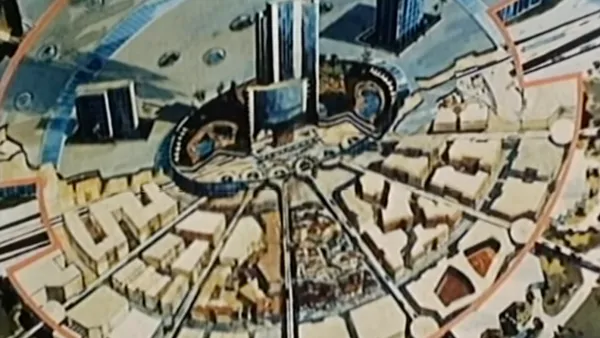
EPCOT: The Original 'Smart City'
What can today’s futurists learn from Disney’s unrealized utopia?

AI-Based Ride Hailing Spreads in Japan
A series of partnerships announced is pushing integrating taxi service and artificial intelligence in Japan.

Planetizen Federal Action Tracker
A weekly monitor of how Trump’s orders and actions are impacting planners and planning in America.

California plans to bury El Niño’s downpour
If the state plays its cards right, it may be able to store a billion acre-feet of El Niño’s water in aquifers.

Chicago breaks ground on $3 billion megadevelopment
The new neighborhood, titled Foundry Park, will one day host 3,700 residences.

California High-Speed Rail Authority CEO resigns after $600,000 scandal
Under Ian Choudri, the authority used taxpayer dollars to fund first class flights and trips to nightclubs.

Want to study the Missouri River? Soon, you may need unanimous approval from 10 states
Legislation would require 10 governors’ permission to study or build projects moving water outside the basin.

Desperate measures: Advocates weigh draining Lake Powell to fill Colorado River
Draining the reservoir could reduce evaporation losses by a couple hundred thousand acre-feet.

FREE Course: Walkable City 1: Why Walkability?
After describing his path towards focusing on walkability as the essence of good planning, Jeff Speck marches through his five principal reasons for making more walkable places.
Reinventing Malls: Planning Alchemy—Turning Gray Fields Into Gold
The course focuses on the opportunities and imperatives that shape reinvention of mall sites.

City of Rosemead
Rutgers University, Edward J. Bloustein School of Planning and Public Policy
One Hundred Miles
Hunter College, City University of New York (CUNY)
The Architects Foundation
University of Cincinnati Online
City of Cambridge
Montrose County
The Pocatello Development Authority