An indoor ski hill, roller coasters, and a water park are all part of the New Jersey mall that reflects the shift from material consumerism to the consumption of experiences.


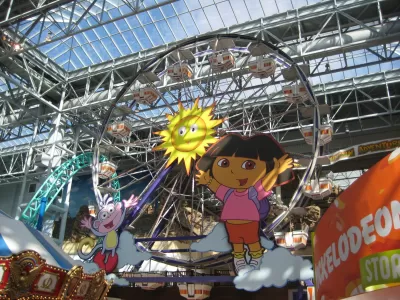
Amanda Hess writes about a surreal trip to American Dream, a new 3-million-square-foot mall complex. "Just off the New Jersey Turnpike, a post-shopping mall is born: More than half of American Dream’s space is allotted not to retail but to entertainment. The psychic center of American social life has shifted from buying things to feeling them."
Hess starts at Big Hill, an indoor ski hill, and continues to Nickelodeon Universe, an amusement park with record-breaking roller coasters. There’s an ice rink and the world’s largest candy store. The DreamWorks water park is still under construction, and it will include the largest wave pool in the world when it is up and running. "The whole place is vulgar, which I happen to appreciate," she says.
American Dream is a project by the same team behind the Mall of America in Minnesota and is based on the premise that millennials want to spend their money on experiences rather than material things. "No, it is not a mall. It’s a performance piece ruminating on the corporate takeover of nature and society. The name — American Dream — is both unnerving and absolutely correct," adds Hess.
FULL STORY: Welcome to the Era of the Post-Shopping Mall

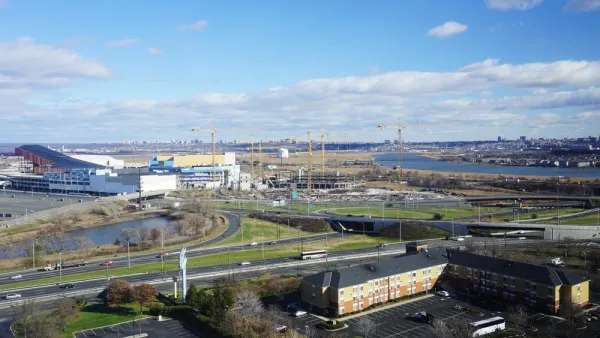
Long-Delayed $5 Billion American Dream Mall Opens
It took 17 years and no small amount of public ridicule as it sat dormant in the New Jersey meadowlands, but a small portion of the American Dream mall is now open to the public.

America faces a 'fun shortage'
The United States has lost nearly a third of its bowling alleys and a fifth of its movie theaters since 2001.
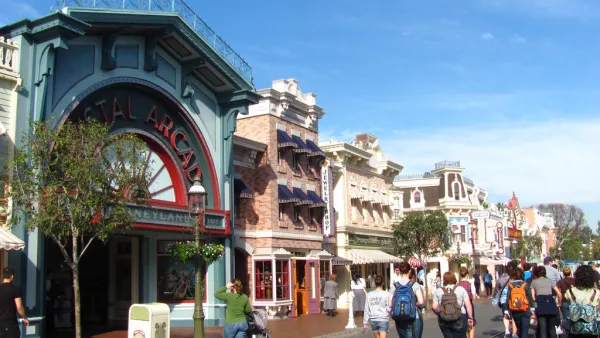
What Will Disneyland Be Like When it Reopens?
According to a study, Disneyland could comfortably accommodate 50% of the 110-acre theme park’s pre-COVID-19 attendance capacity.

The state-sanctioned urbicide of Austin
People don’t kill cities. Freeways do.

US to reduce Colorado River water deliveries to Mexico
A new Colorado Treaty amendment reduces Mexico’s Colorado River water allocation by 250,000 acre feet.

New Jersey’s second-largest city bans standalone data centers
Jersey City will continue to allow co-location facilities, such as those meant for research institutions that store their own data.

Amtrak not solely to blame for New Jersey commuter rail's unreliability, report finds
A new study from the Garden State Initiative found that NJ Transit’s budget grew 20% across a 4 year period, but reliability declined significantly over the same period.

EPA erases limits on planet-warming pollution from power plants
Under Monday’s plan, power plants would still have some limits on how much mercury, arsenic and other contaminants they can emit.

Phoenix announces new on-demand transit service, more frequent RAPID buses
Both new services will launch in October, and are part of Phoenix's Project Effective Access Solutions for Easing Congestion.

FREE Course: Walkable City 1: Why Walkability?
After describing his path towards focusing on walkability as the essence of good planning, Jeff Speck marches through his five principal reasons for making more walkable places.
Reinventing Malls: Planning Alchemy—Turning Gray Fields Into Gold
The course focuses on the opportunities and imperatives that shape reinvention of mall sites.

Eagle County Government
Harvard University Graduate School of Design
Nashville Planning Department
The Architects Foundation
University of Cincinnati Online
The Pocatello Development Authority
The Urban Renewal Agency of the City of Pocatello
Journal of the American Planning Association