Value is in the eye of the beholder.


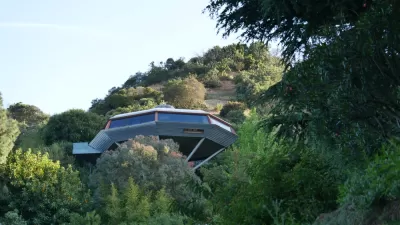
James Tarmy reports on the surprising lack of value that residential buildings designed by starchitects (i.e., the most famous of globe-trotting, high-profile-project-designing architects) find when sold on the open market.
The article launches with the example of a home designed by Steven Holl for a homeowner in the Catskills, who recently listed the property for $1.6 million, or 20 percent less than the money spent developing the property 23 years ago. Moreover, the property's real estate broker is quoted in the article saying a typical local realtor would value that house at $400,000, based just on location and square footage.
The reality of selling a "starchitect"-designed home is sobering, according to Tarmy, who includes more anecdotes, mostly from the perspective of the brokers stuck in limbo trying to sell a few famous examples around the country.
While Tarmy's coverage focuses on contemporary examples, the tough real estate market for notable historic residential architecture is also famously sluggish, like with examples from John Lautner and Frank Lloyd Wright in Los Angeles.
FULL STORY: Having a Home by a Star Architect Is Amazing, Until You Try to Sell It

Institutional Investors Gaining a Larger Footprint in the Housing Market, Report Says
The locations with the fastest growing populations are seeing the most dramatic increase in investor-owned single-family housing rentals.

Survey Says: U.S. Homebuyers, Especially Gen Z, Want Walkable Neighborhoods
Generation Z is leading a new push toward walkable communities, according to a recent survey by the National Association of Realtors.
Wall Street Suddenly Buying Fewer Single-Family Homes
Rising interest rates are having a major effect in the housing market—including on the large institutional investors who spent much of the past couple of years buying up single-family homes.

Planetizen Federal Action Tracker
A weekly monitor of how Trump’s orders and actions are impacting planners and planning in America.

The state-sanctioned urbicide of Austin
People don’t kill cities. Freeways do.

US to reduce Colorado River water deliveries to Mexico
A new Colorado Treaty amendment reduces Mexico’s Colorado River water allocation by 250,000 acre feet.

5 New England states march closer to 800 megawatt wind energy project
Securing federal approval for the project may be complicated under the Trump administration, which has historically been hostile towards domestic wind power.

Baltimore to break ground on $50 million Transit Priority Project
The project will bring faster bus trips, safer streets and better bike connections to Baltimore.

Airbnb launches $250 million 'last-dollar financing' housing accelerator, makes first investment in Austin
The company will put $6.4 million towards affordable housing development in Texas’ capital.

FREE Course: Walkable City 1: Why Walkability?
After describing his path towards focusing on walkability as the essence of good planning, Jeff Speck marches through his five principal reasons for making more walkable places.
Reinventing Malls: Planning Alchemy—Turning Gray Fields Into Gold
The course focuses on the opportunities and imperatives that shape reinvention of mall sites.

Eagle County Government
Harvard University Graduate School of Design
Nashville Planning Department
The Architects Foundation
University of Cincinnati Online
The Pocatello Development Authority
The Urban Renewal Agency of the City of Pocatello
Journal of the American Planning Association