Building community wealth from the bottom up is a more effective way to turn struggling communities around.


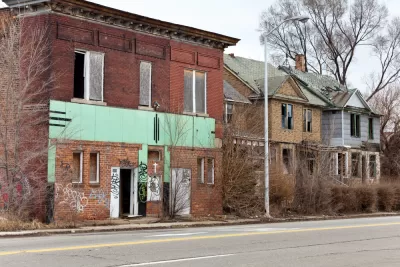
A new report from the Nowak Metro Finance Lab at Drexel University argues for a move away from community development models to a community wealth system, reports Richard Florida. "They define community wealth as 'a broad-based effort to build equity for low-income residents,' which could unlock 'hundreds of billions in market and civic capital' to revitalized struggling places across America."
This bottom-up approach looks to grow individual and collective neighborhood-based assets in distressed communities, improve access to private capital, and enhance inclusion. It is a holistic and more localized way to tackle regional inequality, says Florida.
The report points to Opportunity Zones as one alternative to federal grant-based programs, and community wealth depends on such place-based approaches, says Florida. "We already know these work—to enhance workers’ skills; support and nurture local entrepreneurship; provide services to small and medium-sized businesses; and invest in neighborhood assets such as schools and parks, and public safety and other critical public services."
FULL STORY: How to Grow the Wealth of Poor Neighborhoods From the Bottom Up

Opinion: Congress Should Expand the Opportunity Zone Program
The federal economic development program has brought over $100 billion in private investment to revitalize struggling communities.
19 of 1,036 Majority-Black ZIP Codes Are 'Prosperous,' Report Says
The Economic Innovation Group has released its 2020 Distressed Communities Index.

Portland's Opportunity Zone Designations Raise Eyebrows
Call it "Tax Breaklandia," according to this Bloomberg article.

The state-sanctioned urbicide of Austin
People don’t kill cities. Freeways do.

US to reduce Colorado River water deliveries to Mexico
A new Colorado Treaty amendment reduces Mexico’s Colorado River water allocation by 250,000 acre feet.

New Jersey’s second-largest city bans standalone data centers
Jersey City will continue to allow co-location facilities, such as those meant for research institutions that store their own data.

Amtrak not solely to blame for New Jersey commuter rail's unreliability, report finds
A new study from the Garden State Initiative found that NJ Transit’s budget grew 20% across a 4 year period, but reliability declined significantly over the same period.

EPA erases limits on planet-warming pollution from power plants
Under Monday’s plan, power plants would still have some limits on how much mercury, arsenic and other contaminants they can emit.

Phoenix announces new on-demand transit service, more frequent RAPID buses
Both new services will launch in October, and are part of Phoenix's Project Effective Access Solutions for Easing Congestion.

FREE Course: Walkable City 1: Why Walkability?
After describing his path towards focusing on walkability as the essence of good planning, Jeff Speck marches through his five principal reasons for making more walkable places.
Reinventing Malls: Planning Alchemy—Turning Gray Fields Into Gold
The course focuses on the opportunities and imperatives that shape reinvention of mall sites.

Eagle County Government
Harvard University Graduate School of Design
Nashville Planning Department
The Architects Foundation
University of Cincinnati Online
The Pocatello Development Authority
The Urban Renewal Agency of the City of Pocatello
Journal of the American Planning Association