Though it stops well short of a citywide upzoning, the city of Tacoma has still expanded its planned development envelope by upzoning residential neighborhoods around the city.



"In late September, the Tacoma City Council approved a large slate of areawide rezones and future land use map designation changes, which primarily affected residential properties," reports Stephen Fesler.
"The rezones and land use designation changes were included as part of the annual Comprehensive Plan update process for minor amendments, which were proposed in order to attain consistency between zoning and land use designations," adds Fesler.
According to Fesler, the changes amount to an upzoning, allowing more development intensity in residential areas in the city. "Where zoning of a site was less intensive or inconsistent with a future land use map (FLUM) designation type, the highest and most consistent implementing zoning type was proposed," according to Fesler. Still, Fesler warns, the effect fo the changes should not be overstated: "The changes adopted by the city council represent a small fraction of single-family areas and an even smaller fraction of the city, but they should help the city expand overall development capacity."
FULL STORY: Tacoma Quietly Rezoned Residential Areas in Latest Comp Plan Update


Minneapolis Draft Comprehensive Plan Would Allow Fourplexes in Single-Family Neighborhoods
If the rezoning of single-family neighborhoods succeeds in Minneapolis as part of its ongoing Comprehensive Plan process, we could be looking at one of the most ambitious pro-development zoning schemes in the country.
A Small Town Makes its First Zoning Update Since 1997
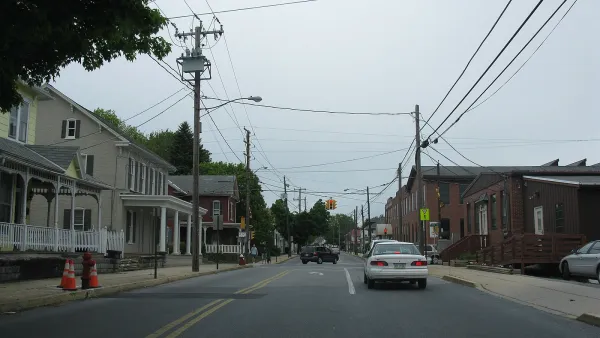
Mixed-use development and a floodplain overlay are the big-ticket items when the small community of Akron Borough in Pennsylvania recently updated its zoning code.
Pittsburgh Moves Ahead With Zoning Changes for University-Adjacent Neighborhood
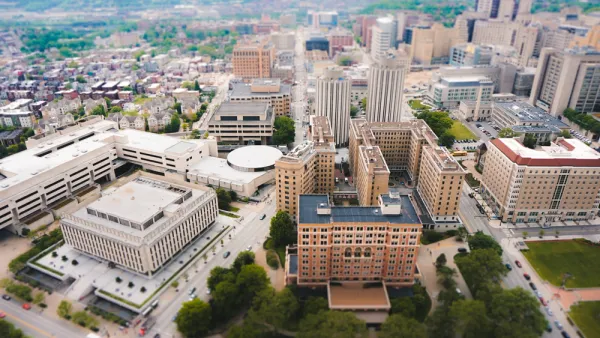
The implementation of a new master plan for the neighborhood of Oakland, home to the University of Pittsburgh, is moving forward despite controversy and a contentious community engagement process.

Planetizen Federal Action Tracker
A weekly monitor of how Trump’s orders and actions are impacting planners and planning in America.

The state-sanctioned urbicide of Austin
People don’t kill cities. Freeways do.

US to reduce Colorado River water deliveries to Mexico
A new Colorado Treaty amendment reduces Mexico’s Colorado River water allocation by 250,000 acre feet.

Airbnb launches $250 million 'last-dollar financing' housing accelerator, makes first investment in Austin
The company will put $6.4 million towards affordable housing development in Texas’ capital.

Guerilla urbanists are building DIY bus stop benches in Chicago
A before-and-after of one of the bus stops with a new bench. The new benches are not officially sanctioned or permitted, but the residents who placed them hope they will be the start of a network of DIY benches across the city.

Mamdani overhauls NYC's Vision Zero plan with 100 new policy goals
The overhaul aims to reduce traffic deaths and make streets safer for pedestrians, cyclists and drivers through lower speed limits, new safety infrastructure and more.

FREE Course: Walkable City 1: Why Walkability?
After describing his path towards focusing on walkability as the essence of good planning, Jeff Speck marches through his five principal reasons for making more walkable places.
Reinventing Malls: Planning Alchemy—Turning Gray Fields Into Gold
The course focuses on the opportunities and imperatives that shape reinvention of mall sites.

Eagle County Government
Harvard University Graduate School of Design
Nashville Planning Department
The Architects Foundation
University of Cincinnati Online
The Pocatello Development Authority
The Urban Renewal Agency of the City of Pocatello
Journal of the American Planning Association