The Home SF plan was supposed to usher in a wave of new housing development on transit corridors in San Francisco. Now, 2.5 years later, that promise might finally be ready to become reality.



J.K. Dineen reports on the progress with the Home SF program, adopted two and a half years ago in San Francisco to add 16,000 housing units along transit corridors by 2037.
"The program lets developers exceed height and density limits in exchange for including more affordable housing in their projects, and the idea was to push more projects in historically development-wary neighborhoods," explains Dineen.
So far, however, the plan has yet to live up to its ambitions. "Not one Home SF project is under construction and just three have been approved," according to Dineen. The sluggish pace of development is blamed on the "one-size-fits-all" legislation that enabled the program, but there is evidence that developers are starting to Home SF as an attractive alternative to the state's development bonus incentives.
The article includes a lot more details about a wave of new projects seeking approval under the program.
FULL STORY: Home SF was meant to boost housing along transit. But can it fulfill its promise?

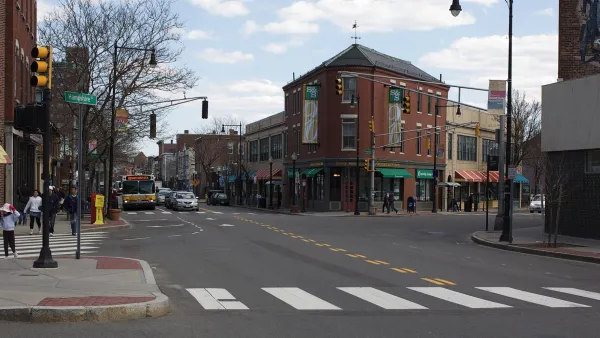
The Thinking Behind Cambridge's Affordable Housing Overlay
A podcast discussion with Cambridge Mayor Sumbul Siddiqui details how and why the Massachusetts city become a planning trendsetter by adopting an Affordable Housing Overlay earlier this year.
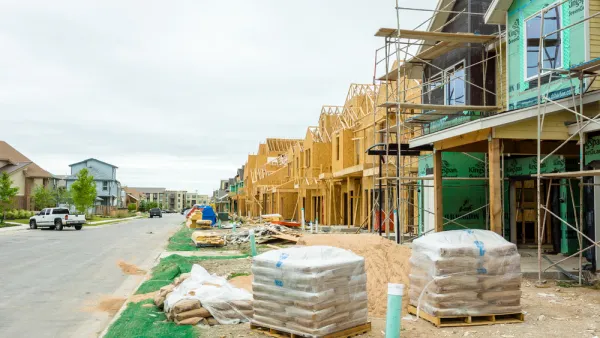
Early Returns on Austin's New Density Bonus Program: 2,337 Affordable Housing Units
Since late 2019, developers who deliver affordable housing units in Austin have received bonuses in height, density, parking, and other regulatory metrics, leading to a large number of new affordable housing units in the pipeline.

Taller, Denser, but More Affordable Housing Coming to San Francisco
Following a similar ordinance signed into law by Mayor Ed Lee last July that dealt with developments that are 100 percent affordable, the new housing density ordinance apples to market-rate developments that have 30 percent affordability.

The state-sanctioned urbicide of Austin
People don’t kill cities. Freeways do.

US to reduce Colorado River water deliveries to Mexico
A new Colorado Treaty amendment reduces Mexico’s Colorado River water allocation by 250,000 acre feet.

New Jersey’s second-largest city bans standalone data centers
Jersey City will continue to allow co-location facilities, such as those meant for research institutions that store their own data.

Amtrak not solely to blame for New Jersey commuter rail's unreliability, report finds
A new study from the Garden State Initiative found that NJ Transit’s budget grew 20% across a 4 year period, but reliability declined significantly over the same period.

EPA erases limits on planet-warming pollution from power plants
Under Monday’s plan, power plants would still have some limits on how much mercury, arsenic and other contaminants they can emit.

Phoenix announces new on-demand transit service, more frequent RAPID buses
Both new services will launch in October, and are part of Phoenix's Project Effective Access Solutions for Easing Congestion.

FREE Course: Walkable City 1: Why Walkability?
After describing his path towards focusing on walkability as the essence of good planning, Jeff Speck marches through his five principal reasons for making more walkable places.
Reinventing Malls: Planning Alchemy—Turning Gray Fields Into Gold
The course focuses on the opportunities and imperatives that shape reinvention of mall sites.

Eagle County Government
Harvard University Graduate School of Design
Nashville Planning Department
The Architects Foundation
University of Cincinnati Online
The Pocatello Development Authority
The Urban Renewal Agency of the City of Pocatello
Journal of the American Planning Association