As a response to rising rental prices and low vacancy rates, Vancouver planners have created a package of zoning and process changes to provide incentives for new multi-family developments.


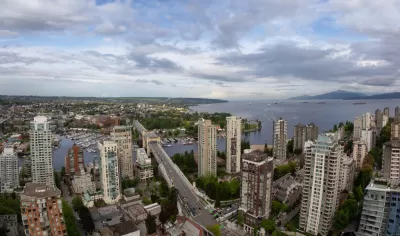
This week, the Vancouver City Council "will consider a staff report containing recommendations for enhancing the city’s policies for boosting construction of purpose-built rental housing," report Dan Fumano.
Planners organize the amended Secured Rental Policy, available in the form of a 236-page report [pdf], around ten key recommendations for increasing the supply of rental housing in the city of Vancouver. Recommendations include "supporting repairs of old buildings, making it easier to build six-storey, mixed-use buildings on main streets and allowing four-storey apartment buildings on side streets in previously low-density residential areas," according to Fumano.
Other recommendations include 'pre-zoning' to allow mixed-use projects to be built without a public hearing and rezoning process and a zoning change "to allow four-storey rental apartment or townhouse buildings in 'low-density transition areas' — defined as residential blocks within 150 metres from an arterial street."
The recommendations included in the amended Secured Rental Policy have the support of Mayor Kennedy Stewart, who campaigned on a platform of pro-housing development policies, according to Fumano. Additional coverage of the city's proposed approach to its housing affordability challenges is available in a separate article by Frances Bula.
The news about the Secured Rental Policy comes shortly after the city kicked off a long-awaited citywide planning process.
FULL STORY: Four-storey apartment buildings could replace houses on more Vancouver side streets

Sweeping Zoning Reforms Adopted in Olympia
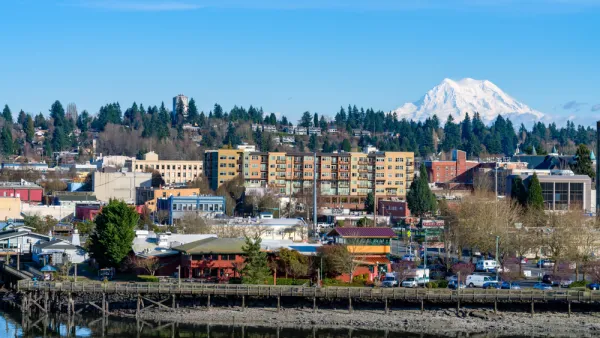
The Olympia, Washington City Council adopted a new Housing Options Code Amendments ordinance, effectively eliminating single-family zoning in the city.

Prescriptions for the 'Broken' Massachusetts Multi-Family Market
The Metropolitan Area Planning Council (MAPC) is taking a strong stance in support of zoning regulations that enable new multi-family housing developments.

Salt Lake City Slashes Lot Size, Parking Requirements for Middle Housing Zones
A new ordinance alters regulations for middle housing zones, removing barriers that made multifamily development impractical or too expensive.

The state-sanctioned urbicide of Austin
People don’t kill cities. Freeways do.

US to reduce Colorado River water deliveries to Mexico
A new Colorado Treaty amendment reduces Mexico’s Colorado River water allocation by 250,000 acre feet.

New Jersey’s second-largest city bans standalone data centers
Jersey City will continue to allow co-location facilities, such as those meant for research institutions that store their own data.

Amtrak not solely to blame for New Jersey commuter rail's unreliability, report finds
A new study from the Garden State Initiative found that NJ Transit’s budget grew 20% across a 4 year period, but reliability declined significantly over the same period.

EPA erases limits on planet-warming pollution from power plants
Under Monday’s plan, power plants would still have some limits on how much mercury, arsenic and other contaminants they can emit.

Phoenix announces new on-demand transit service, more frequent RAPID buses
Both new services will launch in October, and are part of Phoenix's Project Effective Access Solutions for Easing Congestion.

FREE Course: Walkable City 1: Why Walkability?
After describing his path towards focusing on walkability as the essence of good planning, Jeff Speck marches through his five principal reasons for making more walkable places.
Reinventing Malls: Planning Alchemy—Turning Gray Fields Into Gold
The course focuses on the opportunities and imperatives that shape reinvention of mall sites.

Eagle County Government
Harvard University Graduate School of Design
Nashville Planning Department
The Architects Foundation
University of Cincinnati Online
The Pocatello Development Authority
The Urban Renewal Agency of the City of Pocatello
Journal of the American Planning Association